
Erica Pate, Fruit Crop Specialist; Katie Goldenhar, Pathologist- Horticulture, OMAFRA
These guidelines were developed to address the presence of anthracnose resistance to group 11 fungicides in Ontario, and the limited products available to growers.
This includes the changes to the captan label for berry growers including a 6-day REI and a maximum of 6 applications.
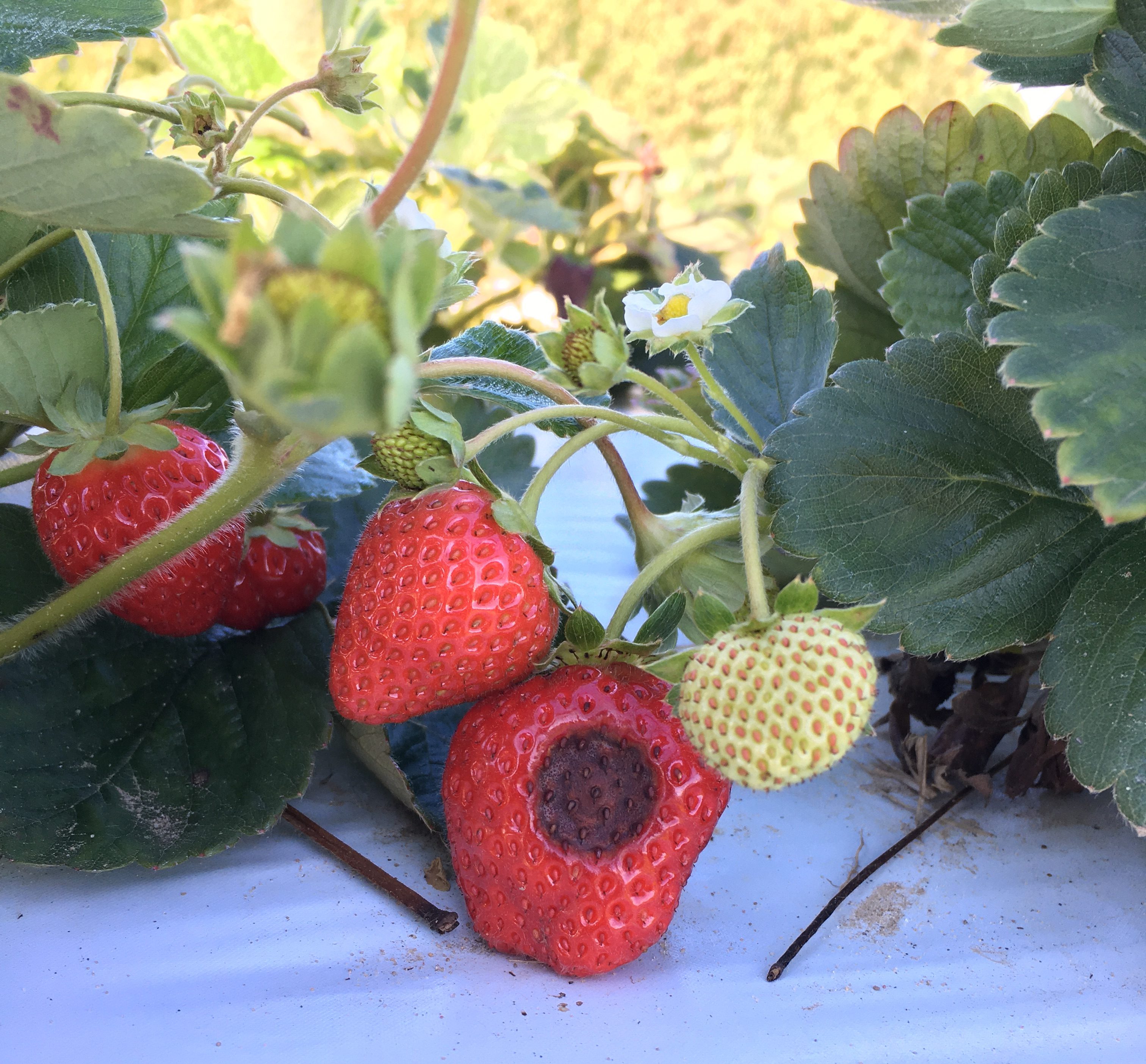
In Ontario, strawberry anthracnose has been confirmed resistant to FRAC group 11 fungicides, also known as strobilurins. A survey conducted in 2021 -2022 on 13 farms from across the province confirmed that all anthracnose samples were resistant to group 11s through a genetic mutation. Due to this, we do not recommend using the following products for anthracnose management – Cabrio (11), Evito (11), Pristine (11+7), Merivon (11+7), Quadris Top (11+3) and Luna Sensation (11+7). Please see the Fungicide Resistance Action Committee (FRAC) guidelines for group 11 resistance management. If you want to test for resistance to a group 11 product in your field, contact Erica Pate, OMAFRA (contact information below). Wherever possible, include a group M fungicide in your program for resistance management and to expand the spectrum of disease control.
Results from the anthracnose resistance survey and fungicide efficacy trial in 2021 can be found here https://onfruit.ca/2022/03/31/anthracnose-fruit-rot-management-research-update/ .
Integrated Management of Anthracnose Guidelines:
Anthracnose will be challenging to control in day-neutral strawberries with fungicides alone. Include other integrated anthracnose management practices such as:
- Some new cultivars (eg. Keepsake, Flavorfest) have tolerance or resistance to anthracnose – try these out on your farm
- Start new fields with clean plants from an accredited program. Plug plants from field-grown tips carry a higher risk
- Don’t let the plant canopy get too thick. Nitrogen management is very important. Avoid over-application of nitrogen
- The source of nitrogen can also have an effect; avoid ammonium forms of nitrogen
- Apply chlorothalonil or captan before bloom for Botrytis management
- As much as possible apply broad spectrum fungicides (group M) during bloom
- Use a disease prediction model for timing fungicide sprays
- During harvest your options are more limited because of the longer REI and PHI intervals. Options include:
- Switch/Button (group 9 +12), cyprodonil + fludioxonil
- Miravis prime (group 7+12), pydiflumetofen + fludioxonil
- Diplomat (group 19), polyoxin D zinc salt
- Inspire Super (group 3+9), difenoconazole + cyprodonil (suppression only)
- Do not rely on group 11 products
- Remove diseased fruit from plants and if possible, remove from field
- Work in older fields, and/or diseased fields last
- Sanitize between fields (eg. equipment, tools, hands)
- After crop removal, incorporate residue into the soil to allow for breakdown of residue
See the pdf below for further comments and examples of fungicide programs.
0 comments on “Suggestions for Anthracnose Management in Strawberries, 2024”