
By Wendy McFadden-Smith and Katie Goldenhar, OMAFA
Phosphorous acid products include Aliette, Confine Extra, Phostrol and Rampart. They have become an important part of our downy mildew management program in Ontario. They are fully systemic, which means that they will move from foliage that is sprayed into newly developing leaves and also into fruit. While they have preventive activity, they also reduce sporulation on lesions, and we have been relying on them when downy mildew starts to show up as a way of eradicating the disease.
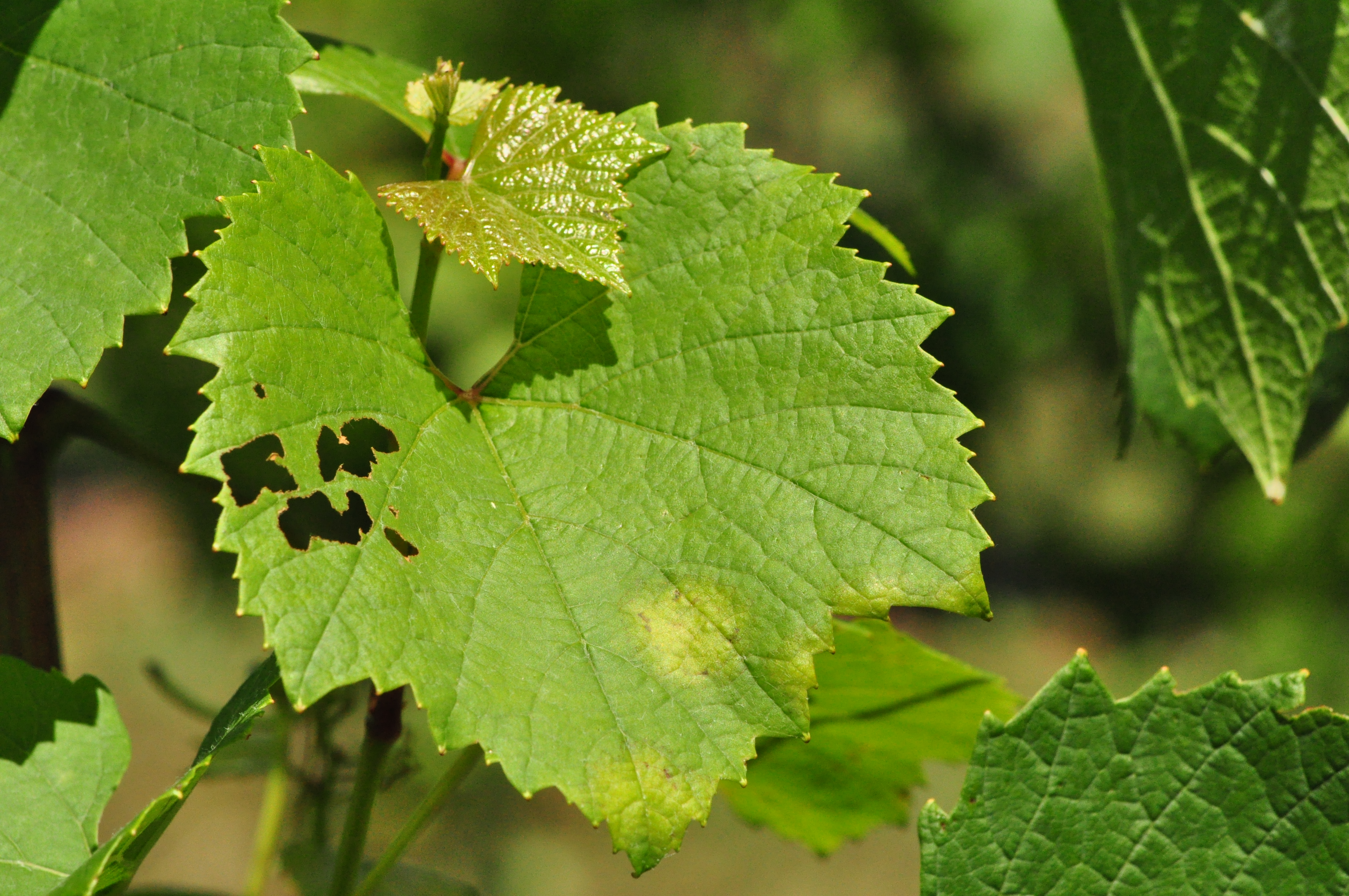
In a recent study conducted in Maryland and Pennsylvania , 352 samples of grape downy mildew (Plasmopara viticola) were screened for resistance to Group 11 (azoxystrobin), 4 (Ridomil – metalaxyl-M) and P07 (phosphorous acid). Isolates were inoculated on Cabernet franc and Chardonnay leaves treated with label rates of each fungicide. Isolates were considered susceptible if no symptoms developed. If oil spots formed, whether sporangia were produced or not, the isolate was considered resistant. From 6 to 64% of the P. viticola isolates were resistant to phosphorous acid, depending on the region. The researchers also found that 20% of isolates were resistant not only to phosphorous acid but also to the other fungicides tested.
What does this mean for Ontario grape growers? It’s an important reminder to use phosphorous acid products BEFORE lesions develop, rather than after. If you must use them after sporulation has occurred, you should tank mix them with another product that is effective on downy mildew.
0 comments on “Resistance management for phosphorous acid fungicides in grapevines”