
Table of Contents
Crop Update
Strawberries
The first day-neutral strawberries were picked this week from over-wintered fields as harvest slowly begins with the continued cool weather this week. Row-covered June-bearing strawberries aren’t far off with green fruit and ripening berries present, and some growers will begin picking next week. There is plenty of bloom now in mid and late-season June bearing varieties, and fruit buds are present in Malwina.
Newly planted fields are looking good with plenty of moisture recently. New plantings need 50 kg of N per ha, which can be applied as a side dressing 2-3 weeks after planting. Remove spring-planted day-neutral blooms until plants are well established- about 4-6 leaves.
We are looking forward to more seasonal temperatures in the forecast next week!
Disease:
- See the Strawberry Disease Decision Support System for the risk of anthracnose and botrytis infection. Use the disease prediction models to time fungicide applications for anthracnose and botrytis.
- Overwintered day-neutrals often have the highest disease pressure compared to spring-planted day-neutrals. Once harvest begins use Switch/Button (9+12) or Miravis Prime (7+12) for anthracnose control when there is high disease pressure (hot & humid with rain). Another option is Diplomat (19), however, under high disease pressure Diplomat alone did not provide acceptable control. Note that there is a maximum of 4 applications of fludioxonil-containing products per year, which includes Switch, Button, Miravis Prime, and Scholar. Note the maximum applications for each individual product: Switch/Button- 3, Miravis Prime- 2, Scholar- 2. Do not rely on group 11s alone for anthracnose control.
- Use broad spectrum fungicides (group M) during bloom as much as possible for botrytis control (June-bearing and day-neutrals).
- With a cool, wet spring so far check out Phytophthora crown rot of strawberry for information on identifying and managing this challenging disease.
Insects:
- Continue to monitor for tarnished plant bug, clipper weevil, thrips, aphids, cyclamen mite and two-spotted spider mite. In new fields monitor for flea beetles and potato leafhoppers.
- Thrips: Thrips can cause bronzing under the calyx, on the seeds and fruit, and can cause the entire berry to become bronzed and cracked. Watch for thrips on day-neutrals, table-tops, and June-bearing strawberries. Gently breath on blossoms to encourage thrips to move out of the bloom. If control is needed Delegate, Exirel, Beleaf or Harvanta are registered for thrips suppression or control.
- Tarnished plant bug (TPB): are at or approaching threshold (approximately 1 nymph in 4 flower clusters) in some fields. Beleaf is a good choice during bloom applied at the high rate (200 g/ha).
- Slugs do the most injury during cool, damp, rainy seasons- sound familiar? Keep an eye out for slugs and injury as we approach harvest. Risk factors for slugs include weedy areas, thick straw mulch, and vigorous leaf canopies. Sluggo (PCP# 30025) is registered for slug control on strawberries if control is needed.
Blueberries
Blueberries are at bloom to petal fall. Check bushes that have had scale infestations in the past for scale crawlers by using black sticky tape. It’s important to control when crawlers are active- insecticides are most effective at this stage. Wait until after bloom to apply an insecticide.
Raspberries
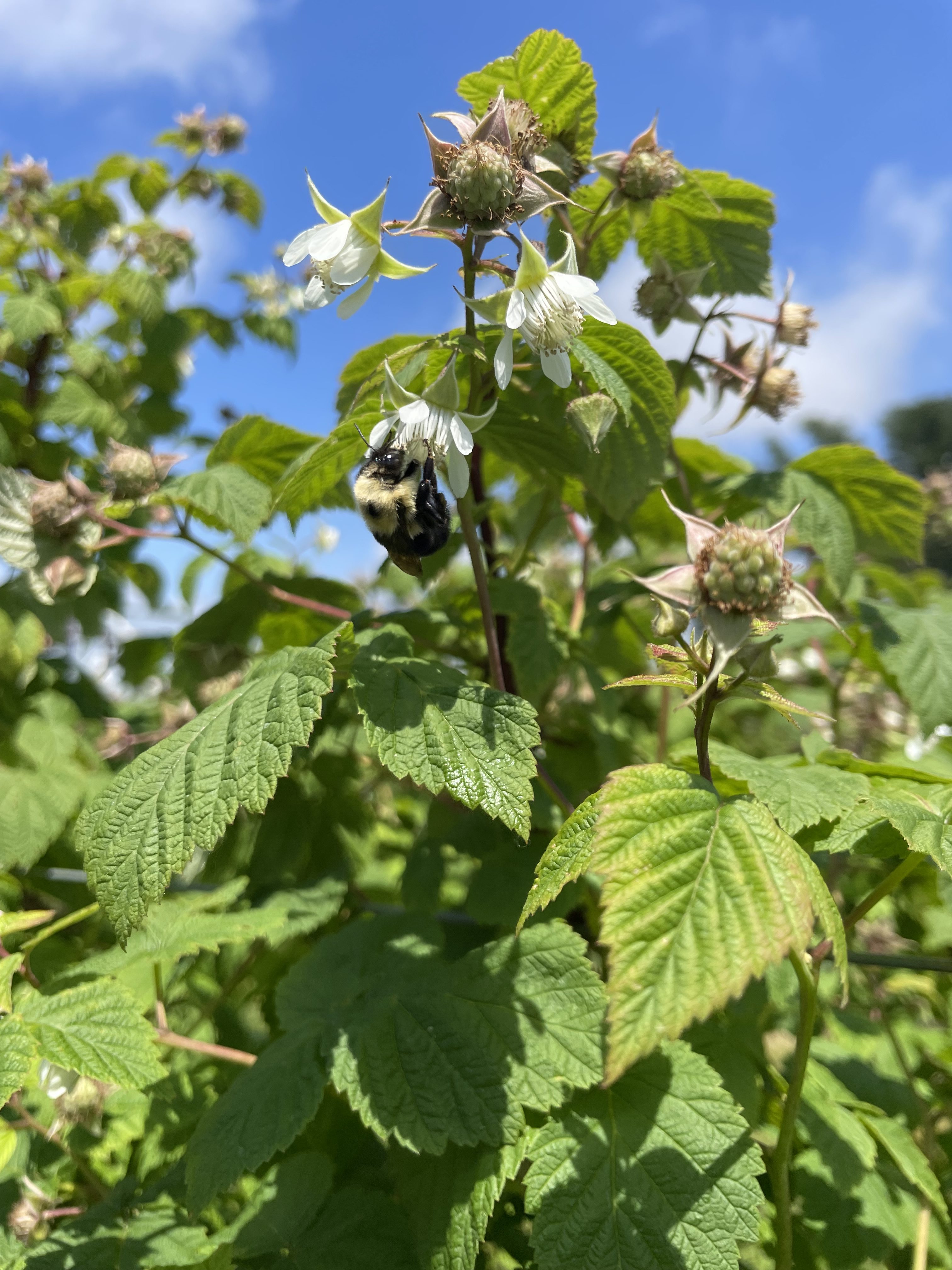
Raspberries are in bloom in southern Ontario and early green fruit is present in early areas. Do not use an insecticide during bloom. Check primocanes for raspberry cane borer injury. Cut any affected primocane tips below the lower girdle/zipper when you see injury.
Product Update
Gatten® (flutianil, PCP# 34297, FRAC group U13) is now registered for powdery mildew control on strawberries (outdoor).
Rate: 440- 590 mL/ha
PHI: 0 days
REI: 12 hours
Max apps: do not apply more than 5 applications per year.
Herbicide Resistance Testing
- No-cost Molecular Herbicide Resistance Testing Available for Ontario Growers. Check out onfruit for details on submitting samples for fast, accurate, resistance confirmation- for Free!
Spotted Wing Drosophila Monitoring
Traps have gone up for spotted wing drosophila at a few sites across the province this week. Watch the berry bulletin or the onfruit.ca blog for updates on traps catches. Start planning now to manage SWD this year:
- Harvest early, clean and often
- Cool fruit as quickly as possible postharvest
- Keep alleys clean, and destroy unmarketable fruit
- Ensure thorough spray coverage. Calibrate your sprayers now to get excellent spray coverage.
- Spray when adults are most active, in the early morning and evenings.
- Use salt water tests or plastic baggie tests once harvest begins to evaluate your management program
0 comments on “May 30 Berry Bulletin”