



By Kathryn Carter, Stephanie Vickers and Wendy McFadden-Smith, OMAFA
Our thoughts are with the growers and communities affected by the recent flooding events caused by significant rainfall across Northern Niagara. These severe weather events have resulted in flooding of orchards, vineyards, farm buildings, farm stands, homes and roads, creating substantial challenges for the agriculture sector with impacts on the agricultural industry. Waterlogged soils occur when the soil remains fully saturated for an extended period, reducing the availability of oxygen to the plant. As oxygen levels decline, root function is decreased, reducing the plant’s ability to take up water and nutrients and increasing the risk of stress, disease and reduced productivity.
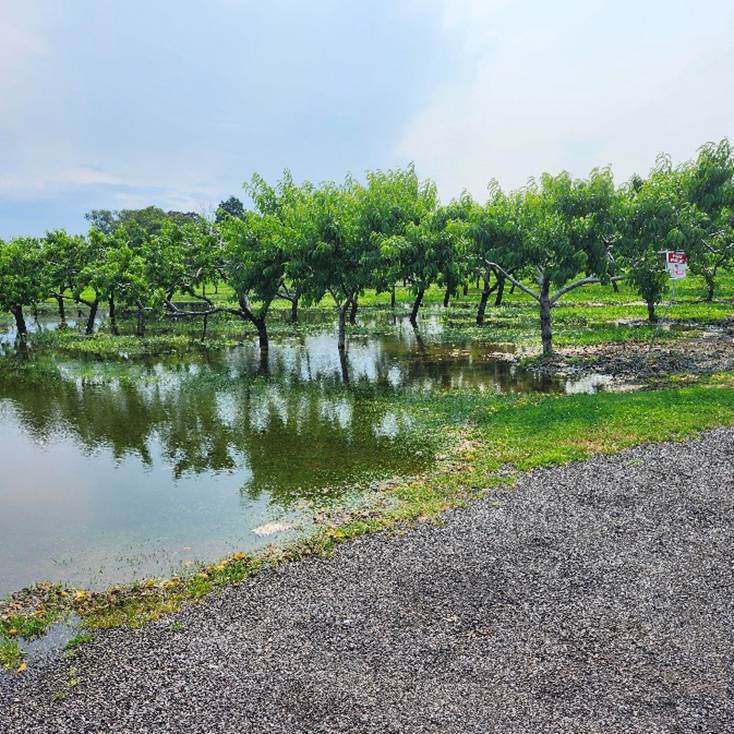
Figure 1 Photos of flooding in orchard in Niagara, July 2026 (Photo: K. Carter)
Factors affecting the impact of flooding on crops
The full impact of waterlogged soil is often not immediately apparent. Symptoms may develop days, weeks or even months after the flooding event. Ongoing monitoring is essential to assess crop health and identify issues.
The impact of flooding or water logging (saturated soils) on fruit crops is influenced by several factors:
- Duration of Waterlogging
The length of time soils remain saturated is one of the most important factors affecting crop survival. When soils remain waterlogged for extended periods (greater than 48 hours), oxygen levels decline rapidly and roots can begin to die from oxygen deprivation. Severe root injury can result in reduced vigour, increased susceptibility to disease and in extreme cases, root and potentially plant death. The recent series of extreme rainfall events in Northern Niagara has resulted in repeated flooding and prolonged periods of saturated soils in some orchards and vineyards, increasing the potential for root injury.
Soil type influences drainage. Sandy soils typically drain more rapidly, while heavier clay soils may remain saturated for longer periods, increasing the risk of plant stress.
- Crop Sensitivity
Fruit crops vary in their tolerance to saturated soils. Generally, cherry, apricot, peach trees, and grape vines are highly sensitive to waterlogged conditions. Plum trees are generally more tolerant, although they may still be affected by prolonged waterlogging.
- Rootstock
Rootstocks differ in their ability to tolerate flooding and saturated soil conditions. In tender fruit, Krysmk ® 86 rootstocks have demonstrated greater tolerance to waterlogged soils than other rootstocks.
In grapes, long-term flooding studies have shown S04 to be more tolerant of prolonged flooding than 101-14 (Mauligen et al., 2026), highlighting the importance of rootstock selection on sites prone to excess moisture.
- Age of the plant
Young trees and vines are generally more vulnerable to flooding injury than mature plants because they have smaller, less developed root systems.
- Timing of when the event occurred
Flooding that occurs when the trees are dormant has less impact than during the growing season, as respiration rates are lower in the roots and less oxygen is required.
How does intense rainfall and prolonged waterlogging affect plants, soil, and agricultural operations?
Flooding and saturated soils can have immediate and long-term effects on plant health, soil health and farming operations.
Flooding Impacts on Plants
- Excess soil moisture excludes oxygen from the soil, reducing soil respiration, water uptake, and photosynthesis. Roots stop growing in waterlogged soils, become damaged and eventually begin to die. Over time, flooding can damage or kill roots, ultimately affecting the entire plant.
- Extended flooding can result in the accumulation of toxic compounds within plant tissues, leading to root death, premature leaf senescence (particularly with basal leaves), reduced vigour and yield loses.
- Increased risk of soil-borne diseases such as Phytophthora crown and root rot.
- The plant’s ability to uptake nutrients (nitrogen, phosphorous and calcium, potassium, magnesium and calcium) is inhibited, impacting plant growth.
- Heavy rainfall can leach nitrogen out of the root zone, making it unavailable to the plants.
- Small feeder roots and root tips are more vulnerable to flooding as they require more oxygen than larger roots. Saturated soils inhibit the growth and production of small feeder roots, impacting plant growth.
- Excess moisture can result in fruit cracking, split pits (stone fruit), soft fruit, poor quality fruit, and reduced yields. Prolonged periods of flooding may result in earlier production of ethylene, resulting in faster ripening of fruit, creating issues with harvest.
- Prolonged periods of high humidity and leaf wetness may favour fungal diseases and make it difficult to effectively time fungicide applications. See https://onfruit.ca/2026/08/05/rainfastness-of-pesticides-after-a-deluge-2026/
- Vines can recover from waterlogging, but growth and fruit production can be impacted for the remainder of the growing season and sometimes into the next year.
Effects on Soil
- Excessive rainfall can cause soil erosion, particularly on sloped sites. This moves the nutrient-rich topsoil to downslope positions, affecting crop productivity and negatively impacting soil health.
- Waterlogged soils are structurally unstable and unfit for tractors; compaction will occur if equipment is driven on waterlogged soils. Prematurely taking equipment onto farms with saturated soils increases the risk of poor traction and getting equipment stuck, creating an inconvenience with farm activities that involve equipment.
- Intense rainfall and subsequent ponding can break apart soil aggregates into fine particles which create a crust layer on the top of the soil that “seals” and prevents oxygen and water from penetrating.
- Waterlogged soils lack oxygen needed for beneficial soil organisms like microbes and earthworms. Waterlogged soils have reduced number and diversity of microorganisms that normally live in the soil. Waterlogging also results in a shift to anaerobic microbes that can cause nitrogen losses through greenhouse gases emissions (nitrous oxide).
What are symptoms of flood injury to plants?
Although some symptoms of waterlogging appear relatively quickly, symptoms of root damage may occur weeks or months after the actual flooding when drought conditions occur. Symptoms of waterlogging stress to plants include:
- Leaf wilting, drooping, chlorosis, leaf scorch and shoot/twig dieback as a result of root suffocation. In grapevines, experiments have shown vines will tolerate 3 to 7 days of soil water logging before showing signs of reduced growth. Extended waterlogging for more than 10 days will kill the roots. In peach trees, flooding may not damage tree root systems unless the soil is saturated longer than 24 hours but monitor the trees for signs of stress.
- Leaf cupping, yellowing or reddening starts within days of the event in the lower part of the tree on the inside of the crown and then moves outward with tree fruit. With grapes, symptoms often occur at the base of shoots.
- Regeneration of roots near the water surface (vineyards)
- Stunted growth (this season and possibly next) and shoot dieback due to lack of nutrient uptake.
- In tree fruit symptoms of root rot may appear with dark and mushy trunks near the soil, reduced tree growth, dropping foliage.
- Increased susceptibility to cold injury. Plants may slowly decline over one or more years.
- Premature fruit ripening and decrease in fruit quality, fruit splitting, split pits (stone fruit) when flooding occurs during fruit growth and development.
- Reduced yields
- Trees washing out due to wind and excess water.
- Excess water from heavy rainfall can split berries increasing incidence of fruit rots (grapes) and reduced yields. Trees that are subject to waterlogging for a long duration, multiple times over the season fruit may produce ethylene sooner and ripen faster even after they have been harvested.
What should I do if my orchard/vineyard is flooded?
Short Term
Contact your crop insurance adjuster to make them aware of the flooding. Document the areas of the vineyard that have been affected by the flooding and take photos to document symptoms.
Drain or pump water from the orchard/vineyard within 48 hours, if possible. Over time the water will be removed by transpiration by plants and evaporation.
For fruit crops that are nearing harvest (peaches), do not harvest fruit from on low- lying branches that have come in contact with flood waters. Flood water may contain contaminants such as manure, pathogens (E, coli or salmonella), or fuel, which can increase the risk of fruit contamination.
Avoid driving in areas that are wet! Poor drainage is exacerbated by wheel ruts created by tractors and equipment. Consider options to deal with compaction where it is an issue.
Due to the potential risk of nutrient leaching due to flooding. It will be essential to conduct soil and petiole/leaf analysis in flooded areas this season and next to tailor fertiliser applications to the plant’s needs. If you observe soil crusting on the surface, a short-term relief measure would be a single pass of light, shallow tillage (e.g. rotary hoe) only once the soil is no longer wet and is fit for tractors and equipment. Till cautiously to avoid further degrading soil structure.
Monitor for the presence of diseases and apply a disease management program accordingly. See https://onfruit.ca/2026/08/05/rainfastness-of-pesticides-after-a-deluge-2026/ for more information.
Conduct soil and nutrient testing at an appropriate time to assess for deficiencies.
Monitor plants closely for signs of drought stress during periods of elevated temperatures and dry soil conditions, as root damage can reduce water uptake and increase susceptibility to drought stress.
Identify areas that remain waterlogged for long periods and determine remedial action in the future (i.e. connect drains and drains to carry drainage water away from the orchard and on a suitable grade).
Long term
Monitor long term impact on the crops. Increased risk of cold injury on damaged crops. Conduct soil and tissue sampling next year to determine crop needs.
Examine areas that had issues with flooding and consider whether upgrading drainage infrastructure would assist with reducing the impact of future events.
Consider implementing soil Best Management Practices (BMPs) that increase organic matter and rebuild soil structure. Cover crops and organic amendments (e.g. compost) can assist in replacing organic matter that may have been lost through soil erosion as well as improve soil aggregation, water infiltration, and aeration.
Conclusion
Several factors impact the extent of injury caused by a flood event including the duration of the flooding event, crop, soil type, organic matter in soil, age of plant and rootstock. When a flood occurs, remove the water from fields as quickly as possible by pumping it off. Avoid driving on wet soils to prevent compaction. Monitor crops to assess the long term impact of flooding.
Resources
Managing Crop Recovery After Flooding – Grapevines – HIN
TOO MUCH WATER & NOT ENOUGH AIR: WATERLOGGED VINEYARD SOILS PT 1 | Lodi GrowersManaging crop recovery after flooding – stonefruits and almonds – HIN