



In this bulletin
- Crop Update
- Strawberry
- Raspberry
- Blueberry
Table of Contents
Crop Update
Overall, berry crops remain in good condition. Growers are reporting strong yields, healthy plant growth, and good fruit quality across most production regions. Weed growth continues to be one of the most commonly reported challenges this season, particularly where ample rainfall has promoted vigorous growth.
Strawberries
Strawberry fields continue to perform well across the province. Newly established plantings are showing excellent establishment and vigorous growth, with growers reporting good success managing weed pressure. Renovated June-bearing fields are maintaining healthy growth heading into fall, supported by adequate soil moisture.
Day-neutral strawberries continue producing good volumes of fruit, with ongoing flowering and harvest. Fruit quality remains generally good; however, some growers are reporting smaller fruit size and more rapid ripening as environmental conditions fluctuate.
Insects & Pests:
Pest pressure remains relatively low overall. Plant bugs continue to be observed in some fields, while beneficial Orius populations are helping suppress pest populations naturally.
Spider mites have been detected in some plantings and should continue to be monitored, particularly in fields under environmental stress.
Low levels of aphids have also been observed in select fields, particularly in young plantings.
Fields with a history of cyclamen mite pressure should continue to be monitored through fall and into next spring.
Disease pressure remains generally manageable.
Growers have reported:
- Low levels of anthracnose in day-neutral plantings.
- Minor botrytis development in some fields.
- Bacterial angular leaf spot in certain new strawberry plantings.
- Increasing visibility of foliar diseases including leaf spot, leaf scorch, and powdery mildew.
Most disease issues remain under control through regular scouting and established management programs.
Neopestalotiopsis (Neop)
Symptoms consistent with Neopestalotiopsis have been observed in a limited number of strawberry plantings. Affected plants have shown leaf blighting, dark-bordered lesions with tan centres, premature leaf death, and plant decline.
Growers are encouraged to scout fields for:
- Dark lesions with tan or grey centres.
- Leaf blighting and premature leaf death.
- Petiole lesions.
- Crown decline and plant collapse.
- Reduced vigour and stand loss.
Because symptoms can resemble other strawberry foliar and crown diseases, accurate diagnosis is important. Growers observing suspicious symptoms should consider submitting samples for laboratory confirmation.
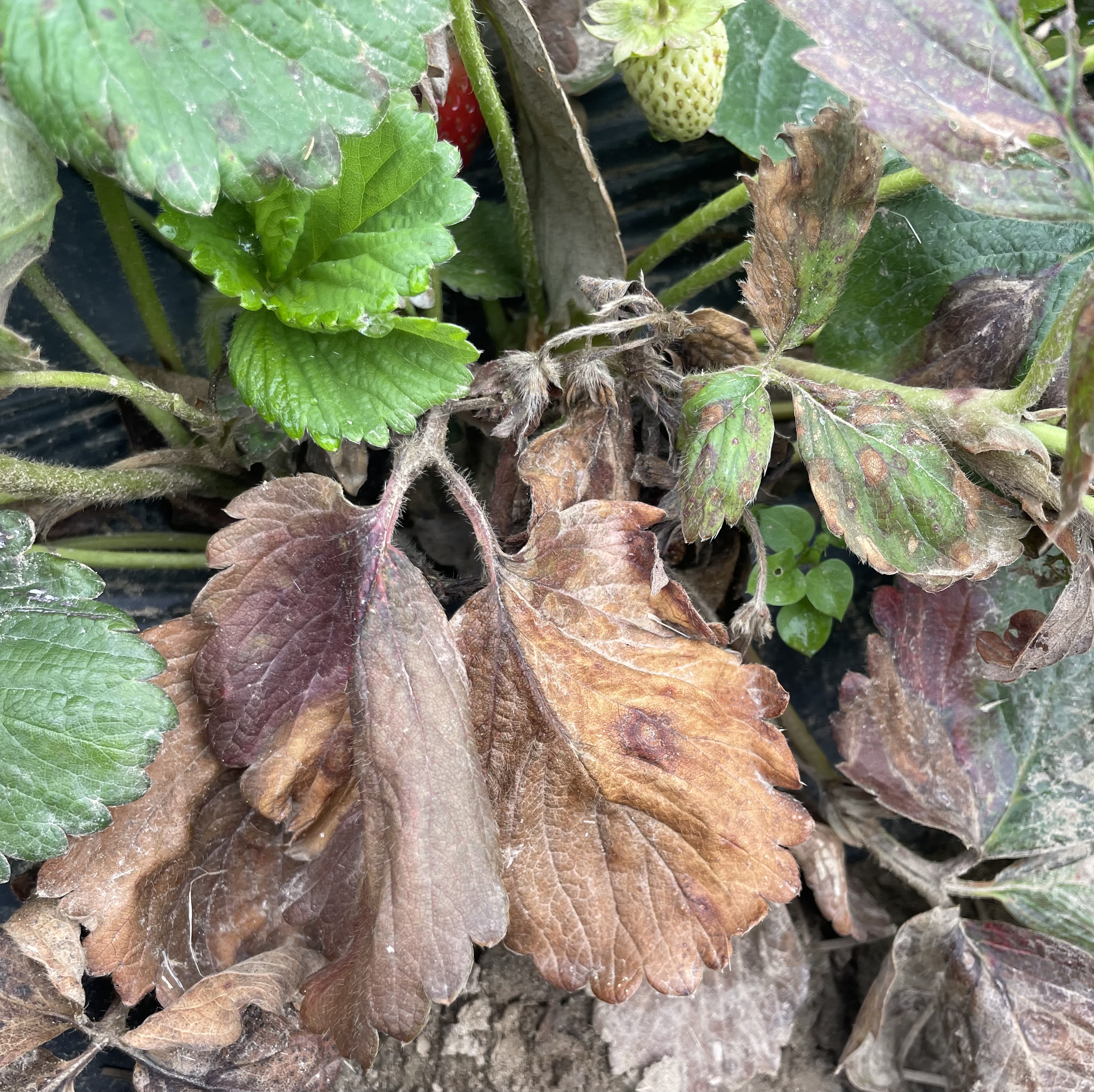
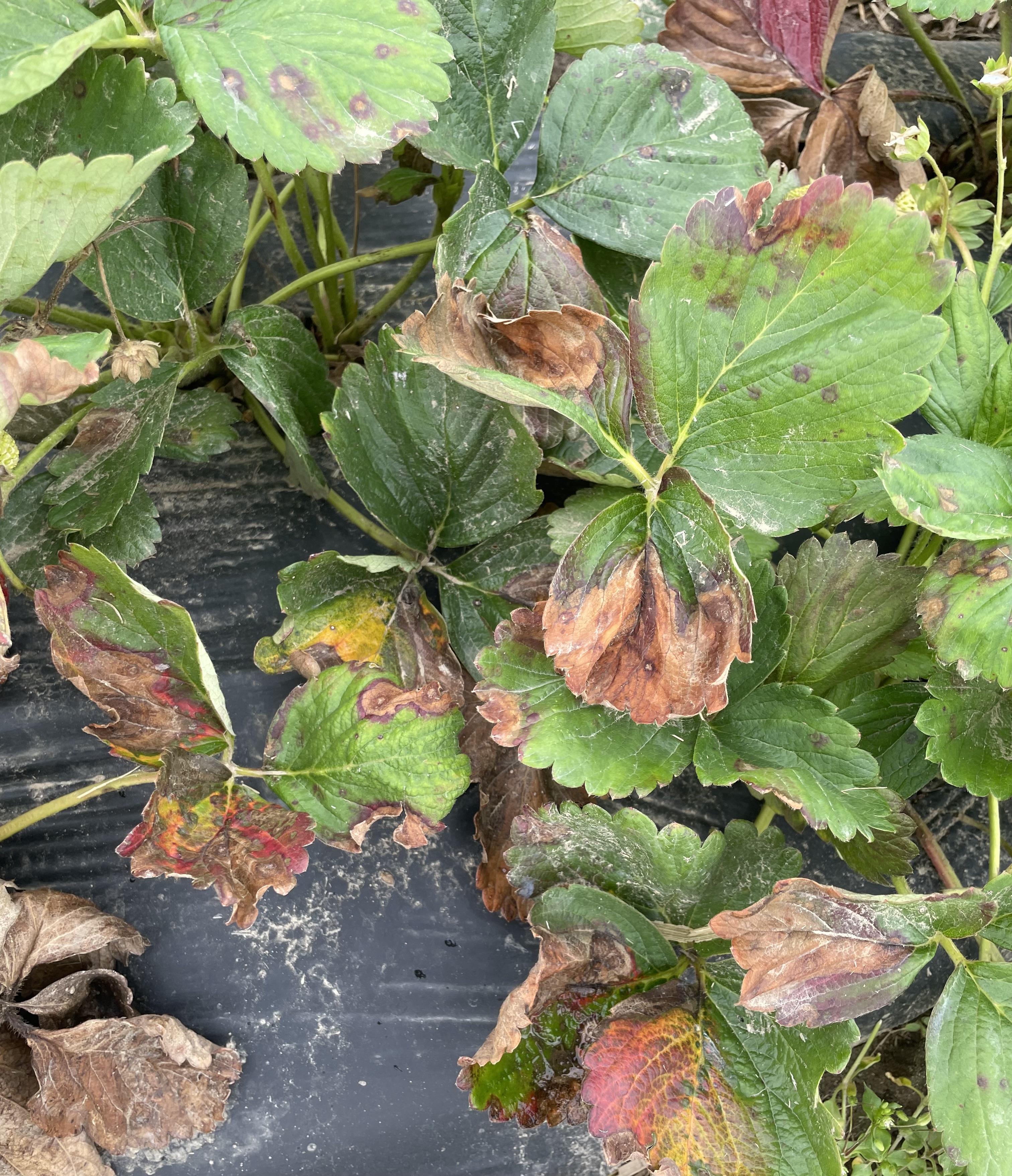
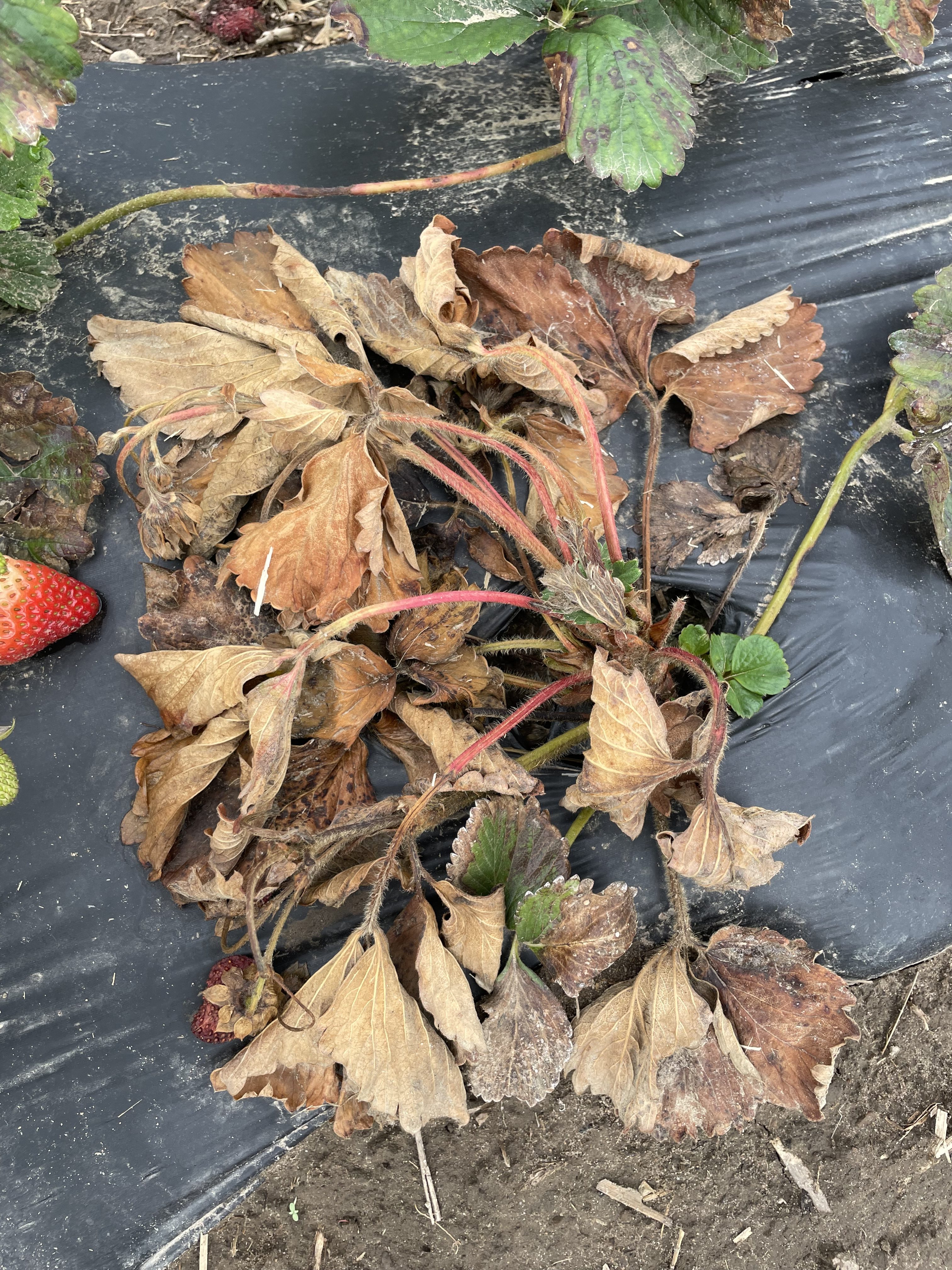
Fig1-3: Symptoms consistent with Neopestalotiopsis in strawberry, including leaf lesions, foliar blight, and plant decline.
Management Priorities
- Monitor spider mites, cyclamen mites, aphids, anthracnose, botrytis, and foliar diseases.
- Scout for potential Neopestalotiopsis symptoms and investigate unusual plant decline.
- Promote strong crown and root development in renovated and newly planted fields.
- Maintain weed control.
- Monitor bacterial angular leaf spot in new plantings.
Raspberries
Raspberry crops continue to perform exceptionally well.
Fall-bearing raspberries are entering a major harvest period, with the coming weeks expected to represent peak production in many growing regions. Growers continue to report:
- Excellent yields
- Strong fruit quality
- Healthy plant growth
- Positive customer response and harvest activity
Summer raspberry harvest is completed. Post-harvest management activities, including floricane removal, mowing, and fungicide applications where required, are ongoing.
Frequent rainfall and extended periods of morning moisture have created challenges for some field operations, particularly mowing and post-harvest maintenance.
Insects & Pests
Low levels of spotted-wing drosophila (SWD) continue to be detected in several regions.
Growers should continue:
- Monitoring SWD populations
- Harvesting fruit frequently
- Removing overripe fruit
- Maintaining good sanitation practices
Low levels of potato leafhopper activity have also been reported in some plantings.
Management Priorities
- Continue SWD monitoring and management programs.
- Maintain regular harvest intervals and field sanitation.
- Remove spent floricanes promptly following harvest.
- Monitor primocane development and late-season insect activity.
Blueberries
Blueberry harvest has largely concluded across Ontario. Most growers report few significant insect or disease concerns at this time. Plants generally remain in good condition following harvest, although some fields are showing signs of fatigue after carrying strong crop loads this season. New vegetative growth is evident in many plantings following recent rainfall and favourable soil moisture conditions.
Key Observations
- Few significant pest concerns reported.
- Good post-harvest plant recovery.
- Strong vegetative regrowth in many plantings.
- Weed pressure continues to be the primary challenge reported by growers.
Management Priorities
- Evaluate weed management programs and identify problem areas.
- Assess plant vigour and overall field health.
- Record disease and pest observations for future planning.
- Continue post-harvest irrigation and field maintenance as required.
Useful Resources
- Ontario Crop Protection Hub: https://cropprotectionhub.omafra.gov.on.ca/ Current pesticide registrations, efficacy information, resistance management recommendations, and product labels.
- Ontario Berry Production resources: https://www.ontario.ca/page/berries Production guides, pest management information, crop establishment resources, and variety information.
- Ontario Crop IPM: https://cropipm.omafra.gov.on.ca/ Identification, monitoring, and management information for insects, diseases, and weeds.