Have You Registered? IPM Workshops Start Next Week
The 2026 Integrated Pest Management (IPM) workshop series is just around the corner. REGISTER NOW to secure your spot!
Our first session, Introduction to IPM, kicks off next week, launching another season of practical, science-based learning designed to support scouts, growers, advisors, and industry professionals across Ontario. Whether you’re new to IPM or looking for a refresh, this workshop series provides valuable tools you can apply right away in your crop.
To register, please follow the registration link or call the Agriculture Information Contact Centre at 1-877-424-1300.
This is an introductory workshop that covers the basic information that scouts need to know. Topics that will be covered: the importance of integrated pest management, disease causal agents, symptoms and damage of insects and mites, scouting for weeds in horticulture crops, pesticide safety, soil diagnostics, symptoms of nutrient deficiencies, tissue sampling, invasive species and farm visit biosecurity. Other scouting workshops will build on this information and will be tailored to the specific crops.
Workshop Leader – Denise Beaton
Location – In person (Auditorium, Ontario Crops Research Centre – Simcoe, 1283 Blueline Rd., Simcoe ON)
Over this 3 hour virtual workshop, participants will learn about the basics of apple IPM, common pests to look out for over the season as well as orchard scouting tips and tricks. This is a condensed version of the in-person workshop, ideal for those looking for a refresher.
Workshop Leader – Kristy Grigg-McGuffin
Location – Virtual (link will be provided after registration)
Reference materials will be provided to attendees
Pre-recorded presentations posted on Apple IPM Resources. Come with pest-specific questions for Q&A.
This in-person workshop will cover the basics of apple IPM, identification and biology of common pests, as well as proper orchard scouting techniques. Portions of this workshop will be held outdoors, weather permitting.
Workshop Leader – Kristy Grigg-McGuffin
Location – In person (Auditorium, Ontario Crops Research Centre – Simcoe, 1283 Blueline Rd., Simcoe ON)
In-person spaces are limited so registration is restricted to potato scouts only. All other attendees are asked to register for the concurrent hybrid Zoom meeting.
Too Cold for Comfort: Risk of Frost Injury in Tender fruit
By Kathryn Carter, Fruit Specialist (Tender fruit and Grape), OMAFRA
Apricots, plums, and peaches are in various states of bloom, and overnight temperatures dropped as low as -2° or -3° C in several fruit growing areas, resulting in increased risk of frost injury. Cold temperatures can damage flowers, fruit buds, and young fruit. Damaged flowers will turn brown, wilt and drop from the tree. Cold injury to the flower pistils reduces and prevents pollination, while injury to the ovaries kills flowers.
The risk of frost injury is influenced by many different factors, including: timing/stage of crop development, weather conditions, variety/rootstock.
Spring Frost
As buds and blooms begin to swell it is important to watch the weather conditions and forecast for frost and implement frost mitigation practices accordingly.
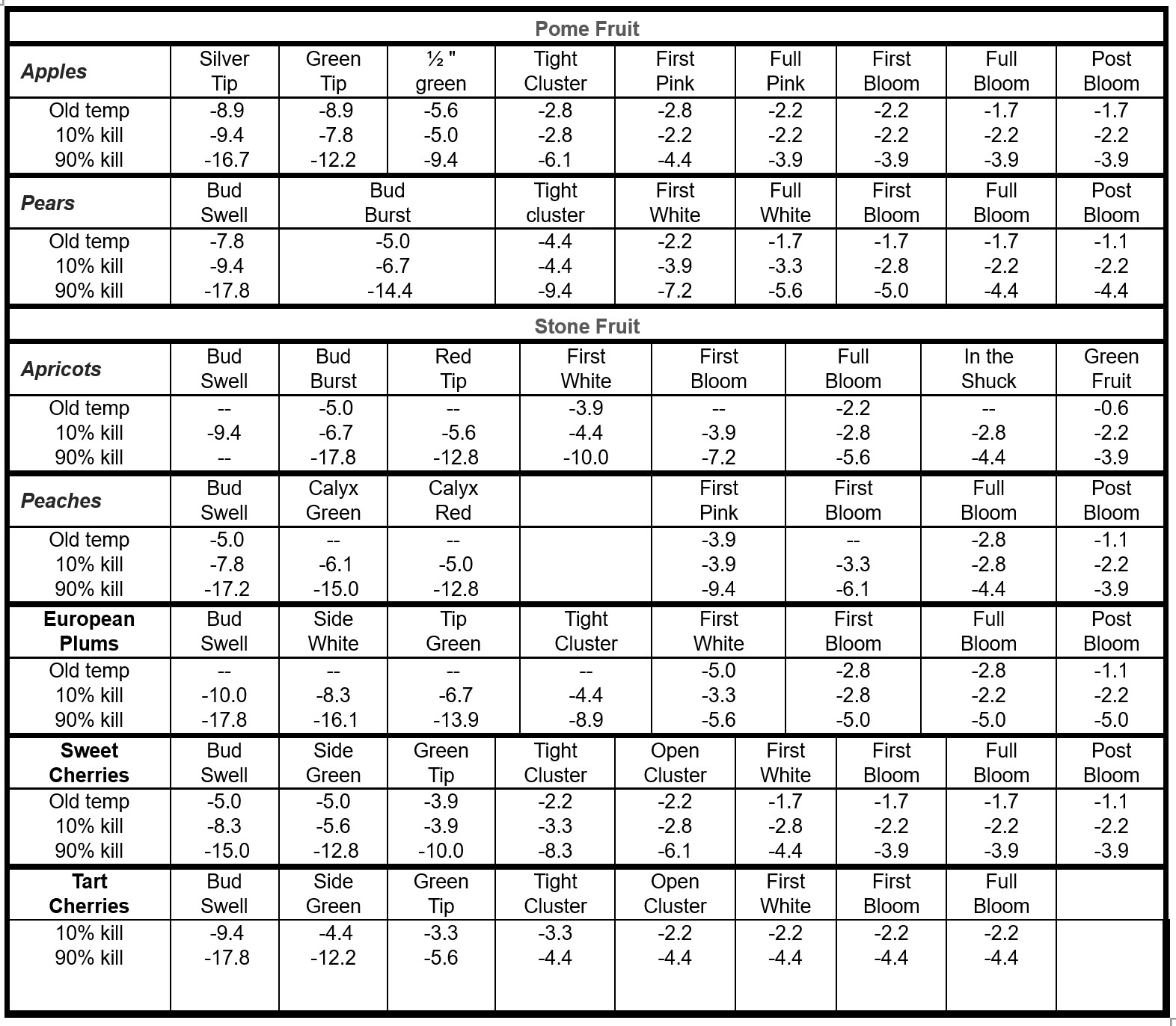
The table below shows the average temperatures required to kill 10 % and 90% of buds. Plants are not affected by windchill, so always use the actual air temperature when assessing the risk of frost injury.
Old standard temperature is the lowest temperature that can be endured for 30 minutes without damage. This chart also shows the temperature that will kill 10 % and 90 % of normal fruit buds. These numbers were taken from Washington (WSU), Michigan (MSU) and North Carolina (NCS) Extension Bulletins. Apple – WSU EB0913, Pears – WSU EB0978, Sweet Cherries – WSU EB11-2.2, Peaches – WSU EB0914, Apricots – WSU EB1-4.40, Tart Cherries – MSU Research. Rpt. 220, Portions of these bulletins are posted at Gregg Lang’s Fruit Bud Hardiness Page at the MSU Horticulture Department
Things to keep in mind
•Weather conditions preceding cold nights can affect bud hardiness. Prolonged cool weather tends to increase bud hardiness during the early stages of bud development.
•The cold intensity and duration of the cold event impact the severity of the damage.
•Cold injury can vary within individual trees, across a block, and between blocks, largely due to differences in topography and air drainage. Cold air tends to settle in low-lying areas or frost pockets, leading to greater injury in these locations-particularly in the lower portions of the tree.
•Developmental stages differ widely among crops and cultivars, strongly influencing their susceptibility to frost injury. Apricots are the earliest blooming crop and are more prone to cold injury than other crops. Cultivars with a delayed bloom (ie. cultivars such as Galaxy Donut, New Haven, Glowingstar, Starfire, Blushingstar, O’Henry, PF-24C) tend to be more resilient to frosts, while varieties that bloom early (PF-23, Suncrest, PF-19007, Glohaven and Redhaven) are more vulnerable to spring time frosts.
•Rootstock selection impacts the risk of frost injury. Guardian and Lovell rootstocks acclimate rapidly in the fall but also de acclimate quickly in the spring, which increases their vulnerability to spring cold events. In contrast, Krymsk 86 acclimates more slowly in the fall and de acclimates later in the spring, making it more tolerant of spring frosts.
Assessing cold injury in Tree Truit
After a frost event, it is important to evaluate for frost/cold damage as the extent of damage will impact future crop protection practices and thinning programs. It takes several hours for symptoms of frost damage to develop. As the frozen tissue thaws, affected tissue it will appear black or brown showing the extent of the damage. Collect 10 shoots, each with approximately 10 buds (100 buds total) from differing heights in the tree (high and low) and different locations within the orchard. Keep samples from different cultivars separate by bundling with flagging tape and a label.
Bring the samples back from the orchard and place the base of the shoots into a bucket (or a can) with water. Allow them to warm up at 21° C for a minimum of four hours, which will make the damage tissue become more apparent. Cut the buds or blossoms vertically, using a sharp blade.
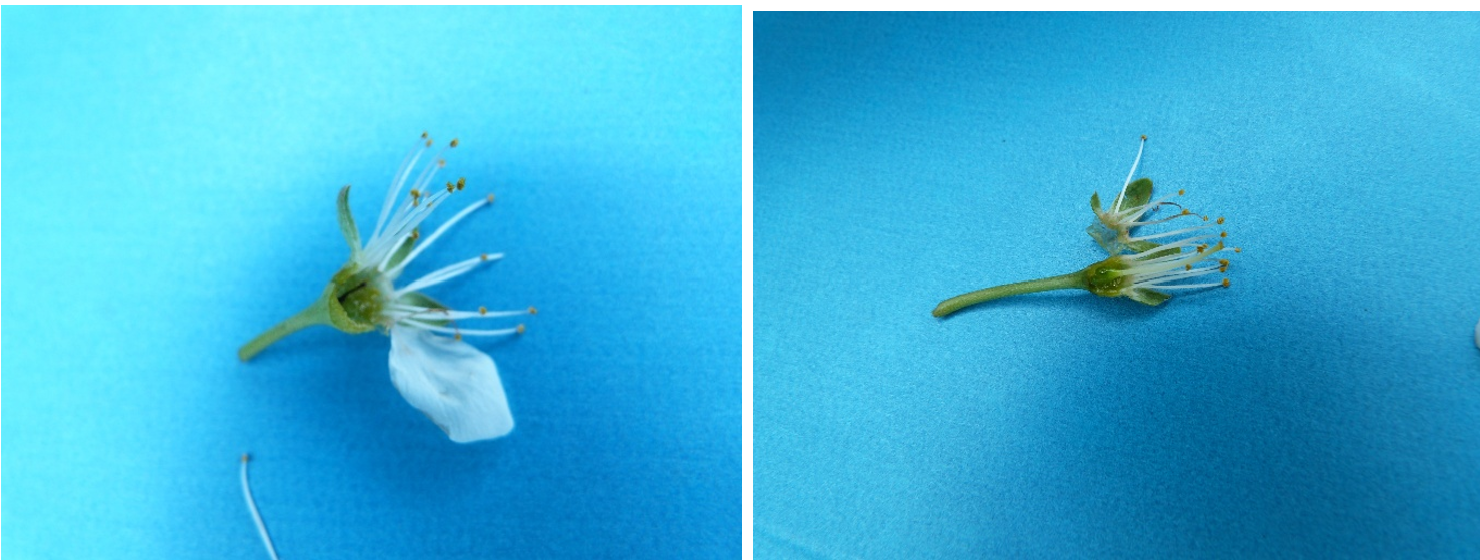
Stone fruit (peaches, nectarines, cherries and plums) flowers have a single pistil (the female part of the flower). If the pistil is brown or black (Figure 1) it has cold injury and the fruit will not develop. Injury to peach pistils can be more difficult to assess due to the fuzz. Healthy buds/flowers will have green pistils.
In apple and pear clusters the blossom in the centre of the cluster (king bloom) is the furthest advanced within the fruit cluster and is most likely to be killed in a frost event. The king bloom produces the largest fruit and is the most desirable of the flowers in the cluster. Frost injury assessments should focus on the king bloom. Pistils of apples and pears are buried inside the base of the flower, meaning it is necessary to tear the flower apart (cross section vertically) to see if the centre of the flower is brown or black. Often times, king blooms may have damage, yet side blooms remain undamaged. For additional photos of cold injury see Evaluating Tree Fruit Bud and Fruit Damage from Cold – Colorado State University Extension.pdf
Figure 1 Frost injury in cherry blossom with brown/black pistil (left) vs healthy bloom with green pistil (right)
Assessing the Impact of Frost Injury on Yields
Fruit trees have more blooms then are required to set a crop. With large fruit like peaches and pears, only 10% of the blooms need to set fruit for a crop, so small amounts of cold injury, can help with crop thinning. Smaller fruit like cherries require 50% fruit set for a full crop and are generally impacted by frost events.
Conclusion
The impact of cold temperatures on tender fruit trees varies depending on stage of crop development, weather conditions, variety/rootstock and production practices (crop load, harvest time). It is important to monitor weather conditions and check tree fruit buds for cold/frost injury as injury can have a significant impact on pruning and production decisions.
What the Crop?! Apple Update: April 17, 2026
Production and pest update brought to you by the OMAFA Apple Team: Erika DeBrouwer, Tree Fruit Specialist and Kristy Grigg-McGuffin, IPM Specialist
Grower Grind
Across the province, growers are in the later stages of pruning. No reports yet of any winter damage. The significant rainfall over the last 7-10 days has left soils saturated, making it difficult to get sprayers through without lightening the spray load. Despite the challenges, critical sprays are still getting on where they can. Meanwhile, apple staging has substantially changed over the past week due to warm temperatures.
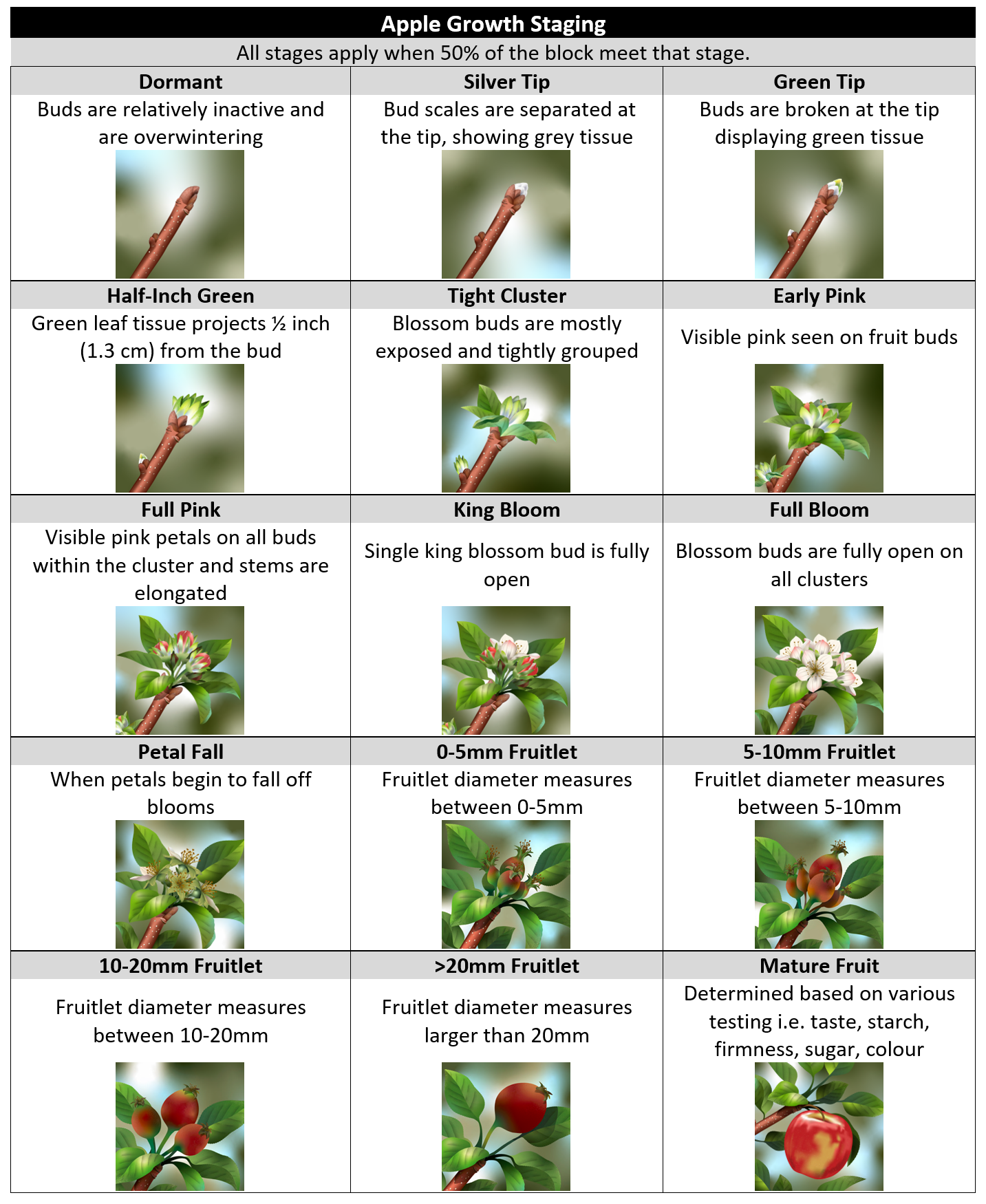
For a reminder of apple growth stages:
Growth Stages
Recent warm daytime and nighttime temperatures have really pushed development in early growing regions. Across the province, we are seeing the following growth stages:
Essex – Tight cluster to early pink
Chatham-Kent – Quarter-inch green to early tight cluster
Lambton, Middlesex, Elgin – Quarter-inch green to early tight cluster
Norfolk – Quarter-inch green to early tight cluster
Brant, Wellington – Green tip to half-inch green
Niagara – Half-inch green to early tight cluster
Grey – Green tip
Durham, Northumberland and Quinte – Green tip to half-inch green
Ottawa Valley – Green tip
Frosty the Threshold
Cool nights may be upon us in the near future (hopefully, not too cool). Here is a refresher chart, along with resources for frost mitigation and assessment.
Silver Tip
Green Tip
1/2 inch Green
Tight Cluster
First Pink
Full Pink
First Bloom
Full Bloom
Post Bloom
10% kill
-9.4
-7.8
-5.0
-2.8
-2.2
-2.2
-2.2
-2.2
-2.2
90% kill
-16.7
-12.2
-9.4
-6.1
-4.4
-3.9
-3.9
-3.9
-3.9
This chart also shows the temperature that will kill 10 % and 90 % of normal fruit buds. These numbers were taken from Washington (WSU), Michigan (MSU) and North Carolina (NCS) Extension Bulletins. Apple – WSU EB0913
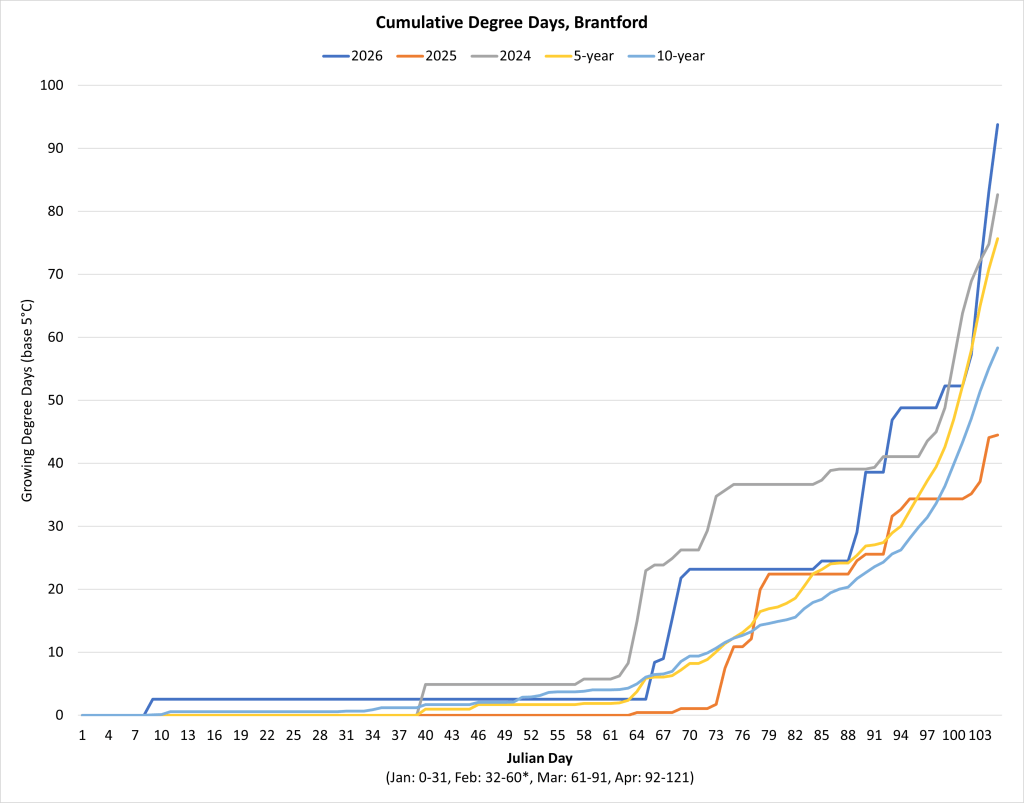
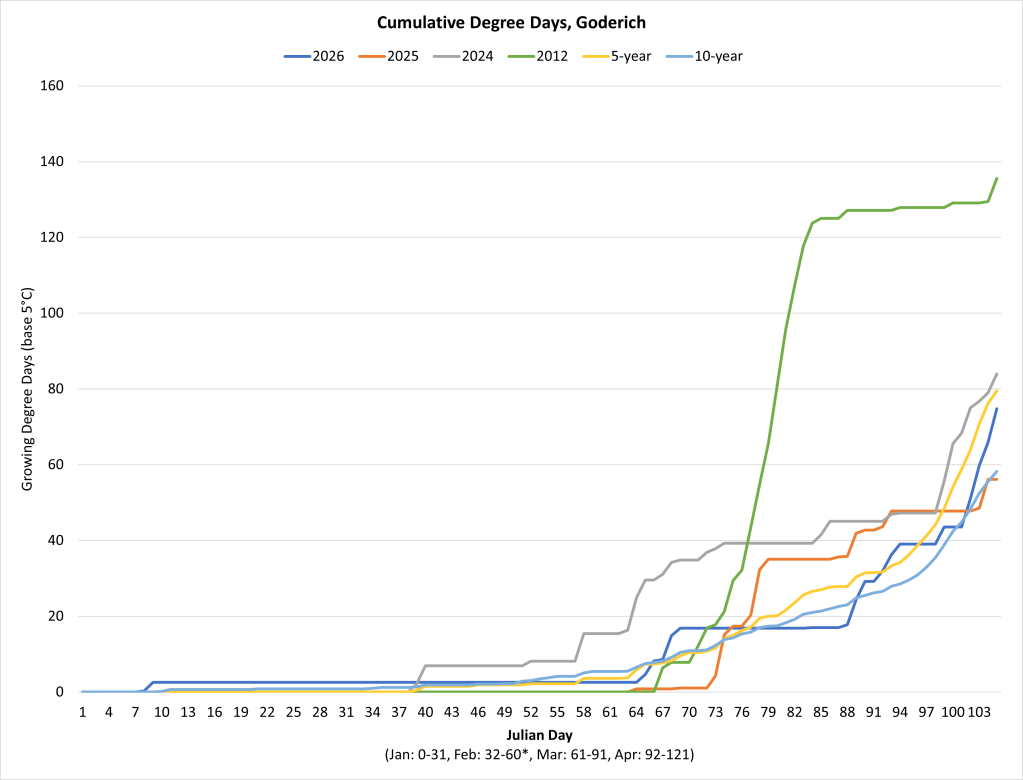
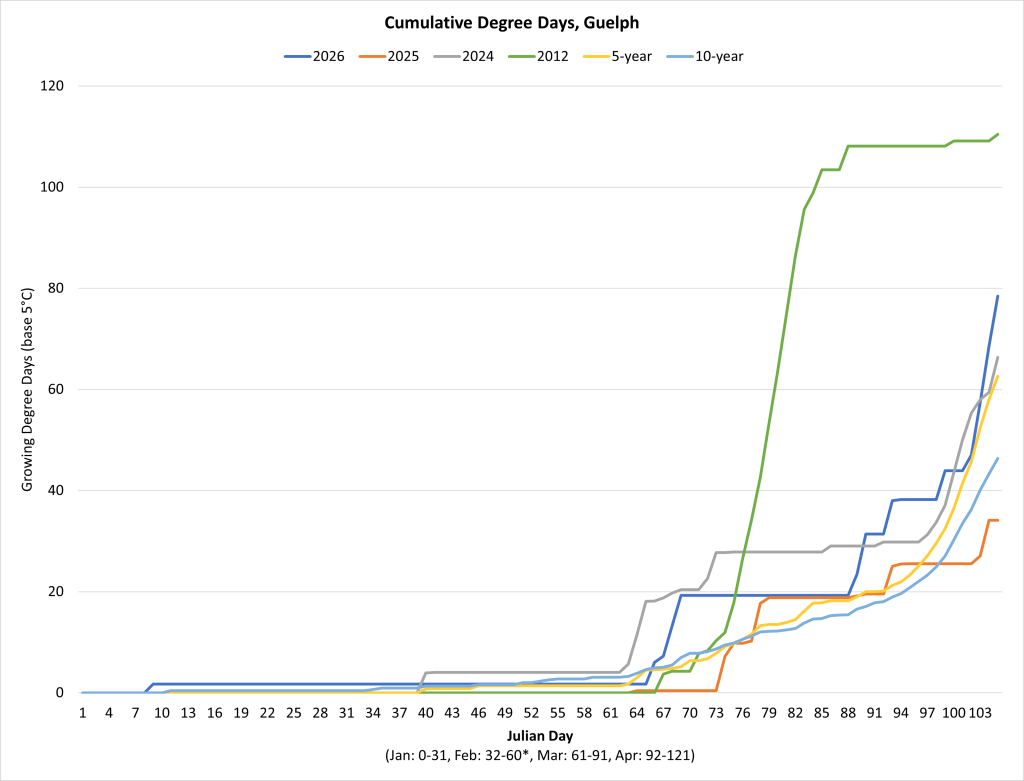
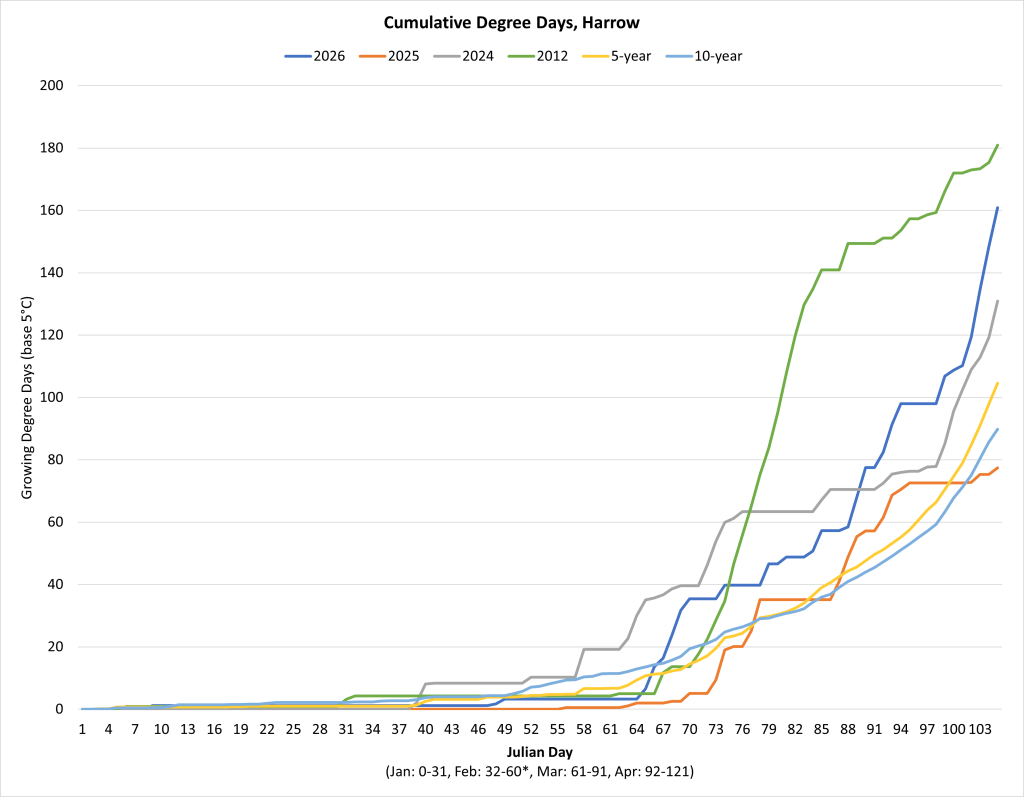
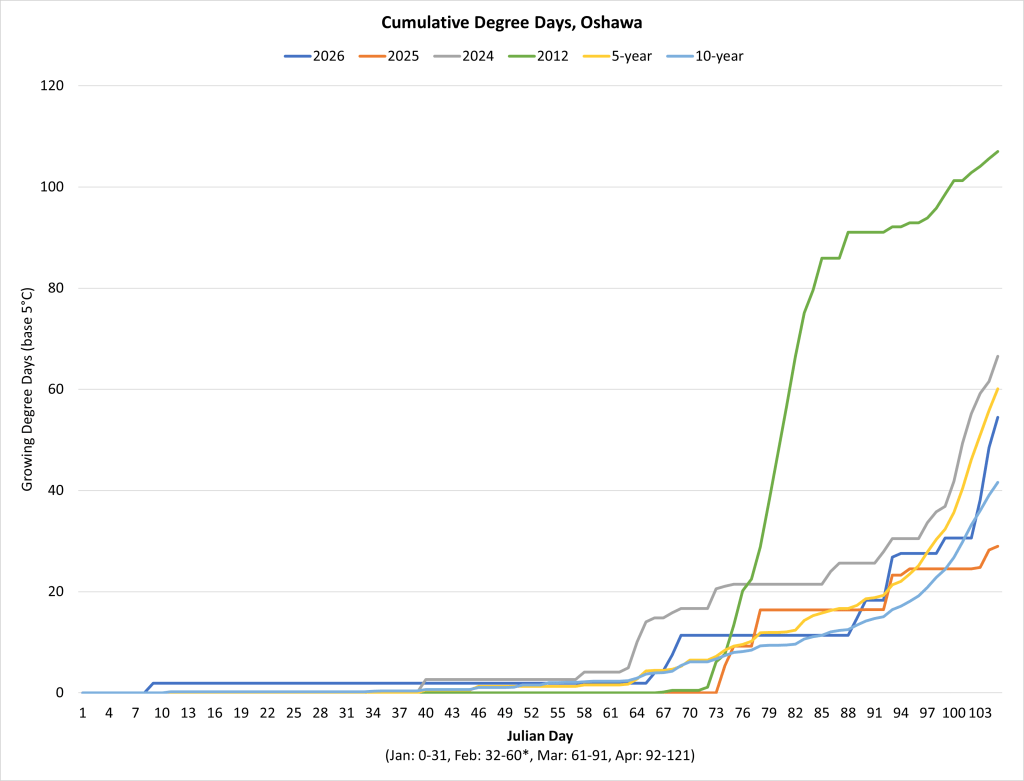
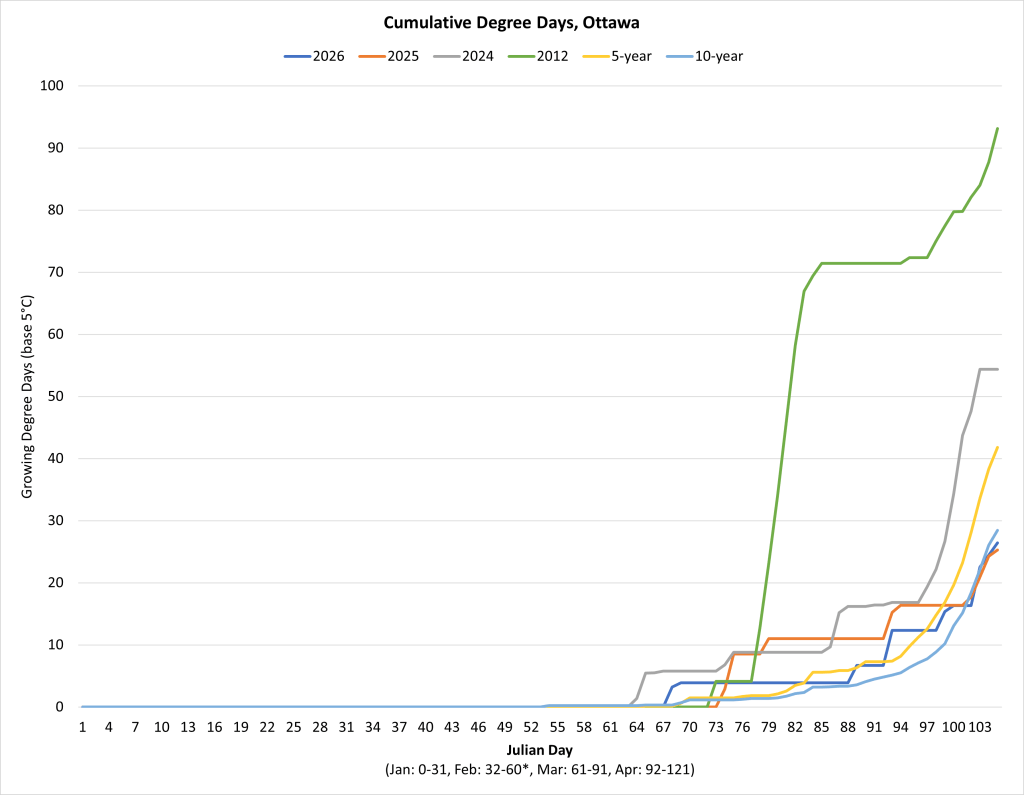
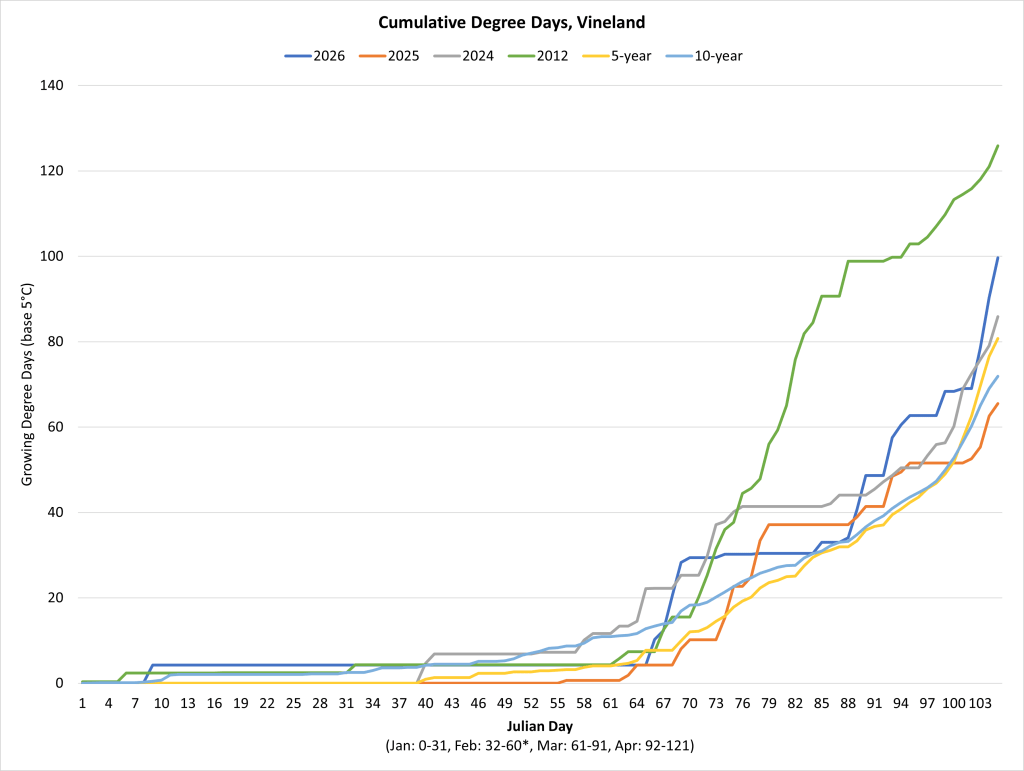
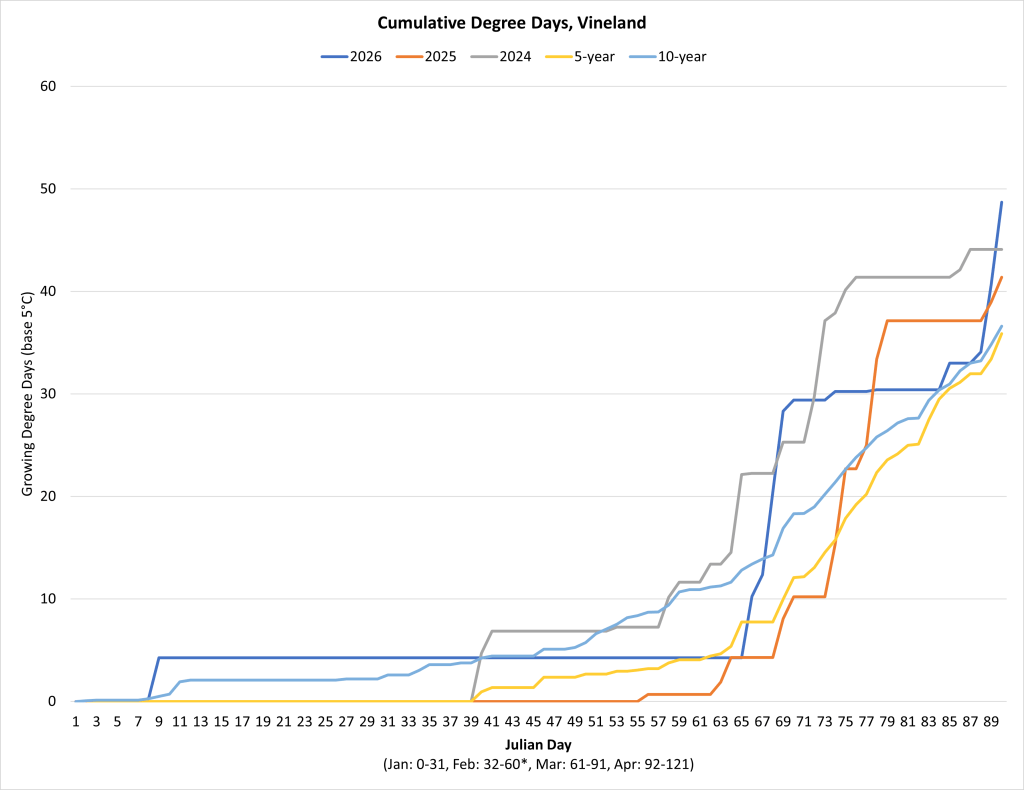
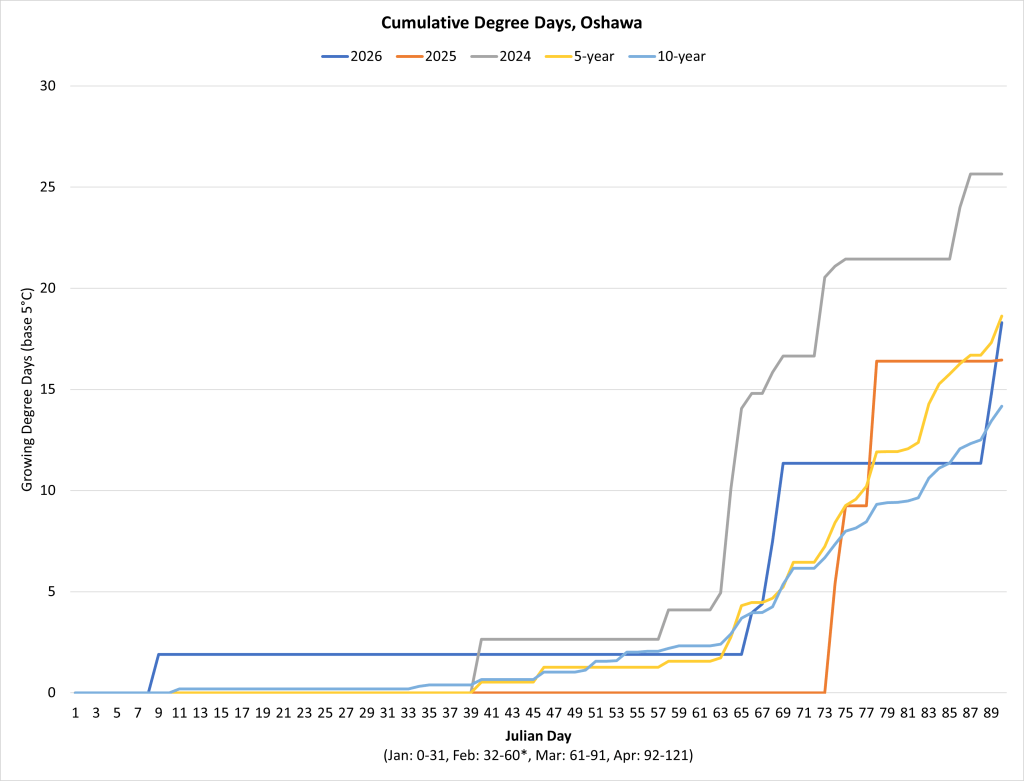
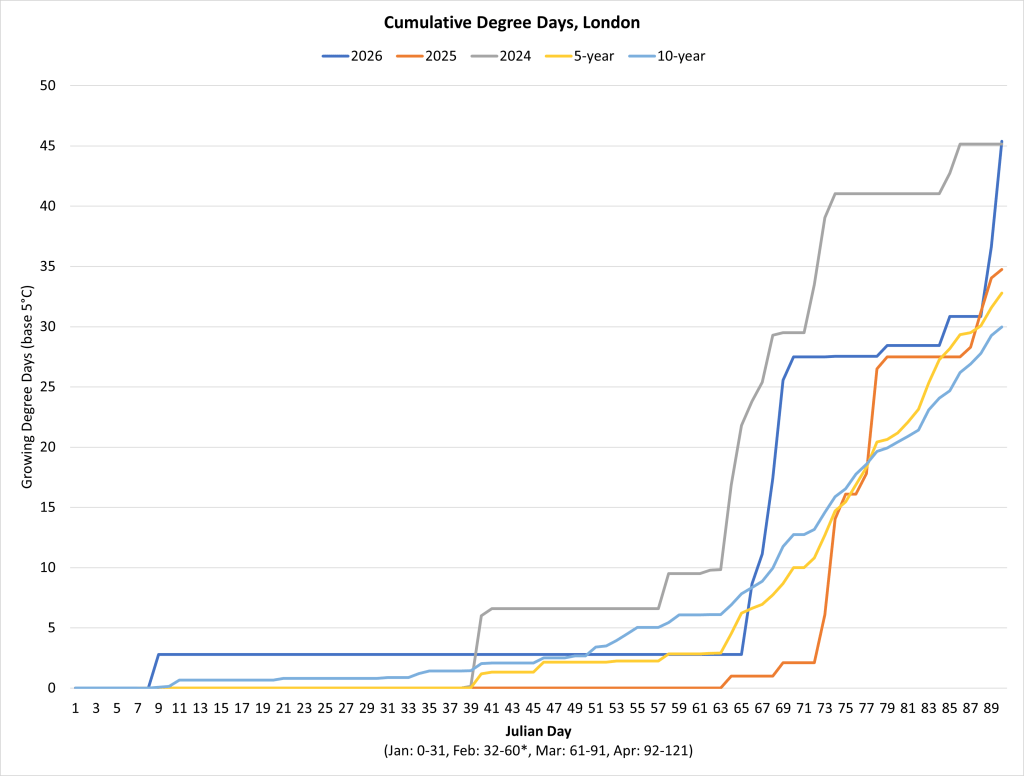
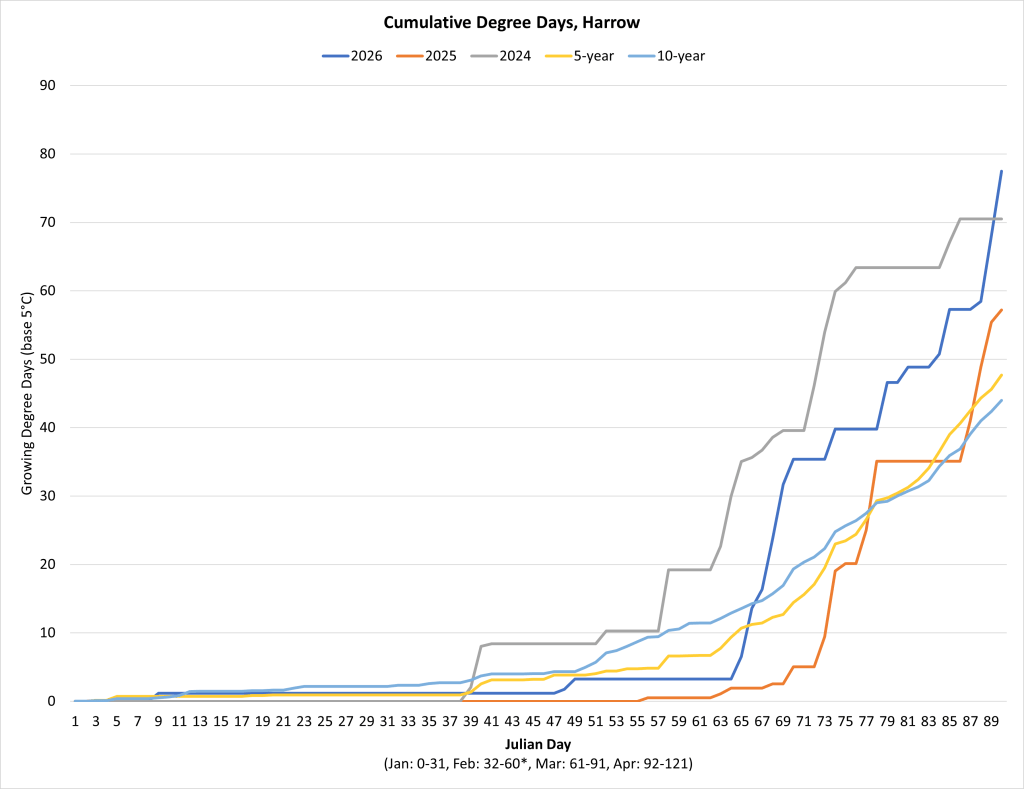
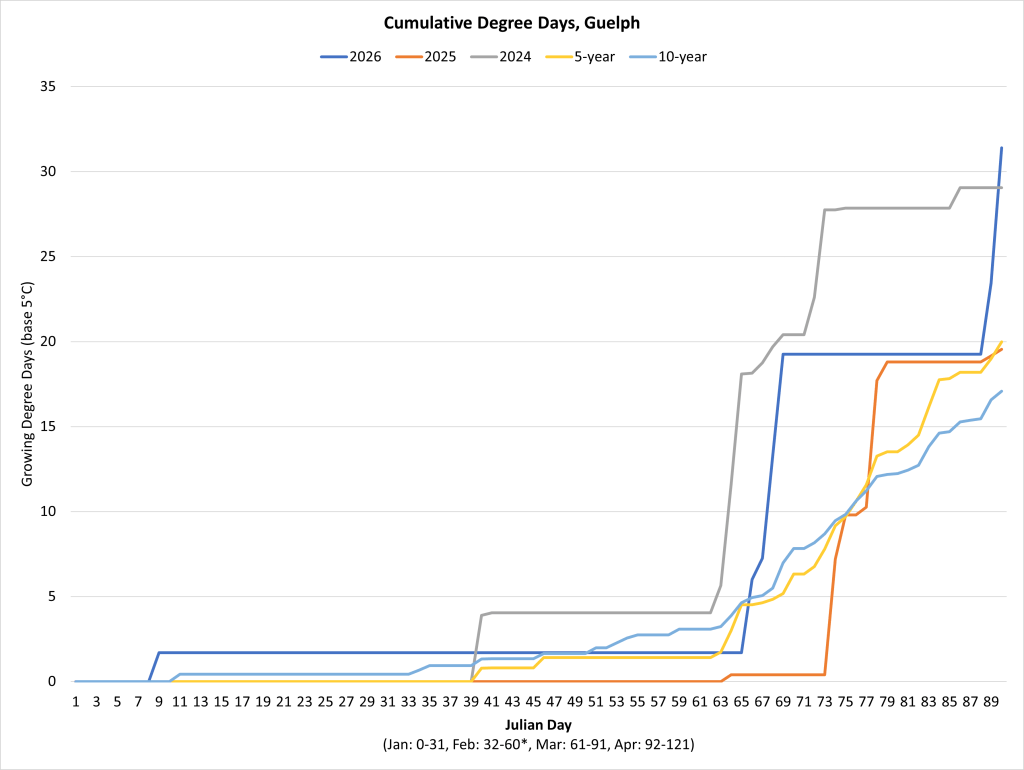
Across the province we are seeing the GDDs with base 5°C, starting January 1, accumulate ahead of long-term averages. Most areas are ahead of the 10-year average and close to or slightly more advanced than the 5-year average. This year is following a similar pattern to 2024, with warm daytime and nighttime temperature advancing the season quickly.
Key GDD Takeaways:
Recent seasons (2024 – 2026) show stepwise rather than smooth GDD accumulation.
Most locations show plateaus followed by jumps in GDDs, meaning – cool periods stall heat accumulation with short warm spells that add GDDs quickly.
2026 is ahead of the 10-year average and slightly ahead of 5-year average, not as advanced as 2012, but certain areas are catching up to or exceeding 2024 (location dependant).
Lake-adjacent sites start slower but accelerate rapidly once warmth sets in.
The gap between the 5-year and 10-year average of GDD is narrowing, suggesting that springs heat accumulation is longer than the norm and is drifting earlier.
Bud development and pest stages may change based on shifting weather patterns. Make phenology-based decisions, not calendar-based decisions.
Development is likely to advance in bursts, which could lead to complications in phenology predictions and spray timing.
Frost risk persists because development is advancing faster than frost-free dates.
The Wet Report
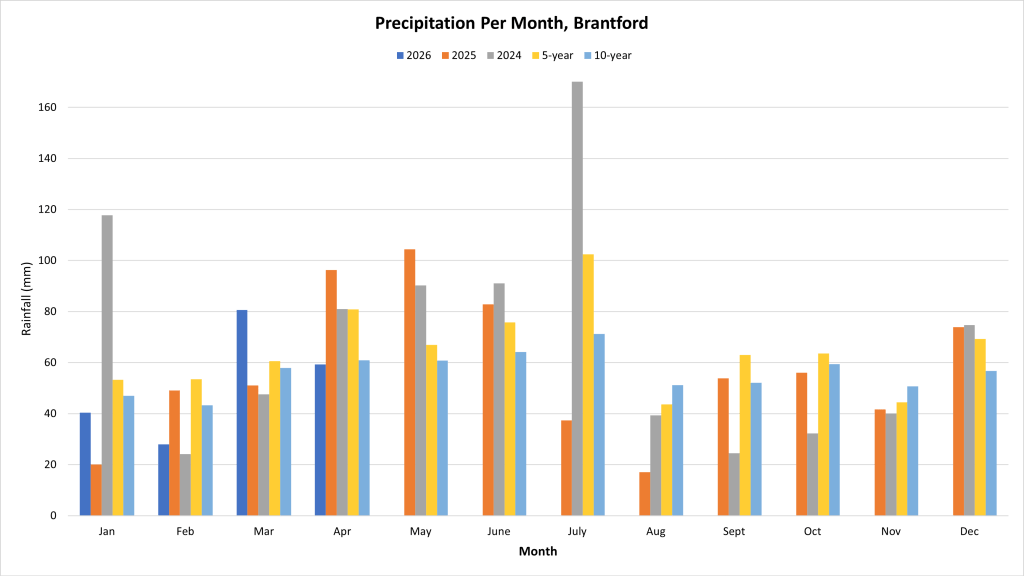
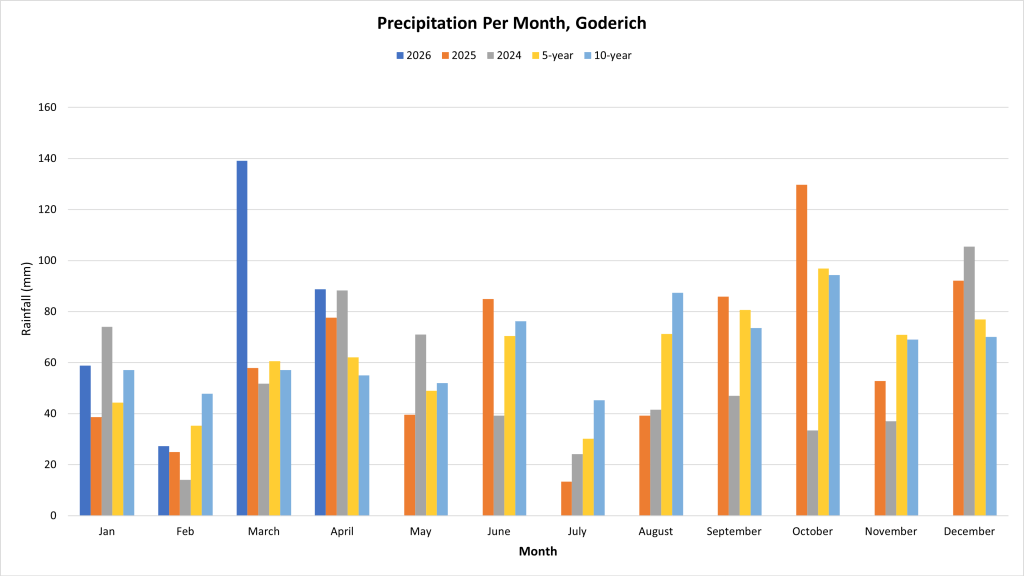
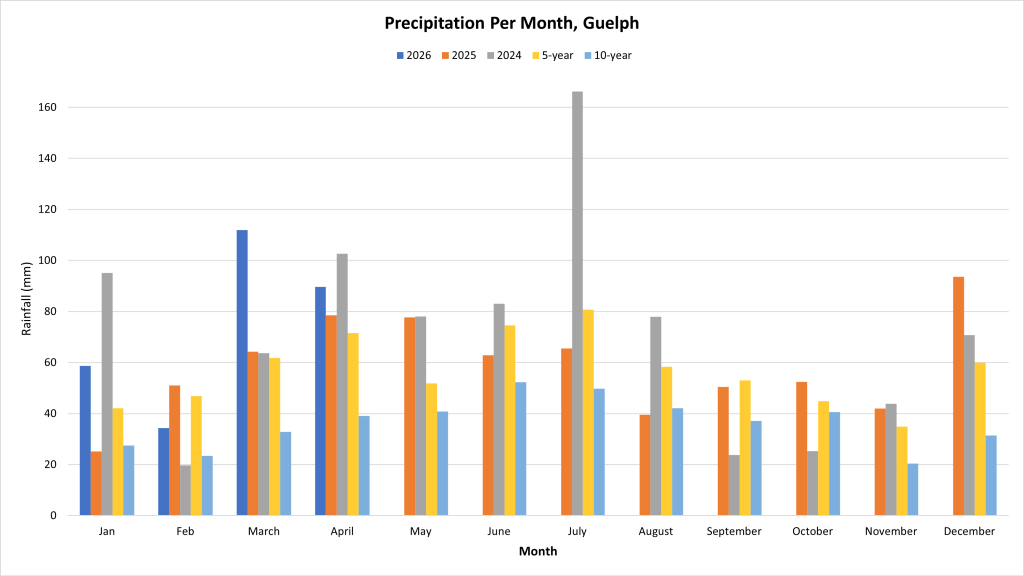
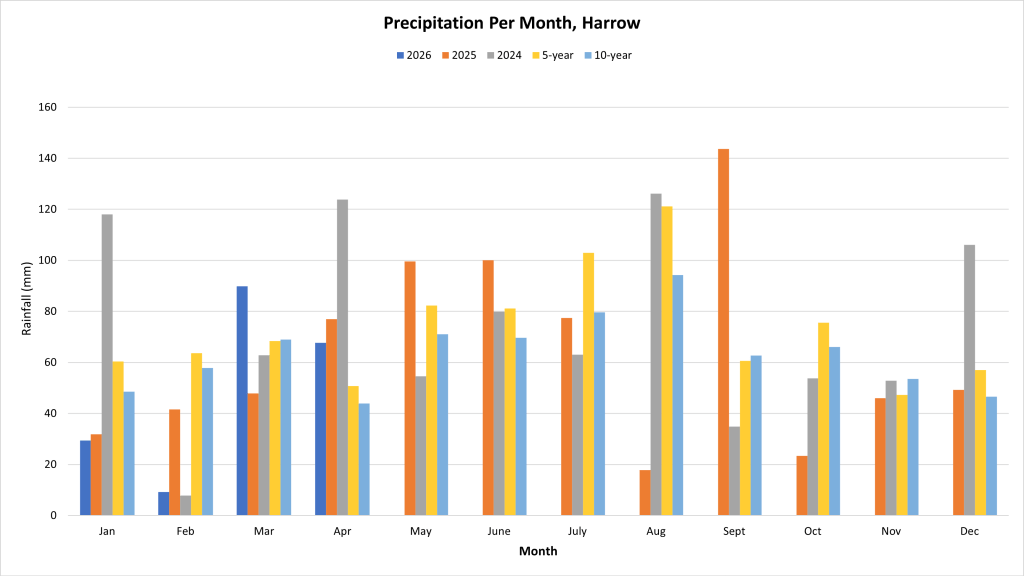
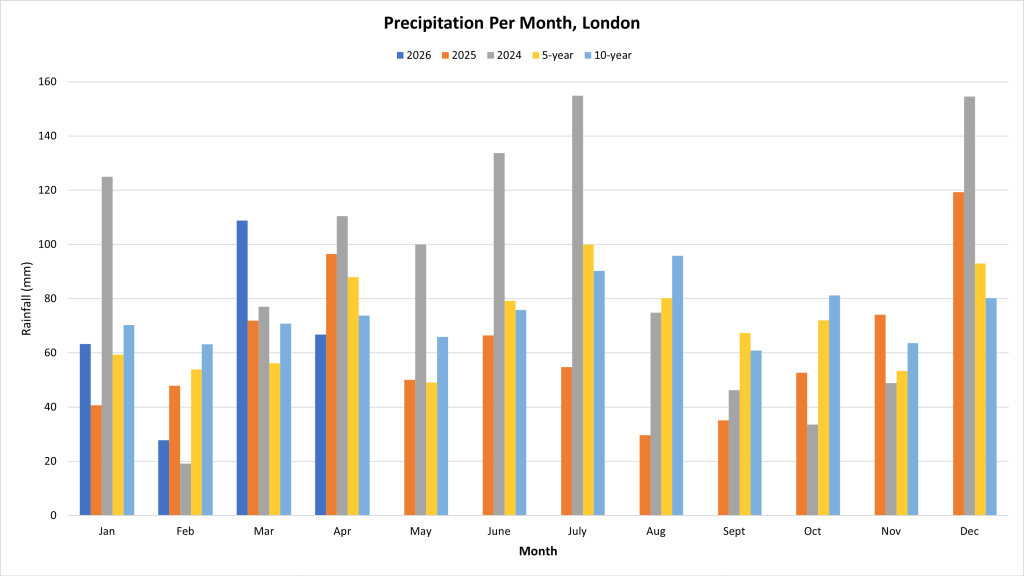
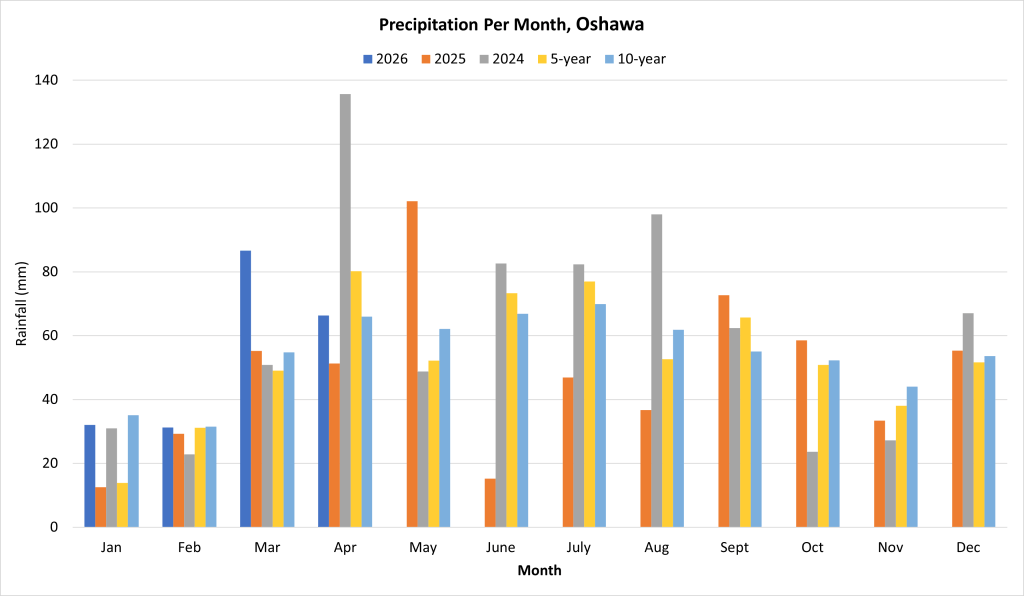
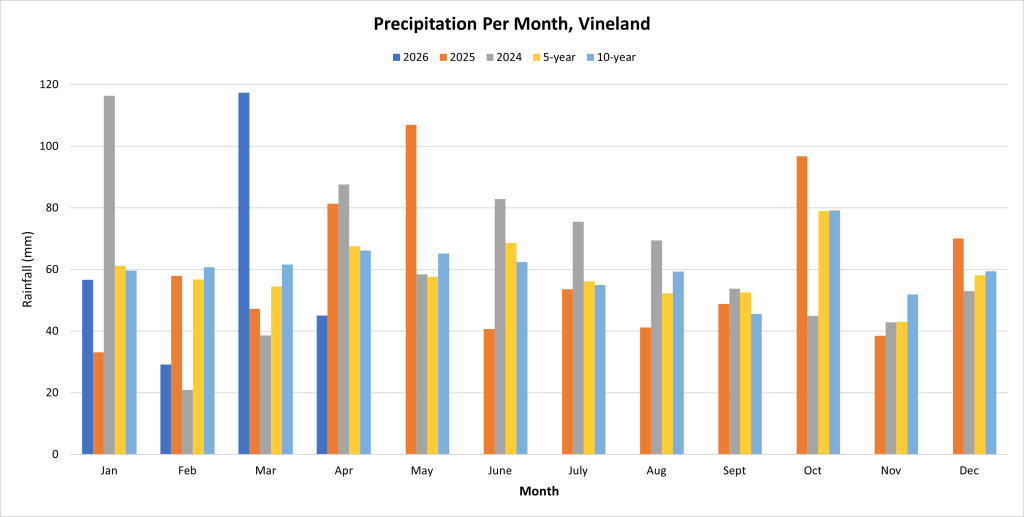
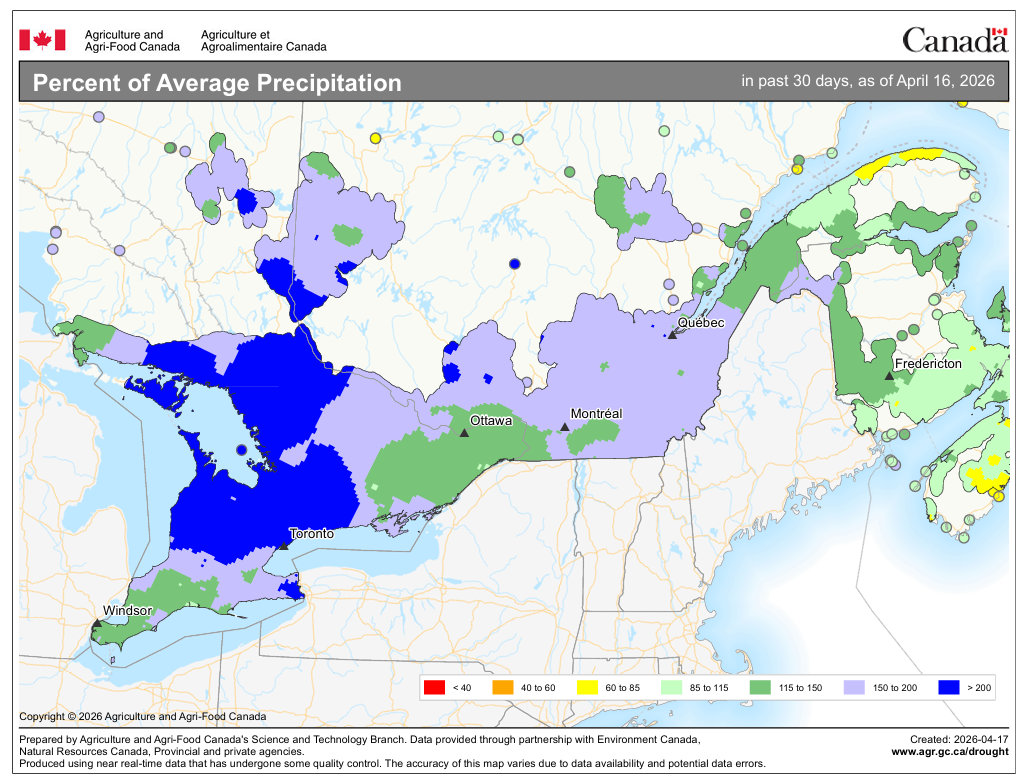
Ontario is experiencing spatial variability regarding precipitation since the beginning of the year. Some regions have experienced reasonable (and unreasonable) rainfall while some regions may be actively dry (Figures 1 & 2). Most apple growing regions have accumulated a significant amount of rain over the past week and the data shows that many locations have already accumulated more than the average for the month of April when we are halfway through the month.
Key Rain Takeaways:
Single months in some years are delivering 2× the 10‑year average, while other months fall well below normal.
2024 was consistently wet in mid‑summer; 2025 trends drier early, wetter later
2026 shows no consistent wet or dry signal (regional specific figures below).
Summer rainfall increasingly arrives in fewer, larger events with peaks in individual months (especially July, August, September).
The 5‑year average is often higher than the 10‑year average
Timing now may have more of an impact than amount due to inconsistent rainfall events. The timing and quantity have serious implications regarding — drainage, soil structure, and nutrient management response.
Due to last year’s drought, some regions may experience a need for soil recharge – keep an eye on moisture levels as there could be early season stress.
If you’re still sitting between dormant and half-inch green, there is still time to consider dormant copper for fire blight suppression and early-season scab reduction. Did you know that an early-season application of dormant copper can be just as effective as a mancozeb? But the window is closing fast!
Use caution:
Beyond half-inch green
Around freezing temperatures
In slow-drying conditions
Under these conditions, the phytotoxicity risk increases with copper being more readily drawn into the green tissue and can trigger bud damage or fruit russetting.
This is one of those sprays where timing matters more than intention – if you’re past the ideal growth stage, it’s better to pivot than push it.
With the warm weather and fast movement in green tissue, many growers’ priorities have shifted to protecting against primary apple scab. The rain events this week have likely resulted in the first apple scab infection(s) of the year for earlier regions of the province.
Primary infections are driven by overwintering inoculum. Orchards with carryover pressure from 2025 are at higher risk of early, aggressive infection events and exponential problems later season. If you saw scab last year, do not skip early season sprays and keep the schedule tight (5-7 day intervals) during high infection risk times. With the warm temperatures, infection events can occur in less than 10 hours of leaf wetness.
Apply protectant fungicides (e.g., mancozeb, captan, folpet) now if not already covered. Most of the available mature spores are discharged within 2 hours after the start of a wetting event. If using protectant fungicides alone, remember these are contact fungicides and do not provide effective post-infection or anti-sporulant activity.
If heavy rains greater than 2″ occur, residues will have likely been washed off. Reapply at any break in the rain if things continue over a period of days. Be prepared to cover again once things dry up.
If there are any concerns about residue wash-off, you may want to consider going in after the rains have stopped with a post-infection, or kickback product. Keep in mind, the timing for kickback activity starts at the beginning of the infection period, not after the rain stops or at time of application. For example, at 16C an infection event begins at 6 hours of leaf wetness. If a product has 48 hours of kickback activity, it begins at that 6 hour mark, even if the rain continues after that point.
There are several registered scab products that have post-infection, or kickback activity. Refer to Characteristics of Apple Scab Fungicidesfor more information.
Kickback Tips
For resistance management, do not rely on kickback activity.
Continue to prioritize protectant products ahead of infection events and rotate modes of action to reduce selection pressure.
Some products perform better in cooler weather than others, including Syllit (do not use beyond tight cluster), Scala, Inspire Super, Luna Tranquility, Migiwa, and Buran.
This doesn’t mean these products don’t work in warm weather, but that they are just as effective in cool stretches.
If things are further along in development (tight cluster and on), consider products that belong to Groups 3, 7 or 11 to provide more broad-spectrum disease control, such as for powdery mildew or rust.
Reminder, powdery mildew thrives in warm, humid (but not wet) conditions – see the next section below!
Where possible, tank-mix systemic fungicides with a protectant such as a Group M (mancozeb, captan, folpet) or a biological product.
Fluazinam (Allegro, Vantana, Downforce) does not offer post-infection activity; this is a contact product.
What About Mildew?
While it might seem a little pointless mentioning powdery mildew in the midst of rain (hint: rain deters powdery mildew development), things will eventually dry up. High powdery mildew pressure in recent years followed by the mild winter could be an unwelcome mix resulting in an early spring arrival of this disease.
Be sure to consider a mildew protectant such as a low rate (3-5 kg/ha) of sulfur in your early season scab program, especially on susceptible cultivars or orchards with a history of powdery mildew. Continue this until tight cluster when more systemic fungicides with mildew activity like the Group 3, 7 and 11s start to be used. Watch your use of sulphur around oil sprays – read the product label for more information.
As mentioned, rain washes off powdery mildew spores. Instead, mildew is spread by wind and thrives in dry weather and high relative humidity. So, protectant sprays may still be required when things dry up and there is little risk from apple scab.
In addition to familiarizing yourself with the maps, now is also the time to consider pre-bloom immune boosting strategies, especially in blocks with a history of fire blight. Products like Lifegard or Regalia can be applied pre-bloom to activate host plant defenses and better prepare the tree for any upcoming infection risk.
These are not rescue products and do not replace blossom blight management. They work best before pressure begins, not during it.
Has Scale Tipped?
As buds move into green tip and beyond, the window for true dormant control of scale is quickly closing. The smothering action of oil reduces in efficacy for scale and may not provide consistent control as the immature nymph emerges from dormancy and begins maturing.
If the dormant window has passed, it’s better to shift strategy to control of the crawler stage, when scale are most vulnerable and exposed. That means planning ahead for in-season applications using degree-day models, typically around early to mid-June (1st generation) and August (2nd generation). Pre-bloom management using products currently registered for scale has not been tested in Ontario and efficacy in not known.
This timing mindset is opposite of how growers often think about oil for mite management – which is why timing is sometimes applied too late for scale. While scale depends on an early dormant window for maximum impact, oil applications for mites are best applied delayed dormant into tight cluster to target the developing eggs.
Save the Date! Apple IPM Workshop
Looking for a chance to refresh your knowledge of apple IPM? New to growing or scouting apples?
Join me for an Apple IPM Workshop!
VIRTUAL – Monday, May 4th from 9:00AM – 12:00PM
IN-PERSON (Simcoe) – Tuesday, May 5th from 9:30AM – 3:30PM
We will discuss common orchard pests, scouting techniques for various insects and disease, tools of the trade, safety protocols and tips for success. Time will also be available to answer any pest-specific questions regarding pre-recorded presentations available on the Apple IPM Resources page.
Production and pest update brought to you by the OMAFA Apple Team:
Erika DeBrouwer, Tree Fruit Specialist and Kristy Grigg-McGuffin, IPM Specialist
And just like that – the 2026 apple season is officially underway! We will start back to sharing pest and production updates from across the province, including timely management insights, resources, and upcoming events. Follow along throughout the season.
Grower Grind
Growers have been in their orchard for a bit, taking advantage of the (previously) consistent weather to prune. Keep an eye out on the weather before making any future cuts as limbs can take up to 2 weeks to fully heal after pruning.
Growth Stages
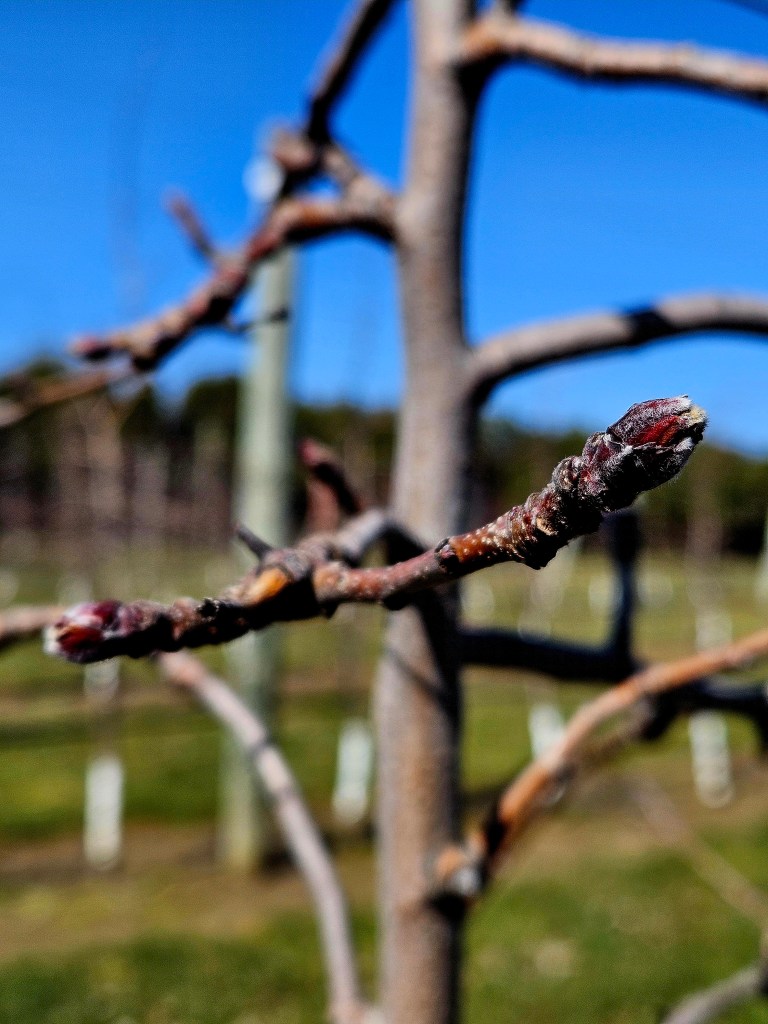
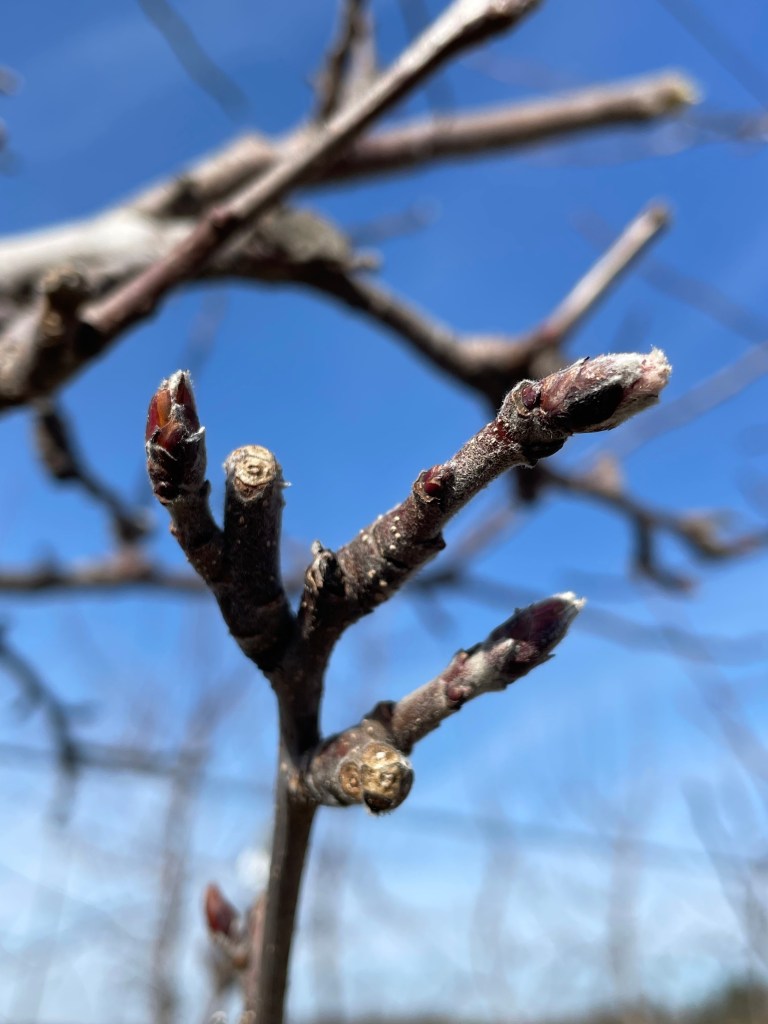
Early growing regions are reporting silver tip, with the first hints of green tip emerging on early cultivars like Golden Russet.
Silver tip on HoneycrispSilver Tip on Brookfield Gala
Phenology Clock Advancing (GDDs)
Looking at 7 locations across Ontario the accumulation of Growing Degree Days (GDD) are shown in the graphs below. All GDD started January 1 of each year with a baseline of 5ﹾC.
To view next graph location > click and drag
It is still early to determine what we may see this spring – but in warmer regions of the U.S. they are noticing earlier development by 14 days. As we all know, the weather can change drastically and quickly, therefore these graphs are for your awareness and allow you to compare your current season to past seasons and/or regions in preparation for what may come.
Takeaways:
Brantford, Guelph, Harrow, London, Vineland seem to follow the 2024 spring season (as a reminder of the 2024 season, we were ahead by 10 to 14 days in the spring which continued up to harvest. Some regions were affected by frost).
Oshawa, Goderich are showing a slower accumulation, but is staring to peak and rise to and be comparable to the 2024 spring.
Harrow (77.5) is the most advanced for GDD currently, followed by Vineland (48.7) and London (45.4)
WE NEED YOU! We are collecting bud break data from Ambrosia, Honeycrisp, Gala and McIntosh to be used for future production- and pest-related prediction models. Please fill out this survey to help!
With development kicking off, it’s time to turn your attention to early season pest management. Let’s go through the checklist of things to consider:
Apple-y Ever After Starts With Sanitation
The first line of defense for pest management in an orchard is prevention. There is no silver bullet to eradicate something like disease once it becomes well established. Instead, management is about reducing inoculum and preventing spread to healthy trees or fruit.
Cut It
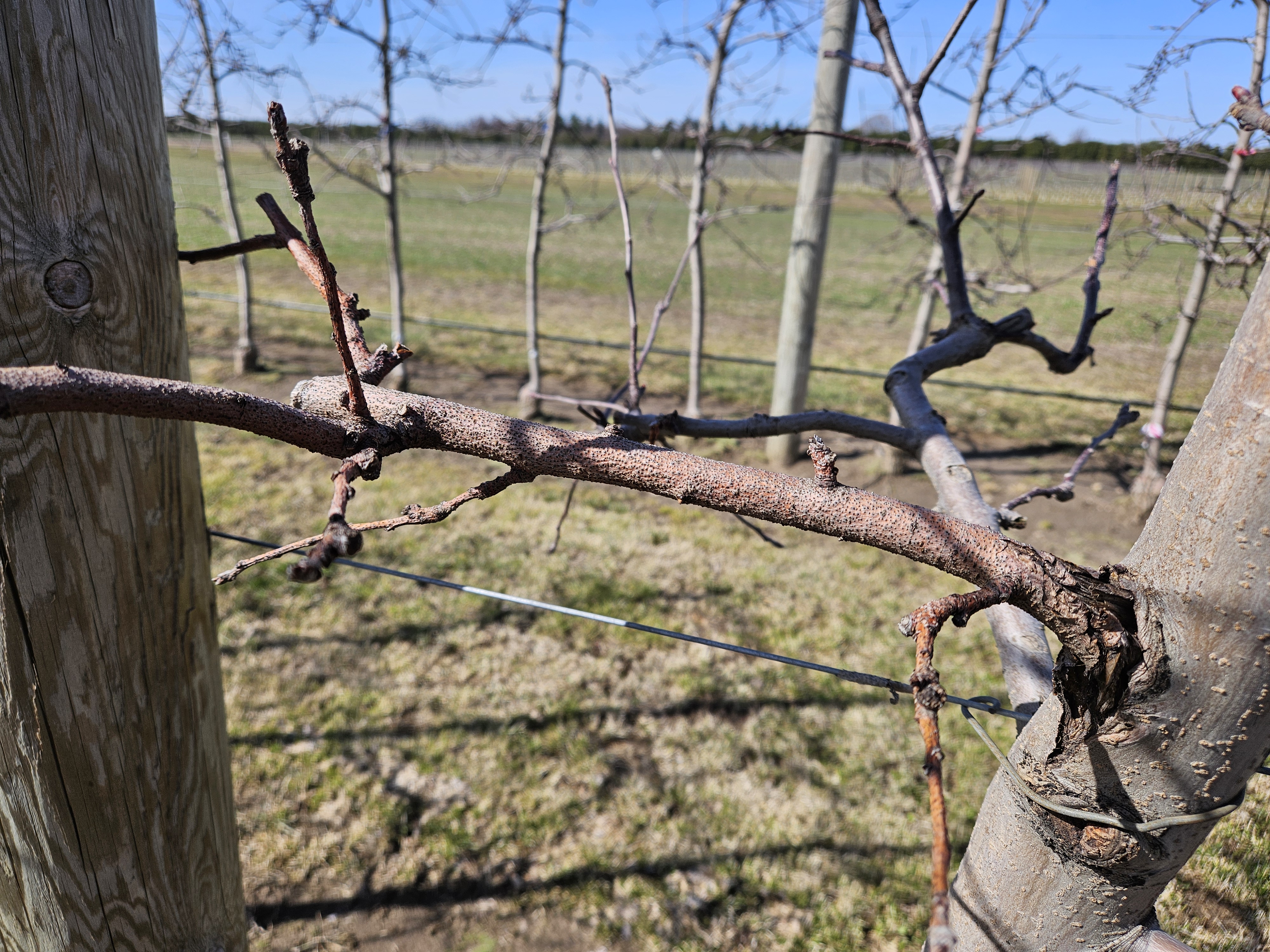
Prune out dead or diseased limbs, trees or signs of cankers as well as rotten or mummified fruit. These can harbour overwintering pests, such as fire blight, black rot or bitter rot.
Remove It
Get rid of wood or cull piles, stumps or old bins that may have been in or near the orchard over the winter. These often provide overwintering sites for insects, such as codling moth and plum curculio.
Mow It
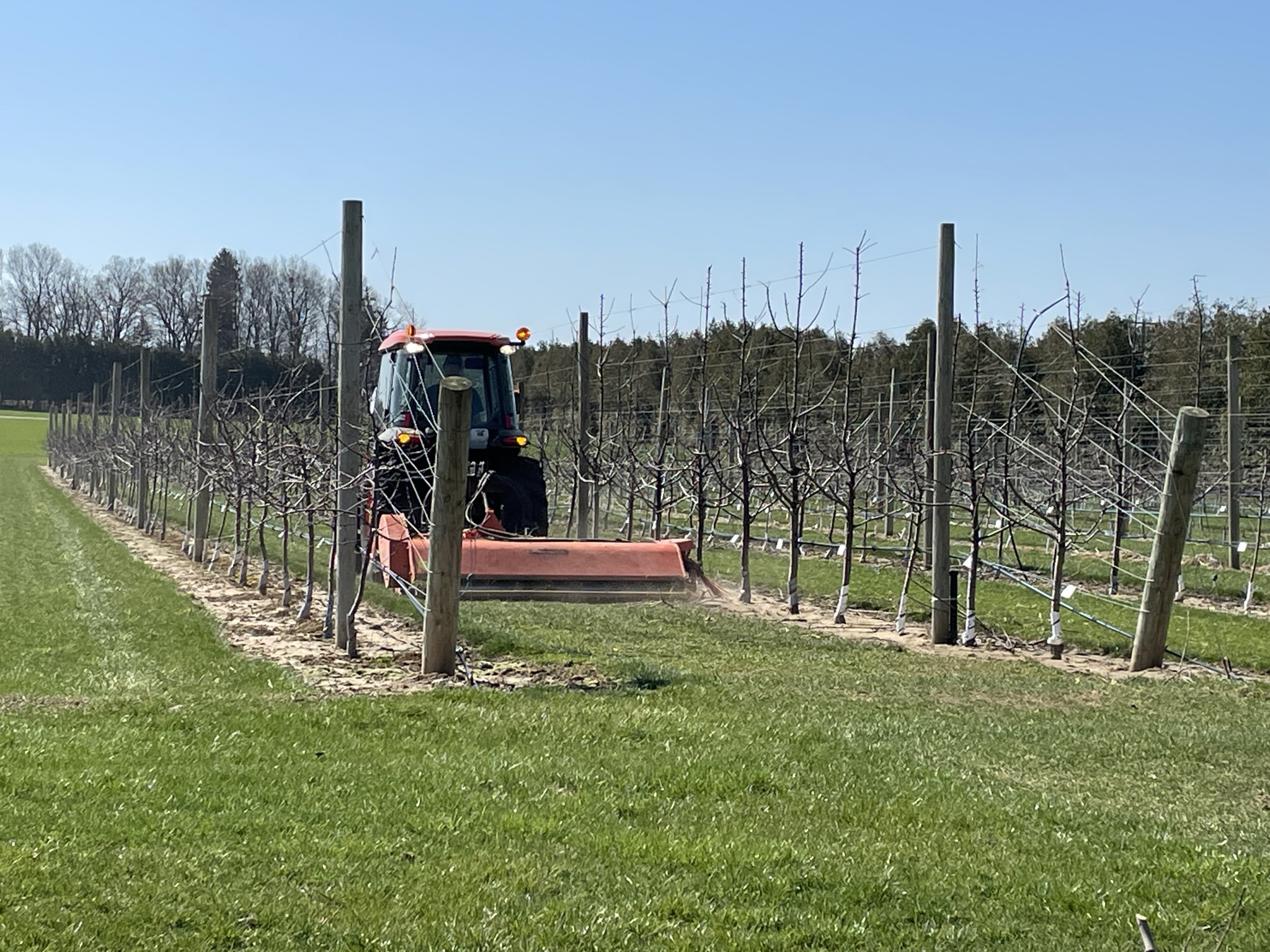
If the ground is dry enough to get the tractor through, flail mow the orchard floor to mulch up leaves, branches and fruit to encourage decomposition.
Note: Spring-applied urea should go on after snow melt, while the tree is still dormant to facilitate leaf decomposition. If buds have already broken in your orchard, urea applications for inoculum reduction are likely not worthwhile. Flail mow instead.
Dead limbs and cankers can harbour overwintering pathogens, such as fire blight, black rot or bitter rot.
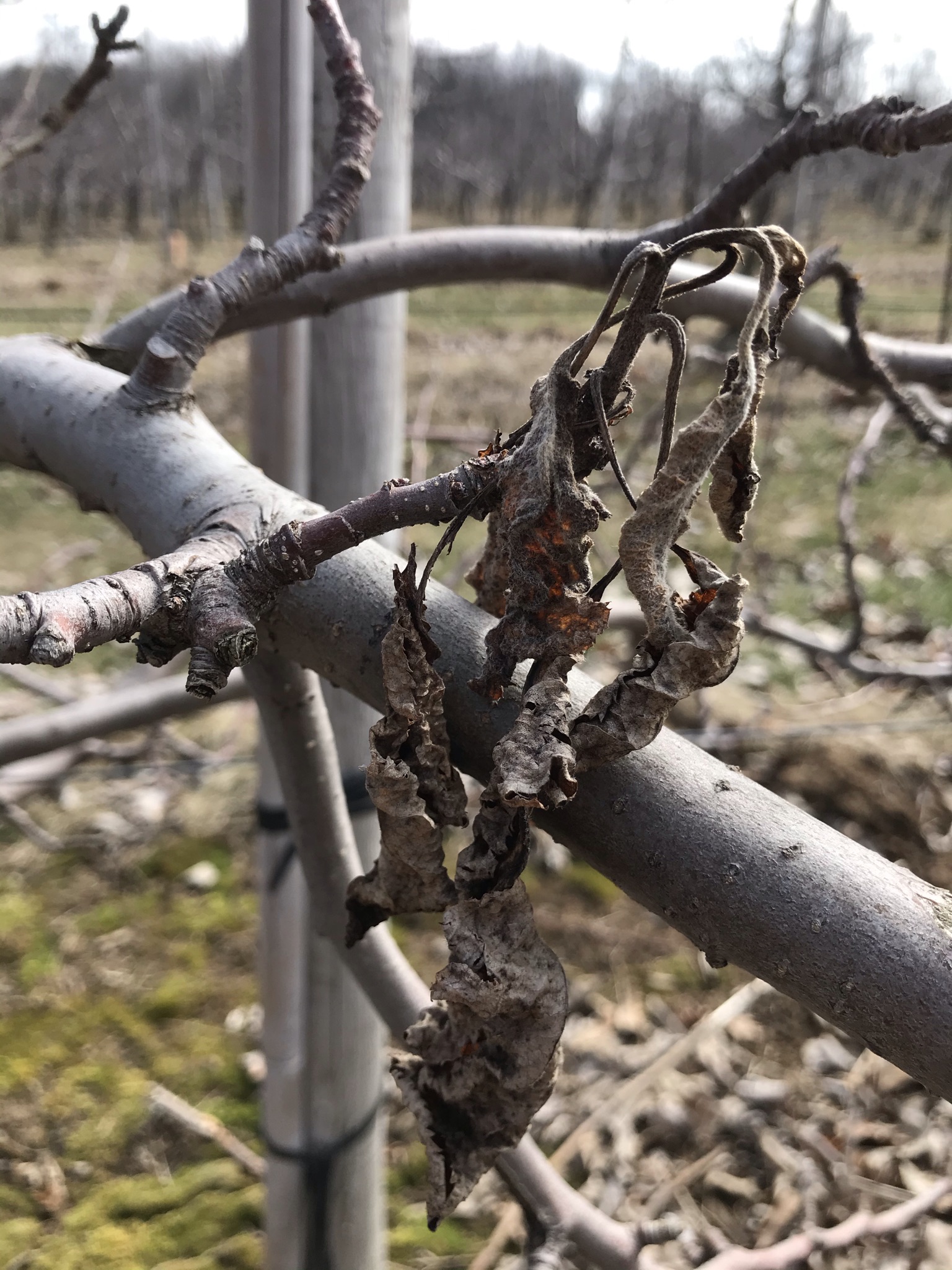
Removing fruit mummies will help reduce overwintering pest pressure.
Rotting fruit, leaves and branches on the orchard floor can be host for many orchard insects and diseases.
Flail mowing in the orchard.
Keep Calm And Copper On
Dormant copper can protect against any bacteria oozing from overwintering fire blight cankers that may have been missed during pruning. Copper is not systemic; its activity is contact only and provides a barrier over the tree to prevent fire blight bacteria from colonizing an area. This means it will only kill bacteria on the surface of the tree as it emerges from cankers with warmer weather. A delayed dormant copper spray will also provide some protection against apple scab.
Residual activity typically last about 7-10 days under ideal spring conditions. However, once rainfall exceeds 2” from the last copper application, it should be assumed all residue has been washed off. Depending on the spring, you may need multiple applications.
Dormant copper such as Copper Spray, Copper 53W, Cueva, Parasol and Kocide can be safely applied up to ¼” green (possibly ½” green) without risk of phytotoxicity. However, the use of a softer copper registered for season-long control such as Cueva could be extended in those early spray timings to ½” green or tight cluster in blocks with low scab inoculum (ie., free of scab last year) to offset the need for other early protectant fungicide sprays.
For some copper formulations, using a dormant oil will act as a sticker/spreader as well as provide efficacy on scale, European red mite and suppression of powdery mildew. This is not the case for all registered coppers. Always refer to precautions listed on the product label prior to use.
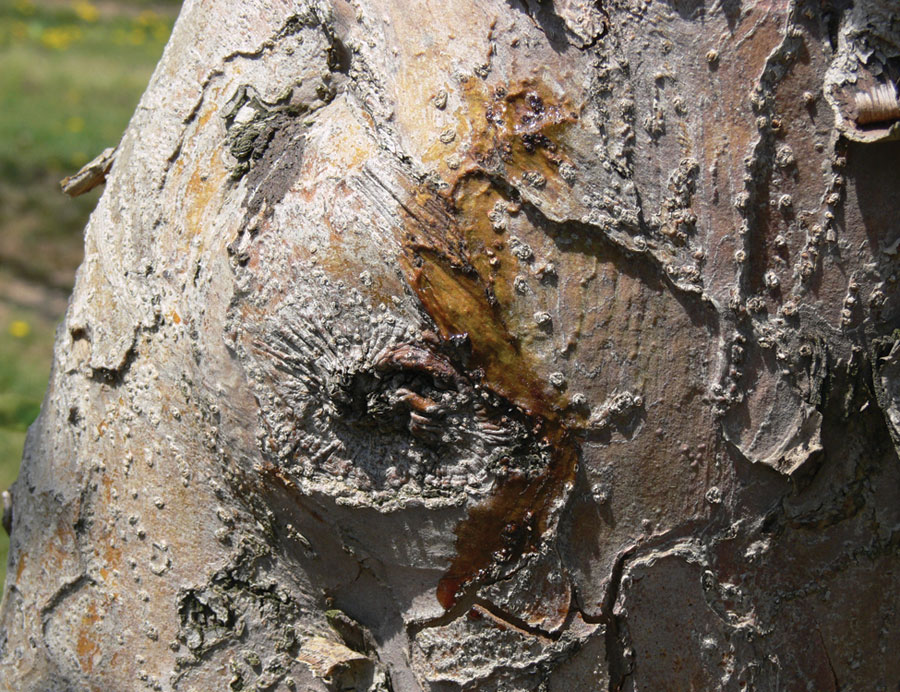
Overwintering fire blight infected shoot of apple tree.
Overwintering fire blight infected shoot of apple tree.
Visible margin of fire blight infection below which tissue appears healthy. Bacteria will ooze from the edge of the canker.
Ooze on overwintering fire blight canker on apple tree.
A Little Oil Goes A Long Way
Depending on the target pest, the term “dormant” oil can be rather misleading as sprays can be applied from the true dormant state prior to bud break up until pink. Unfortunately, optimal dormant timing for scale is not necessarily the same for mites.
If damage from last year indicated scale is a bigger issue in the orchard, oils need to be applied before or shortly after bud break. This efficacy against scale is significantly reduced with later oil applications for European red mite as they develop a waxy protective layer that impedes the oil from effectively penetrating and preventing respiration. Dormant oil applications for scale are one of the most effective control strategies when applied correctly!
However, if European red mite populations have been the problem, sprays can be delayed. Ideal timing is half-inch green to tight cluster but can be delayed to pink; however, blossoms can be quite sensitive to oil under adverse conditions so consider using a lower rate at this timing. Delayed dormant oil applications can also provide suppression of early aphid emergence and powdery mildew sporulation in overwintering buds.
Dealing with the fluctuating spring temperature can often make timing for dormant oil challenging. Be sure to avoid the following situations to reduce the risk of injury:
Do not apply oil if frost is forecast 48 hour before or after planned application.
Allow at least 10-14 days between oil and the use of captan or sulphur products. Oil can enhance penetrant activity of these products, resulting in phytotoxicity.
Do not apply oil during periods of slow drying conditions that may lead to burning of sensitive tissues.
Red Delicious, Empire, Mutsu and Ambrosia can be particularly sensitive to bark damage if applied in conditions listed above.
Overwintering scale, or “black caps” on trunk of Honeycrisp.
Overwintering European red mite eggs.
Save the Date! Apple IPM Workshop
Looking for a chance to refresh your knowledge of apple IPM? New to growing or scouting apples?
Join me for an Apple IPM Workshop!
VIRTUAL – Monday, May 4th from 9:00AM – 12:00PM
IN-PERSON (Simcoe) – Tuesday, May 5th from 9:30AM – 3:30PM
We will discuss common orchard pests, scouting techniques for various insects and disease, tools of the trade, safety protocols and tips for success. Time will also be available to answer any pest-specific questions regarding pre-recorded presentations available on the Apple IPM Resources page.
By Kathryn Carter, Fruit Specialist (Tender fruit and Grape), OMAFA
What is cold injury?
Cold injury occurs when grape vines are exposed to temperatures below their maximum cold hardiness threshold. When this happens, buds, canes, or vascular tissue of the trunk can be damaged.
What are the symptoms of cold injury?
Bud Injury: Cold injury to buds can significantly impact yields. Bud survival assessments are the best tool for evaluation potential crop loss. Both the number of buds, and type of buds (primary, secondary or tertiary) that survive can impact yield.
V. vinifera cultivars generally have poor productivity on secondary buds, often producing 25% or less of a normal crop.
French-American hybrids usually have greater secondary bud fruitfulness and may produce up to 50% of a crop.
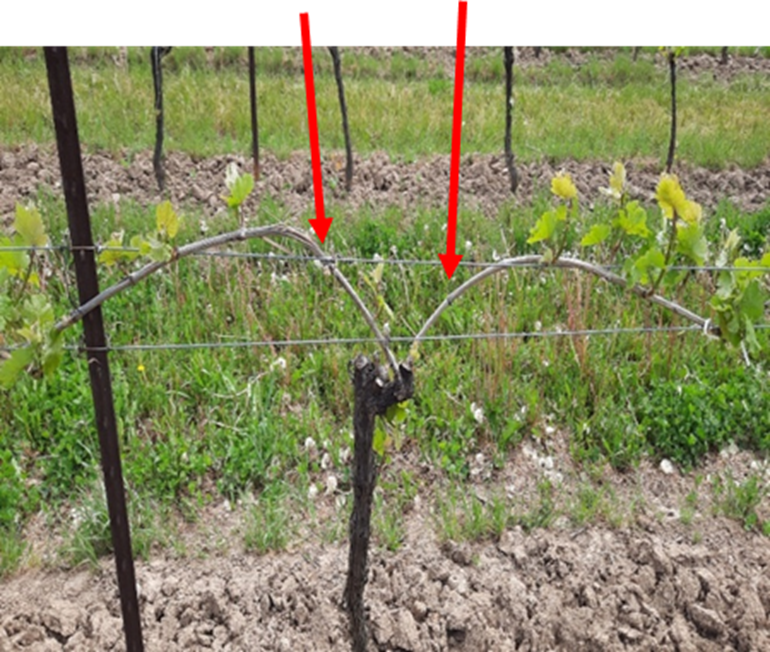
The full extent of injury becomes clear at budbreak, when it is easier to distinguish whether surviving buds are primary (highly fruitful), secondary (less fruitful, with fewer and small clusters), or tertiary (fruitless). Vines with high levels of bud damage may respond with a flush of basal suckers in the spring. Weak, stunted, or uneven shoot development (Figure 1 a) can also be an indication that vascular tissue of the vine (cordon or trunk) has been badly damaged. There is increased risk of trunk injury in vines that have with high levels of bud injury (>80%).
Trunk and cane injury: Cane injury is often visible during pruning, appearing as browning of the xylem and/or phloem. Trunk damage is the most difficult to assess as damage to the internal vascular tissues in the trunk may not result in visible symptoms until vines collapse later in the season when stressed by high temperatures, water stress, or the demands of supporting a crop.
Visible symptoms of trunk injury include trunk splitting, discolouration of the wood, or the presence of orange, slimy growth on pruning wounds in the spring. Injured vines may also show poor or uneven growth along the cordon in the spring. When cordons fail to push shoots in the spring (Figure 1b), cut them back to the head of the vine (where the trunk and cordon meet). Green or cream coloured tissue indicates living tissue; brown tissue indicates injury. If the xylem and phloem are dead, the trunk has been severely damaged and should be replaced. Older vines with trunk injury may fail to produce suckers and require replanting.
Figure 1.a) Cold injured buds on grape vine (arrows indicate dead buds)
Managing cold injured vines
Cold injury rarely occurs uniformly across a vineyard block, which complicates pruning, training and vineyard management and results in increased labour costs.
Document damage before making decisions: Arrange for crop insurance to inspect and document the injury before removing vines or cutting back trunks.
Adjust pruning and crop load: Use bud survival counts to modify your pruning practices accordingly. Adjust the crop load on a vine-to-vine basis according to the level of cold injury and vine health. Avoid over-cropping cold injured vines—this increases the risk of vine collapse and delays long term recovery.
Trunk Renewal: If bud damage is close to 100%, or trunk injury is suspected, retain approximately five healthy suckers that arise from the scion (not the rootstock) at the base of the trunk for possible trunk replacements. They will help to manage excessive vigour (bull wood) and distribute the excess energy stored in the vine’s root system. It’s important to tie up suckers up so they’re off the ground. Suckers can break off easily before they harden off, so leave more than you think you need to ensure that you have enough.
Protect these suckers from herbicide injury, by using grow tubes. Remove the grow tubes in late summer or early fall to allow enough time for the shoots to acclimate for the winter. A vine with no sucker growth even at the base of the vine, is likely dead. While it may be tempting to remove trunks immediately when bud mortality exceeds 90%, the trunk tissue may still be alive. Removing the trunk when not required can increase the time and costs required to get into fruit production. Unless physical damage is obvious, delay trunk removal decisions until closer to bud break. Dead trunks can be retained temporarily as they provide support for the suckers used for trunk renewal.
Where shoot growth appears weak or uneven in the spring, retain a few suckers that can be used to renew the trunk. Older vines that fail to break bud or produce suckers will need to be replaced,
Things to consider
Vine growth: Vines with reduced crop load, will produce more vegetative growth this season, which can lead to the production of bullwood, which is less fruitful and more susceptible to cold injury. Additionally excess vigour can increase shading which can reduce the number of fruitful buds for next years crop and make disease management more challenging. Leave enough shoots to help distribute the growth potential and minimize excess vigour. N fertilizer applications should be reduced or eliminated to help reduce excess vigour in damaged vines. Adjust your sprayer to make sure fungicides reach the sucker leaves and shoots.
Symptoms of cold injury or crown gall: Continue to monitor for symptoms of cold injury throughout the growing season (vine collapse). Cold injury can also activate latent crown gall infections which will start to become evident around July. Often galls appear near the graft union, trunks or cordons, and can appear the year the winter injury occurred, or in subsequent years. Foliar symptoms of crown gall are similar to trunk injury: stunted shoot growth, wilting and eventual collapse during the heat of summer. Cold injury can also predispose vines to trunk infections and can mask underlying trunk disease symptoms.
Vines health: Even without a crop, it is important to manage disease pressure in the vineyards and ensure vines are healthy and reduce stress. Maintain appropriate shoot density and shoot positioning to maintain airflow through the canopy and manage disease pressure. Reduce stress to vines by irrigating as required.
Multiple trunks: Using double or multiple trunks for cold tender vines especially in high-risk locations.
Plan before replant: Prior to replanting blocks of vines with cold injury, take the time to assess the site, variety and training systems as well as cold mitigation strategies.
Register Now! FREE IPM Training Workshops
Registration is now open for many of the OMAFA IPM workshops. Workshop options of in-person, hybrid or virtual only will vary depending on the session and is noted below.
To register, please follow the registration link or call the Agriculture Information Contact Centre at 1-877-424-1300.
This is an introductory workshop that covers the basic information that scouts need to know. Topics that will be covered: the importance of integrated pest management, disease causal agents, symptoms and damage of insects and mites, scouting for weeds in horticulture crops, pesticide safety, soil diagnostics, symptoms of nutrient deficiencies, tissue sampling, invasive species and farm visit biosecurity. Other scouting workshops will build on this information and will be tailored to the specific crops.
Workshop Leader – Denise Beaton
Location – In person (Auditorium, Ontario Crops Research Centre – Simcoe, 1283 Blueline Rd., Simcoe ON)
Over this 3 hour virtual workshop, participants will learn about the basics of apple IPM, common pests to look out for over the season as well as orchard scouting tips and tricks. This is a condensed version of the in-person workshop, ideal for those looking for a refresher.
Workshop Leader – Kristy Grigg-McGuffin
Location – Virtual (link will be provided after registration)
Reference materials will be provided to attendees
Pre-recorded presentations posted on Apple IPM Resources. Come with pest-specific questions for Q&A.
This in-person workshop will cover the basics of apple IPM, identification and biology of common pests, as well as proper orchard scouting techniques. Portions of this workshop will be held outdoors, weather permitting.
Workshop Leader – Kristy Grigg-McGuffin
Location – In person (Auditorium, Ontario Crops Research Centre – Simcoe, 1283 Blueline Rd., Simcoe ON)
In-person spaces are limited so registration is restricted to potato scouts only. All other attendees are asked to register for the concurrent hybrid Zoom meeting.
Weed management for strawberry growers may be a little bit different in 2026. For some areas in Ontario, early snow in 2025 meant that mulch was not put down or the window to apply Chateau was missed. If this applies to you, what should you do now?
First, if you were not able to apply mulch, the generous snowfalls last winter likely helped minimize damage from cold temperature, since snow is an excellent insulator. However, if you did not apply a pre-emergent herbicide in the fall, you should plan on an early spring application. A post-emergence application may still be necessary, but the residual effect of the pre-emergent herbicide from a spring application will last longer into the growing season and might delay the timing of any post-emergence herbicide applications.
The best time for a pre-emergent herbicide application is shortly after you remove the mulch (or if you did not add mulch, when soil temperatures reach 5 °C) before weeds start to emerge. Many of the pre-emergence herbicide options for fall application can still be applied in early spring, just be aware of the preharvest interval (PHI). For example, during a fruiting year, Goal 2XL (oxyfluorfen) (group 14) can only be applied in fall before mulching due to a 150 day PHI. There is one big caveat, most herbicides, like Chateau EZ (flumioxazin) (Group 14), can only be used one time per season. So, if you use Chateau EZ now, you are not able to apply it again in the fall before you put down mulch. Also, strawberry plants are generally more sensitive to spring applications of Sinbar WDG (terbacil) (group 5) than they are to fall applications. Sinbar WDG should only be used if strawberry plants have over-wintered well. The lower rate of Sinbar WDG will result in less crop injury for more sensitive cultivars, like Kent, Mira, Bounty, Annapolis, Glooscap, and Cavendish. Other spring pre-emergent options are:
Product
Active ingredient
WSSA group
PHI (days)
Notes
Authority 480 SC
sulfentrazone
14
70
Max of one application every 48 months
Devrinol 2-XT
napropamide
15
–
Do not apply from bloom to harvest
Dual II Magnum
s-metolachlor
15
30
Consult your supplier for information on the tolerance of specific strawberry cultivars to Dual II Magnum
For effective springtime pre-emergent sprays:
Ensure mulch has been completely removed from the rows as leaf litter or straw in the field at application may result in reduced control.
Check the forecast as cool wet conditions increases the risk of crop injury.
If strawberry plants are out of dormancy, use a spray hood to reduce any contact with the plants.
Most products require rainfall after application to be activated but you want to avoid extreme rain events, so check the forecast.
Always consult the most up to date product label to ensure you are following all the requirements.
Again, you may have to follow up the early spring pre-emergent spray with a post-emergence spray. Remember that some products, such as Venture L (fluazifop-p-butyl) (group 1) should not be applied within 2 weeks of applying Sinbar WDG.
If this year will be the last season that the field will be harvested, remember to check the product label for rotational restrictions. This is especially important for spring herbicide applications. For more information on herbicide persistence and rotational restrictions, see this blog post by Cesar Cappa (Weed Management Specialist – Horticulture) and Kris McNaughton (Horticulture IPM Specialist).
Herbicide resistant weeds have been identified in the province. It is important to rotate between products with different groups and to monitor your fields after spraying. For more information on the distribution of herbicide resistant weeds and weed resistance testing in Ontario, see this newly launched interactive database. If you suspect that weeds in your field are resistant, there is resistance testing that is available at no cost to you! If you suspect herbicide resistance in your field, contact Cesar Cappa (cesar.cappa@ontario.ca), Weed Management Specialist – Horticulture, or Jason Lemay (jason.lemay@ontario.ca) Fruit Crop Specialist – Berries (Acting).
Winter Issue of ONcore Newsletter Now Online
The Winter 2026 (Vol 30, Issue 1) ONcore Newsletter (formerly Orchard Network Newsletter) is now available online.
Visit the newsletter page here for recent and archived issues:
ONcore Newsletter turns 30! Share your pearls of wisdom: What’s the biggest change you’ve seen in your orchard over the last 30 years?Tell us your story here!
Orchard Management
Cold Hard Facts: The Zones Have Shifted
Thinning Response of Ambrosia & Gala Apple Trees: Petal Fall & Late Application of Accede, With or Without Sevin XLR
Crop Protection
Following the Fire: Latest Research for Fire Blight Management
Data Drives the Label: Understanding Restricted Entry & Harvest Intervals
Bitter Rot Management: Results of 2024-2025 Field Trials
See It? Stop It. Don’t Spread It: Spotted Lanternfly Update
New to the Toolbox: Latest Registrations for Apples
Research Highlights
Apple Fruitlet Thinning Gala with Metamitron Applied in Sequence, Tank-Mixed, and At Different Timings
Postharvest
Oxygen Level Influences Storage Temperature Choice for Gala Apples
As some of you may have heard, Erica Pate will be on leave until February 2027. Jason Lemay will be filling in as the acting Fruit Crop Specialist responsible for berries until Erica returns. You can get a hold of him at jason.lemay@Ontario.ca or (519) 410-0624 (same phone number as Erica).
Jason’s bio:
Jason has a broad background with experience in many different horticulture crops. He completed his MSc at the University of Guelph where he conducted research on integrated pest management (IPM) for insect pests of carrots in the Holland Marsh (MSc). He then spent a few years as an IPM consultant, working with greenhouse floriculture and vegetable growers as well as ornamental nurseries before returning to the University of Guelph to do his PhD. His PhD research focused on IPM for insect pests in cannabis. Recently, he was working at Ontario Soil and Crop Improvement Association in the Programs Department assisting in the delivery of cost-share funding programs.
Jason enjoys working with growers to develop practical solutions, and support innovation in the horticultural sector. He is looking forward to spending the next year supporting the berry industry. His contact information is: jason.lemay@Ontario.ca or (519) 410-0624 (same phone number as Erica).
Post-winter freeze: Pruning and vineyard recovery webinar
This free educational session on February 26 will provide practical tools for growers to respond to freeze damage and prepare for a successful season ahead.
Many grape-growing regions across Michigan experienced severe and prolonged cold events this winter. With extended periods of low temperatures, field observations and cold-hardiness models suggest that some vineyards may be facing varying levels of freeze injury and bud damage, particularly in more cold-sensitive grape varieties.
To support growers during this critical time, Michigan State University Extension is offering a free webinar at 1:30 p.m. on Feb. 26, 2026, focused on post-winter freeze assessment, pruning adjustments and vineyard recovery strategies. This session is designed to help growers better understand how extreme winter conditions affect grapevines and to provide practical steps for making informed management decisions heading into the upcoming growing season.
Topics will include key factors influencing grapevine cold hardiness, winter vine physiology, methods for evaluating bud mortality, and effective approaches to pruning and early-season vineyard management.
Whether you are already seeing signs of damage or simply want to be prepared, this webinar will offer research-based guidance to help you respond effectively and support vineyard recovery for a successful season ahead.
Growers are encouraged to join this timely and informative session.