Have You Registered? IPM Workshops Start Next Week
The 2026 Integrated Pest Management (IPM) workshop series is just around the corner. REGISTER NOW to secure your spot!
Our first session, Introduction to IPM, kicks off next week, launching another season of practical, science-based learning designed to support scouts, growers, advisors, and industry professionals across Ontario. Whether you’re new to IPM or looking for a refresh, this workshop series provides valuable tools you can apply right away in your crop.
To register, please follow the registration link or call the Agriculture Information Contact Centre at 1-877-424-1300.
This is an introductory workshop that covers the basic information that scouts need to know. Topics that will be covered: the importance of integrated pest management, disease causal agents, symptoms and damage of insects and mites, scouting for weeds in horticulture crops, pesticide safety, soil diagnostics, symptoms of nutrient deficiencies, tissue sampling, invasive species and farm visit biosecurity. Other scouting workshops will build on this information and will be tailored to the specific crops.
Workshop Leader – Denise Beaton
Location – In person (Auditorium, Ontario Crops Research Centre – Simcoe, 1283 Blueline Rd., Simcoe ON)
Over this 3 hour virtual workshop, participants will learn about the basics of apple IPM, common pests to look out for over the season as well as orchard scouting tips and tricks. This is a condensed version of the in-person workshop, ideal for those looking for a refresher.
Workshop Leader – Kristy Grigg-McGuffin
Location – Virtual (link will be provided after registration)
Reference materials will be provided to attendees
Pre-recorded presentations posted on Apple IPM Resources. Come with pest-specific questions for Q&A.
This in-person workshop will cover the basics of apple IPM, identification and biology of common pests, as well as proper orchard scouting techniques. Portions of this workshop will be held outdoors, weather permitting.
Workshop Leader – Kristy Grigg-McGuffin
Location – In person (Auditorium, Ontario Crops Research Centre – Simcoe, 1283 Blueline Rd., Simcoe ON)
In-person spaces are limited so registration is restricted to potato scouts only. All other attendees are asked to register for the concurrent hybrid Zoom meeting.
Production and pest update brought to you by the OMAFA Apple Team: Erika DeBrouwer, Tree Fruit Specialist and Kristy Grigg-McGuffin, IPM Specialist
Grower Grind
Across the province, growers are in the later stages of pruning. No reports yet of any winter damage. The significant rainfall over the last 7-10 days has left soils saturated, making it difficult to get sprayers through without lightening the spray load. Despite the challenges, critical sprays are still getting on where they can. Meanwhile, apple staging has substantially changed over the past week due to warm temperatures.
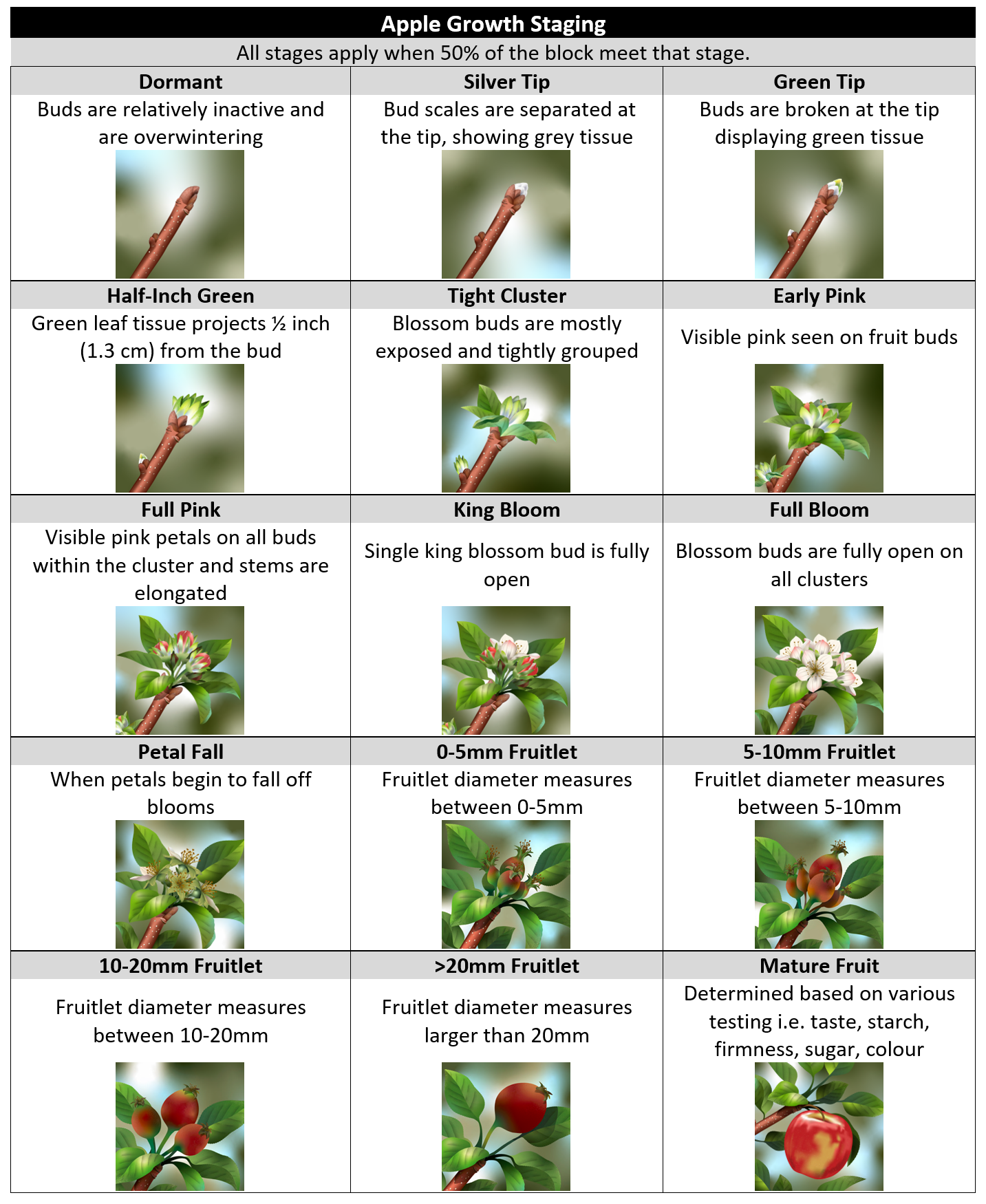
For a reminder of apple growth stages:
Growth Stages
Recent warm daytime and nighttime temperatures have really pushed development in early growing regions. Across the province, we are seeing the following growth stages:
Essex – Tight cluster to early pink
Chatham-Kent – Quarter-inch green to early tight cluster
Lambton, Middlesex, Elgin – Quarter-inch green to early tight cluster
Norfolk – Quarter-inch green to early tight cluster
Brant, Wellington – Green tip to half-inch green
Niagara – Half-inch green to early tight cluster
Grey – Green tip
Durham, Northumberland and Quinte – Green tip to half-inch green
Ottawa Valley – Green tip
Frosty the Threshold
Cool nights may be upon us in the near future (hopefully, not too cool). Here is a refresher chart, along with resources for frost mitigation and assessment.
Silver Tip
Green Tip
1/2 inch Green
Tight Cluster
First Pink
Full Pink
First Bloom
Full Bloom
Post Bloom
10% kill
-9.4
-7.8
-5.0
-2.8
-2.2
-2.2
-2.2
-2.2
-2.2
90% kill
-16.7
-12.2
-9.4
-6.1
-4.4
-3.9
-3.9
-3.9
-3.9
This chart also shows the temperature that will kill 10 % and 90 % of normal fruit buds. These numbers were taken from Washington (WSU), Michigan (MSU) and North Carolina (NCS) Extension Bulletins. Apple – WSU EB0913
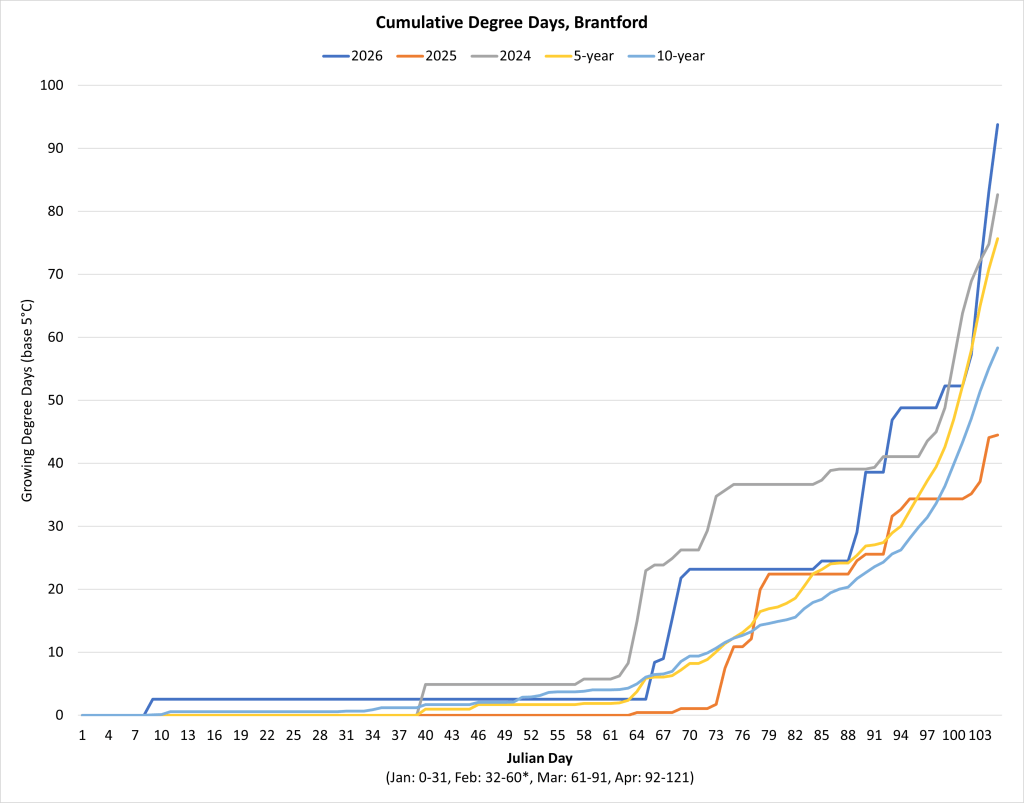
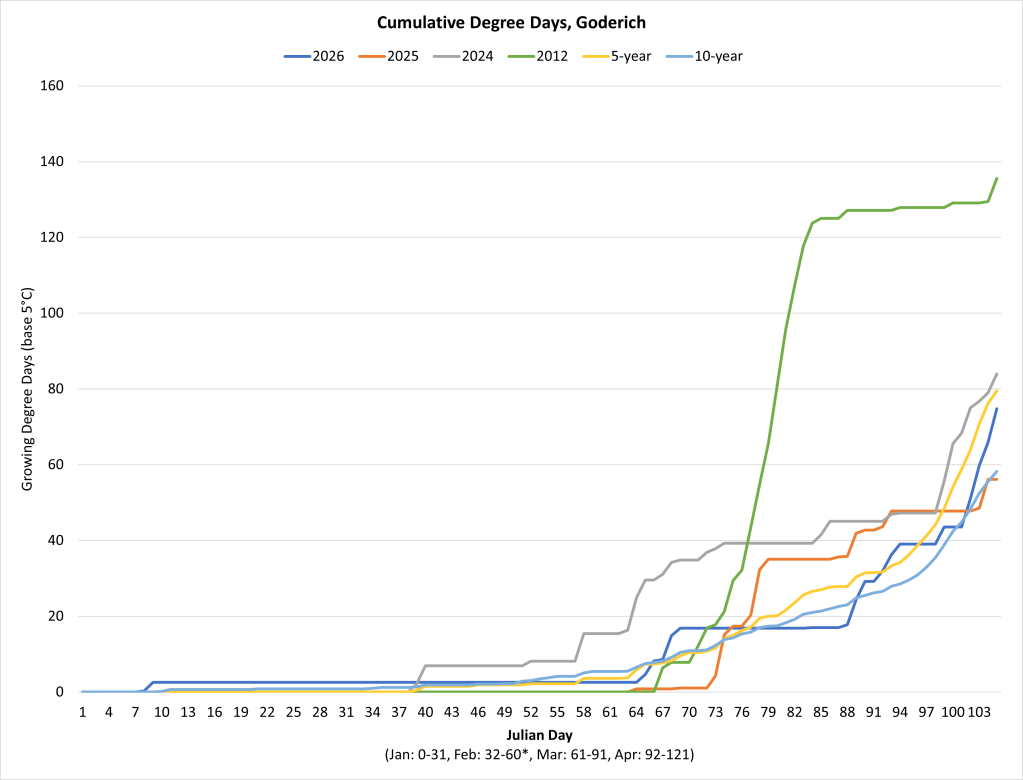
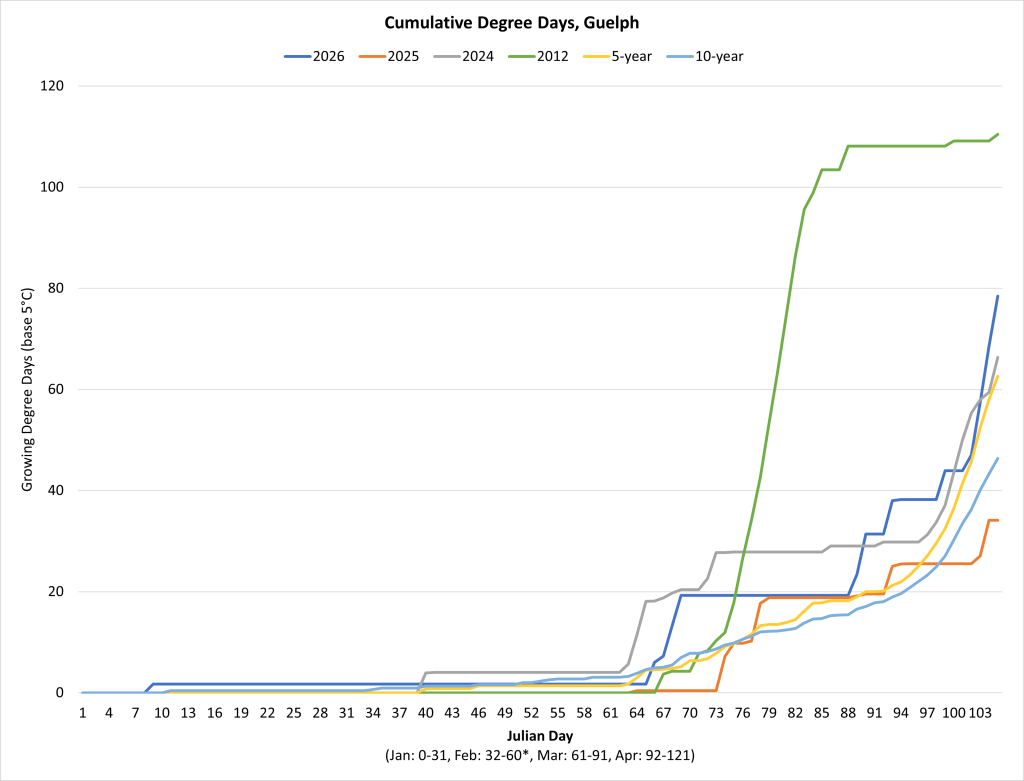
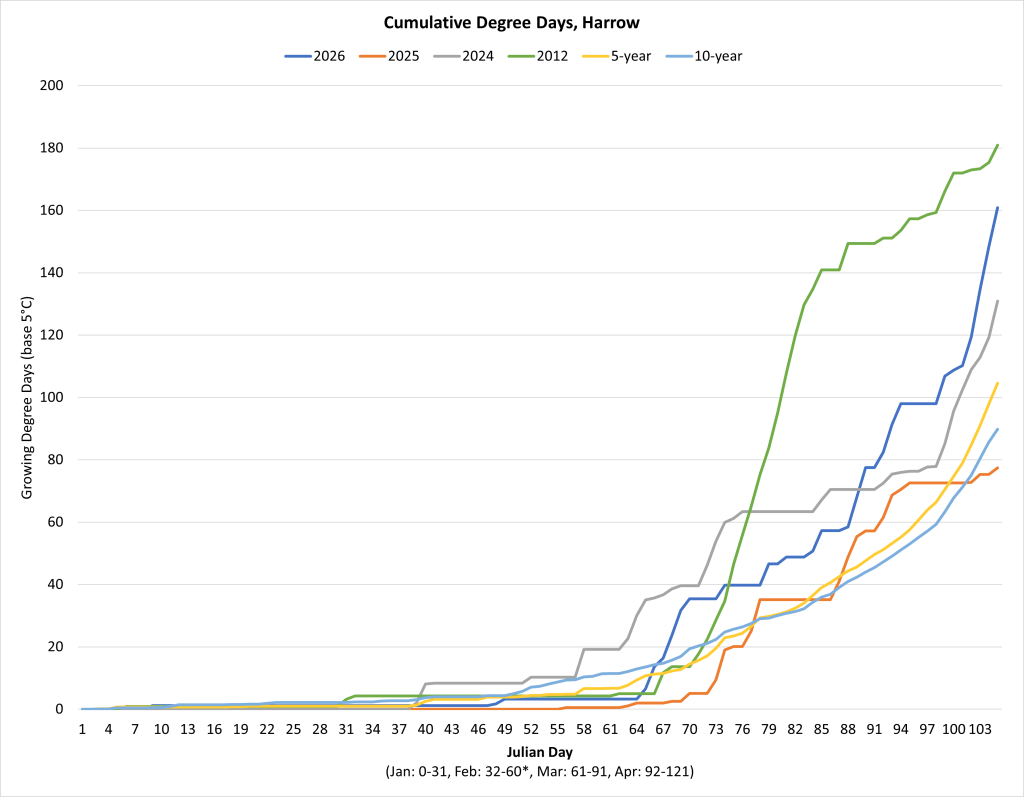
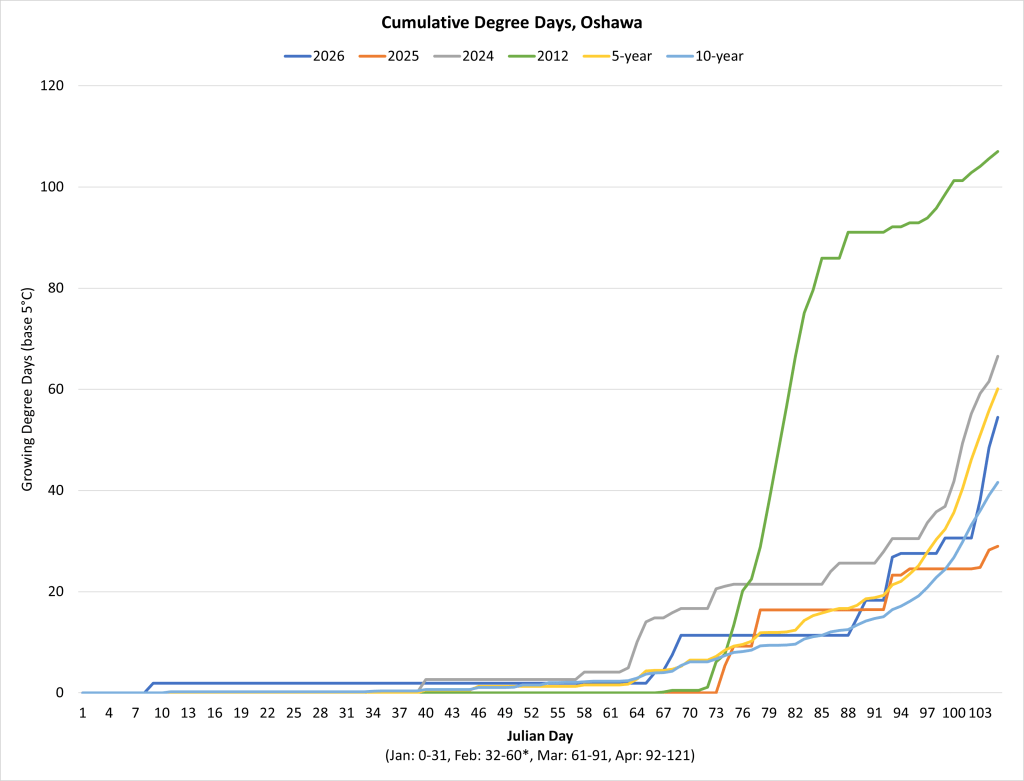
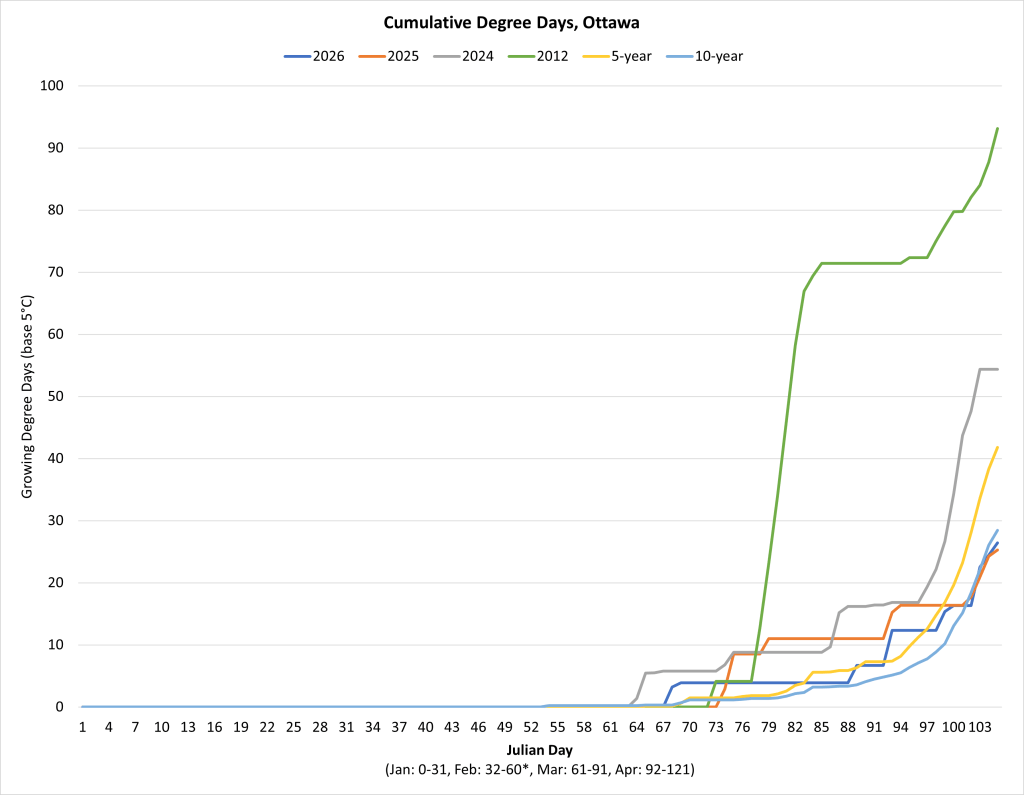
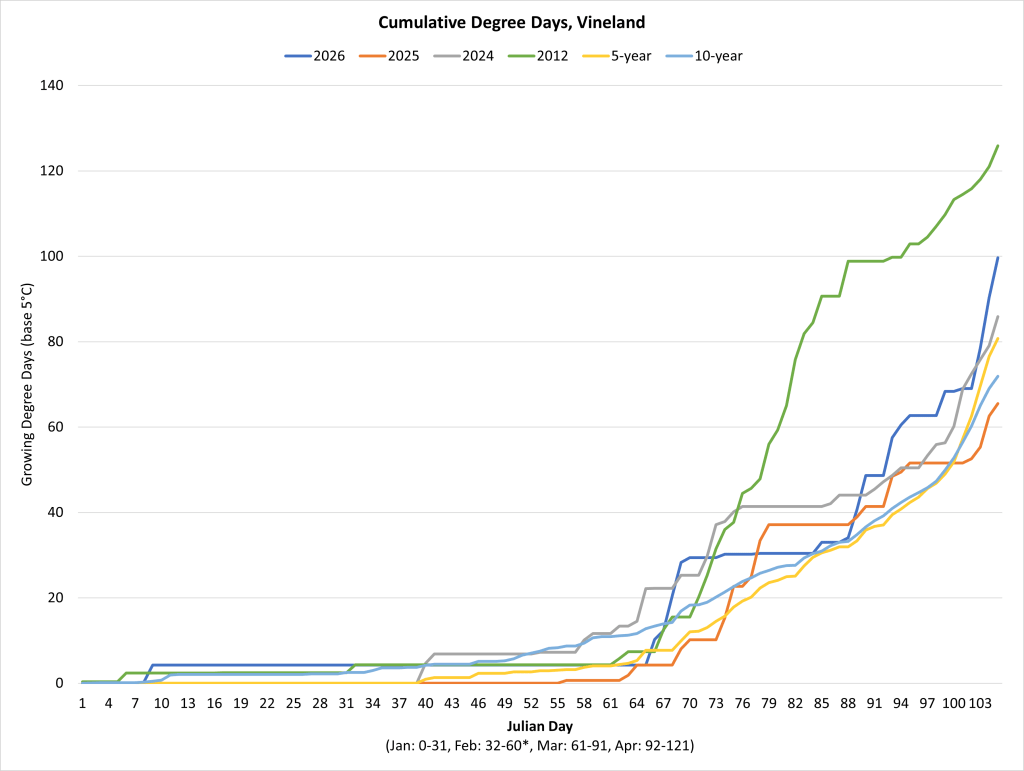
Across the province we are seeing the GDDs with base 5°C, starting January 1, accumulate ahead of long-term averages. Most areas are ahead of the 10-year average and close to or slightly more advanced than the 5-year average. This year is following a similar pattern to 2024, with warm daytime and nighttime temperature advancing the season quickly.
Key GDD Takeaways:
Recent seasons (2024 – 2026) show stepwise rather than smooth GDD accumulation.
Most locations show plateaus followed by jumps in GDDs, meaning – cool periods stall heat accumulation with short warm spells that add GDDs quickly.
2026 is ahead of the 10-year average and slightly ahead of 5-year average, not as advanced as 2012, but certain areas are catching up to or exceeding 2024 (location dependant).
Lake-adjacent sites start slower but accelerate rapidly once warmth sets in.
The gap between the 5-year and 10-year average of GDD is narrowing, suggesting that springs heat accumulation is longer than the norm and is drifting earlier.
Bud development and pest stages may change based on shifting weather patterns. Make phenology-based decisions, not calendar-based decisions.
Development is likely to advance in bursts, which could lead to complications in phenology predictions and spray timing.
Frost risk persists because development is advancing faster than frost-free dates.
The Wet Report
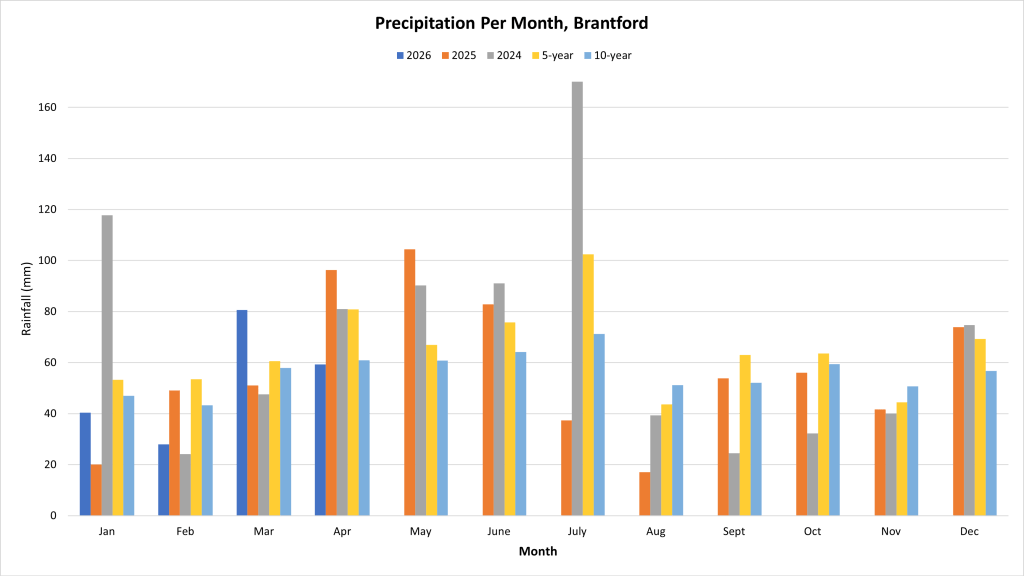
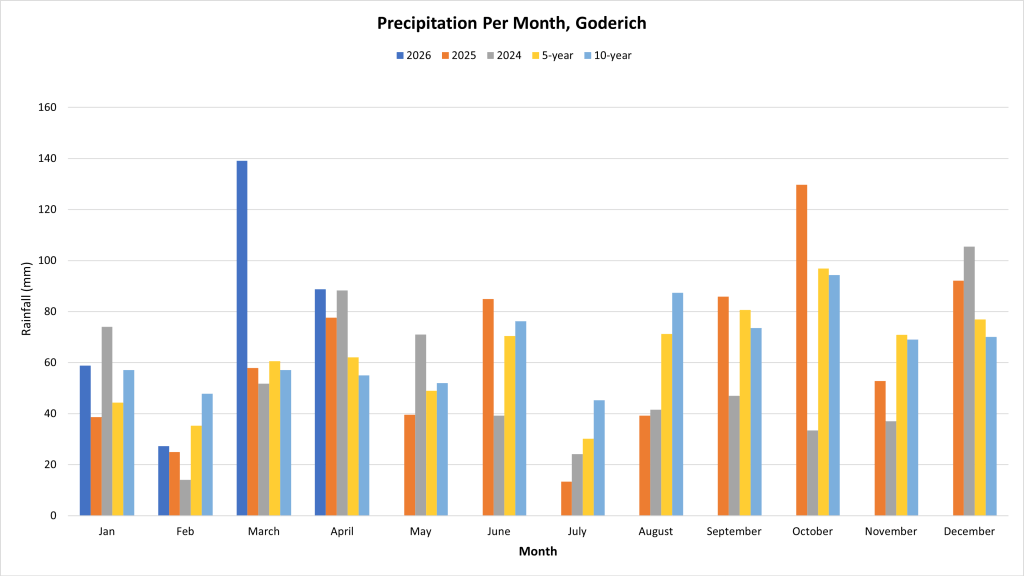
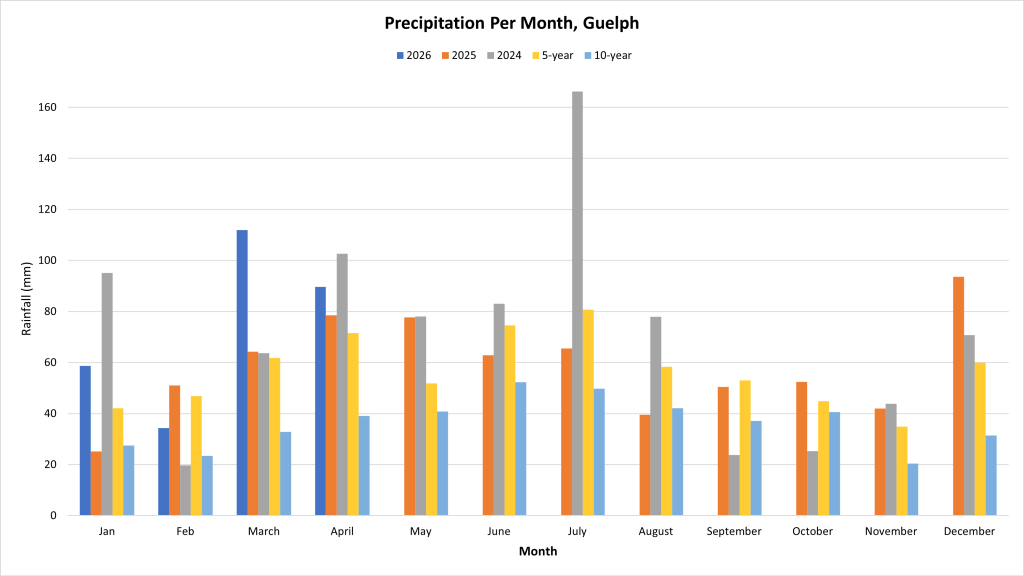
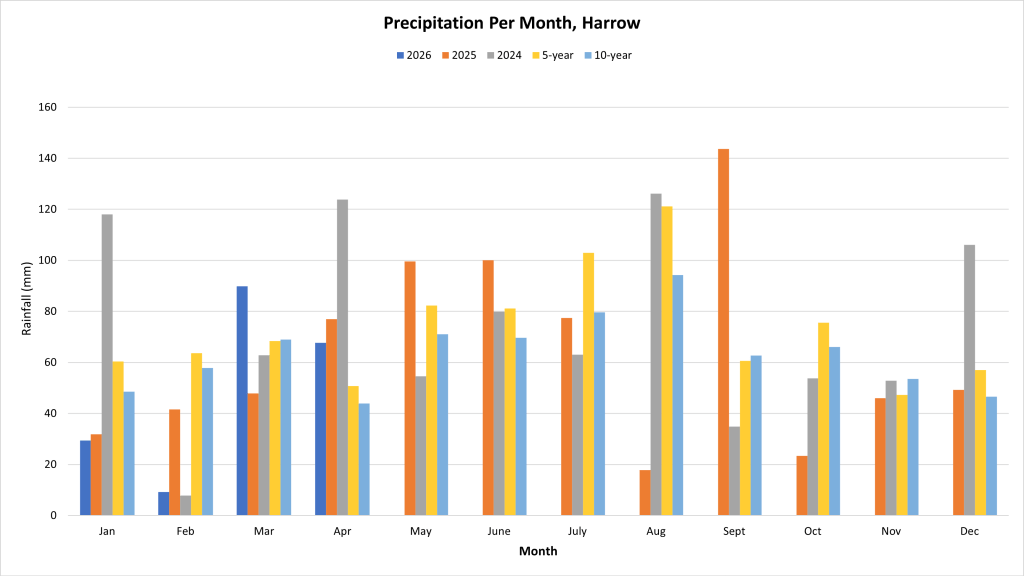
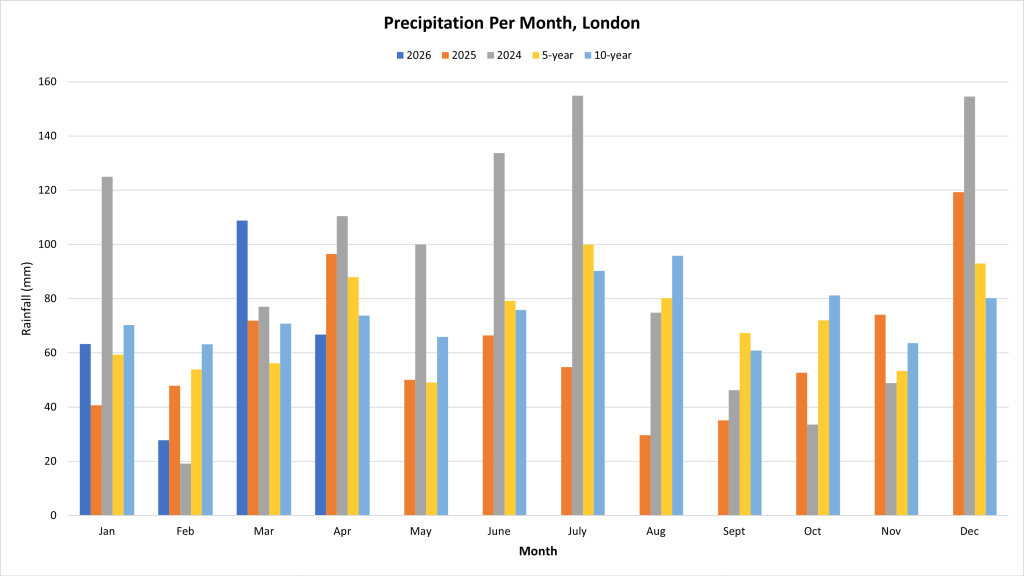
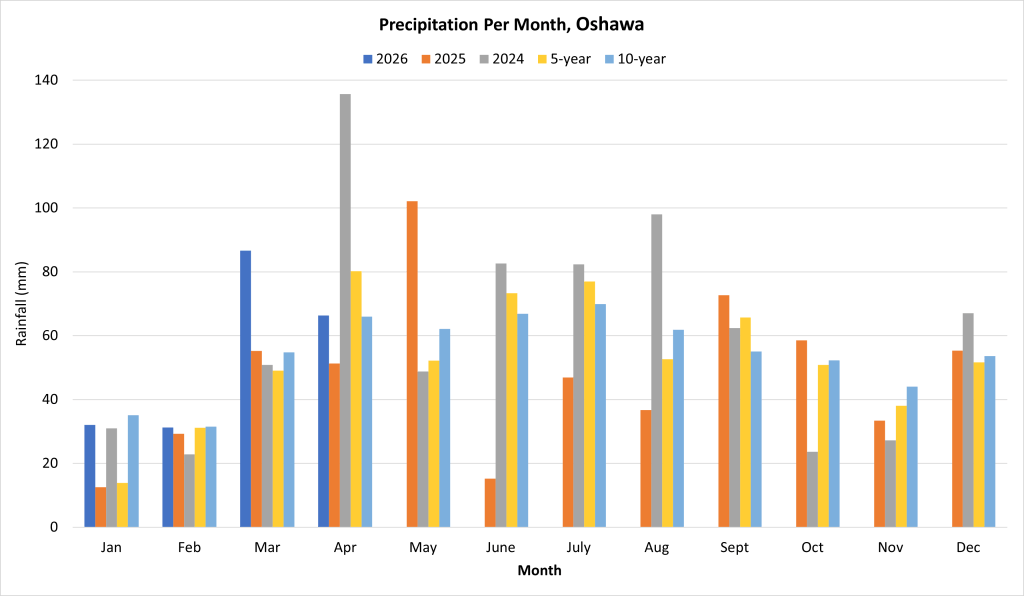
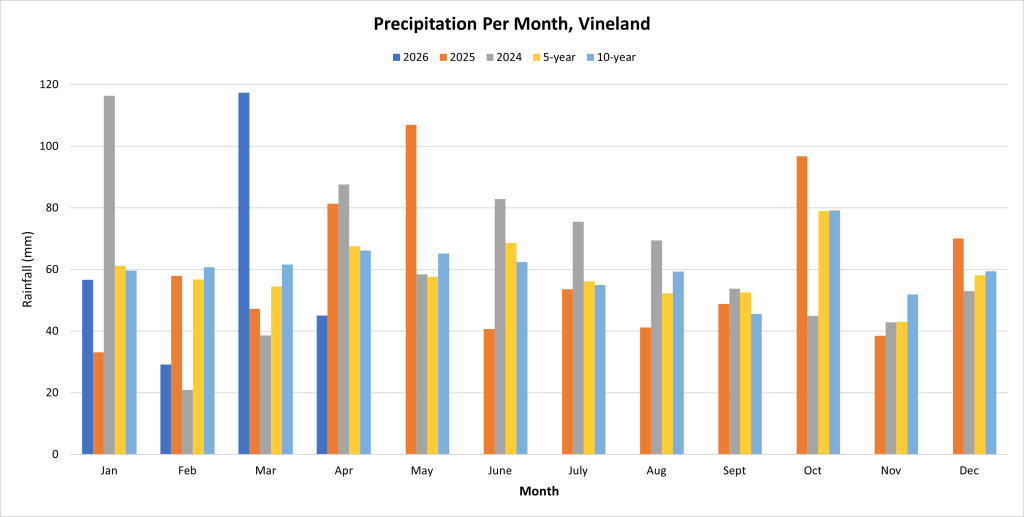
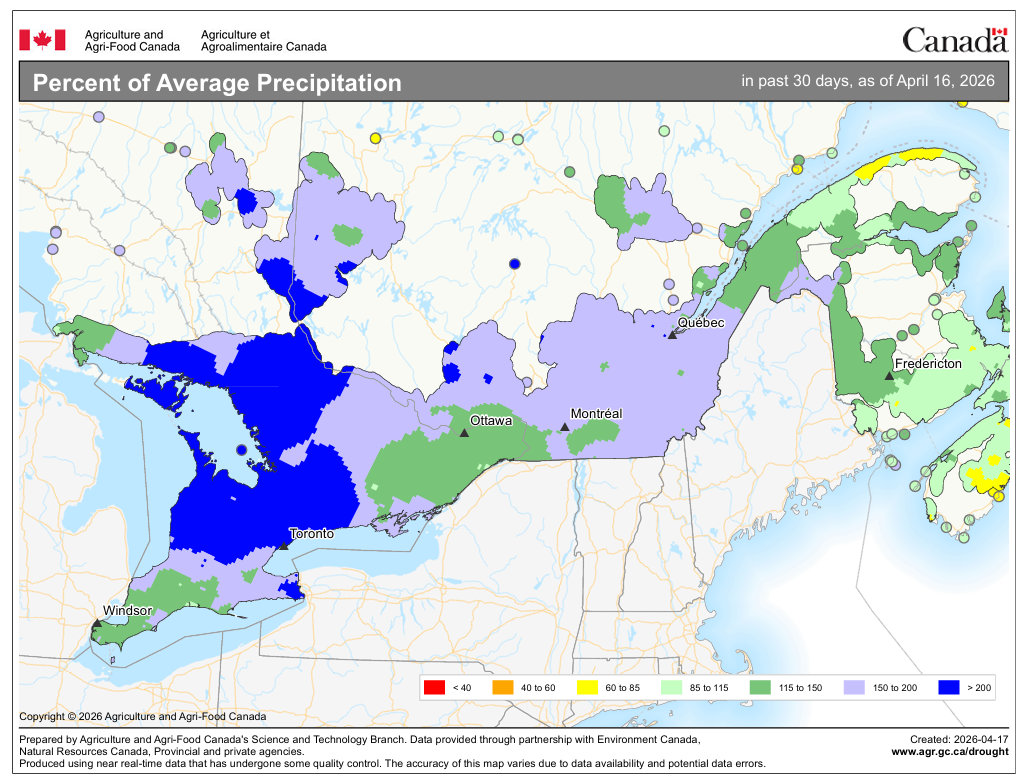
Ontario is experiencing spatial variability regarding precipitation since the beginning of the year. Some regions have experienced reasonable (and unreasonable) rainfall while some regions may be actively dry (Figures 1 & 2). Most apple growing regions have accumulated a significant amount of rain over the past week and the data shows that many locations have already accumulated more than the average for the month of April when we are halfway through the month.
Key Rain Takeaways:
Single months in some years are delivering 2× the 10‑year average, while other months fall well below normal.
2024 was consistently wet in mid‑summer; 2025 trends drier early, wetter later
2026 shows no consistent wet or dry signal (regional specific figures below).
Summer rainfall increasingly arrives in fewer, larger events with peaks in individual months (especially July, August, September).
The 5‑year average is often higher than the 10‑year average
Timing now may have more of an impact than amount due to inconsistent rainfall events. The timing and quantity have serious implications regarding — drainage, soil structure, and nutrient management response.
Due to last year’s drought, some regions may experience a need for soil recharge – keep an eye on moisture levels as there could be early season stress.
If you’re still sitting between dormant and half-inch green, there is still time to consider dormant copper for fire blight suppression and early-season scab reduction. Did you know that an early-season application of dormant copper can be just as effective as a mancozeb? But the window is closing fast!
Use caution:
Beyond half-inch green
Around freezing temperatures
In slow-drying conditions
Under these conditions, the phytotoxicity risk increases with copper being more readily drawn into the green tissue and can trigger bud damage or fruit russetting.
This is one of those sprays where timing matters more than intention – if you’re past the ideal growth stage, it’s better to pivot than push it.
With the warm weather and fast movement in green tissue, many growers’ priorities have shifted to protecting against primary apple scab. The rain events this week have likely resulted in the first apple scab infection(s) of the year for earlier regions of the province.
Primary infections are driven by overwintering inoculum. Orchards with carryover pressure from 2025 are at higher risk of early, aggressive infection events and exponential problems later season. If you saw scab last year, do not skip early season sprays and keep the schedule tight (5-7 day intervals) during high infection risk times. With the warm temperatures, infection events can occur in less than 10 hours of leaf wetness.
Apply protectant fungicides (e.g., mancozeb, captan, folpet) now if not already covered. Most of the available mature spores are discharged within 2 hours after the start of a wetting event. If using protectant fungicides alone, remember these are contact fungicides and do not provide effective post-infection or anti-sporulant activity.
If heavy rains greater than 2″ occur, residues will have likely been washed off. Reapply at any break in the rain if things continue over a period of days. Be prepared to cover again once things dry up.
If there are any concerns about residue wash-off, you may want to consider going in after the rains have stopped with a post-infection, or kickback product. Keep in mind, the timing for kickback activity starts at the beginning of the infection period, not after the rain stops or at time of application. For example, at 16C an infection event begins at 6 hours of leaf wetness. If a product has 48 hours of kickback activity, it begins at that 6 hour mark, even if the rain continues after that point.
There are several registered scab products that have post-infection, or kickback activity. Refer to Characteristics of Apple Scab Fungicidesfor more information.
Kickback Tips
For resistance management, do not rely on kickback activity.
Continue to prioritize protectant products ahead of infection events and rotate modes of action to reduce selection pressure.
Some products perform better in cooler weather than others, including Syllit (do not use beyond tight cluster), Scala, Inspire Super, Luna Tranquility, Migiwa, and Buran.
This doesn’t mean these products don’t work in warm weather, but that they are just as effective in cool stretches.
If things are further along in development (tight cluster and on), consider products that belong to Groups 3, 7 or 11 to provide more broad-spectrum disease control, such as for powdery mildew or rust.
Reminder, powdery mildew thrives in warm, humid (but not wet) conditions – see the next section below!
Where possible, tank-mix systemic fungicides with a protectant such as a Group M (mancozeb, captan, folpet) or a biological product.
Fluazinam (Allegro, Vantana, Downforce) does not offer post-infection activity; this is a contact product.
What About Mildew?
While it might seem a little pointless mentioning powdery mildew in the midst of rain (hint: rain deters powdery mildew development), things will eventually dry up. High powdery mildew pressure in recent years followed by the mild winter could be an unwelcome mix resulting in an early spring arrival of this disease.
Be sure to consider a mildew protectant such as a low rate (3-5 kg/ha) of sulfur in your early season scab program, especially on susceptible cultivars or orchards with a history of powdery mildew. Continue this until tight cluster when more systemic fungicides with mildew activity like the Group 3, 7 and 11s start to be used. Watch your use of sulphur around oil sprays – read the product label for more information.
As mentioned, rain washes off powdery mildew spores. Instead, mildew is spread by wind and thrives in dry weather and high relative humidity. So, protectant sprays may still be required when things dry up and there is little risk from apple scab.
In addition to familiarizing yourself with the maps, now is also the time to consider pre-bloom immune boosting strategies, especially in blocks with a history of fire blight. Products like Lifegard or Regalia can be applied pre-bloom to activate host plant defenses and better prepare the tree for any upcoming infection risk.
These are not rescue products and do not replace blossom blight management. They work best before pressure begins, not during it.
Has Scale Tipped?
As buds move into green tip and beyond, the window for true dormant control of scale is quickly closing. The smothering action of oil reduces in efficacy for scale and may not provide consistent control as the immature nymph emerges from dormancy and begins maturing.
If the dormant window has passed, it’s better to shift strategy to control of the crawler stage, when scale are most vulnerable and exposed. That means planning ahead for in-season applications using degree-day models, typically around early to mid-June (1st generation) and August (2nd generation). Pre-bloom management using products currently registered for scale has not been tested in Ontario and efficacy in not known.
This timing mindset is opposite of how growers often think about oil for mite management – which is why timing is sometimes applied too late for scale. While scale depends on an early dormant window for maximum impact, oil applications for mites are best applied delayed dormant into tight cluster to target the developing eggs.
Save the Date! Apple IPM Workshop
Looking for a chance to refresh your knowledge of apple IPM? New to growing or scouting apples?
Join me for an Apple IPM Workshop!
VIRTUAL – Monday, May 4th from 9:00AM – 12:00PM
IN-PERSON (Simcoe) – Tuesday, May 5th from 9:30AM – 3:30PM
We will discuss common orchard pests, scouting techniques for various insects and disease, tools of the trade, safety protocols and tips for success. Time will also be available to answer any pest-specific questions regarding pre-recorded presentations available on the Apple IPM Resources page.
Registration is now open for many of the OMAFA IPM workshops. Workshop options of in-person, hybrid or virtual only will vary depending on the session and is noted below.
To register, please follow the registration link or call the Agriculture Information Contact Centre at 1-877-424-1300.
This is an introductory workshop that covers the basic information that scouts need to know. Topics that will be covered: the importance of integrated pest management, disease causal agents, symptoms and damage of insects and mites, scouting for weeds in horticulture crops, pesticide safety, soil diagnostics, symptoms of nutrient deficiencies, tissue sampling, invasive species and farm visit biosecurity. Other scouting workshops will build on this information and will be tailored to the specific crops.
Workshop Leader – Denise Beaton
Location – In person (Auditorium, Ontario Crops Research Centre – Simcoe, 1283 Blueline Rd., Simcoe ON)
Over this 3 hour virtual workshop, participants will learn about the basics of apple IPM, common pests to look out for over the season as well as orchard scouting tips and tricks. This is a condensed version of the in-person workshop, ideal for those looking for a refresher.
Workshop Leader – Kristy Grigg-McGuffin
Location – Virtual (link will be provided after registration)
Reference materials will be provided to attendees
Pre-recorded presentations posted on Apple IPM Resources. Come with pest-specific questions for Q&A.
This in-person workshop will cover the basics of apple IPM, identification and biology of common pests, as well as proper orchard scouting techniques. Portions of this workshop will be held outdoors, weather permitting.
Workshop Leader – Kristy Grigg-McGuffin
Location – In person (Auditorium, Ontario Crops Research Centre – Simcoe, 1283 Blueline Rd., Simcoe ON)
In-person spaces are limited so registration is restricted to potato scouts only. All other attendees are asked to register for the concurrent hybrid Zoom meeting.
This is an introductory workshop that covers the basic information that scouts need to know. Topics that will be covered: the importance of integrated pest management, disease causal agents, symptoms and damage of insects and mites, scouting for weeds in horticulture crops, pesticide safety, soil diagnostics, symptoms of nutrient deficiencies, tissue sampling, invasive species and farm visit biosecurity. Other scouting workshops will build on this information and will be tailored to the specific crops.
Workshop Leader – Denise Beaton
Location – In person (Auditorium, Ontario Crops Research Centre – Simcoe, 1283 Blueline Rd., Simcoe ON)
Over this 3 hour virtual workshop, participants will learn about the basics of apple IPM, common pests to look out for over the season as well as orchard scouting tips and tricks. This is a condensed version of the in-person workshop, ideal for those looking for a refresher.
Workshop Leader – Kristy Grigg-McGuffin
Location – Virtual (link will be provided after registration)
Reference materials will be provided to attendees
Pre-recorded presentations posted on the ONhortcrops YouTube channel. Come with pest-specific questions for Q&A.
This in-person workshop will cover the basics of apple IPM, identification and biology of common pests, as well as proper orchard scouting techniques. Portions of this workshop will be held outdoors, weather permitting.
Workshop Leader – Kristy Grigg-McGuffin
Location – In person (Auditorium, Ontario Crops Research Centre – Simcoe, 1283 Blueline Rd., Simcoe ON)
Production and pest update brought to you by the OMAFA Apple Team: Erika DeBrouwer, Tree Fruit Specialist and Kristy Grigg-McGuffin, IPM Specialist
Orchard Activities
Across the province growers are beginning early planting and are in the later stages of pruning. Spring fertilizers are starting to be applied and spray season has begun. Thinning strategies are also top of mind as growth staging progresses.
Growth Stages
Warm and sunny weather over the past few days has pushed apple growth substantially compared to last week’s cool temperatures. Across the province, we are seeing the following growth stages:
Essex – half-inch green to tight cluster
Chatham-Kent – half-inch green to early tight cluster
Lambton, Middlesex, Elgin – half-inch green to early tight cluster
Norfolk – half-inch green to early tight cluster
Brant, Wellington – green tip to half inch green
Niagara – half inch green to early tight cluster
Grey – green tip
Durham, Northumberland and Quinte – green tip to half inch green
Ottawa Valley – green tip
Scab: Are We There Yet?
With the flush of growth and warm days over the last week to encourage ascospore maturity, this rain event much of the province is currently experiencing may be the start of the first apple scab infection period of the year.
Apply protectant fungicides (e.g., mancozeb, captan, folpet) now if not already covered. Most of the available mature spores are discharged within 2 hours after the start of a wetting event. If using protectant fungicides alone, remember these are contact fungicides and do not provide effective post-infection or anti-sporulant activity.
If heavy rains greater than 2″ occur, residues will have likely been washed off. Reapply at any break in the rain if things continue over a period of days. Be prepared to cover again once things dry up.
If there are any concerns about residue wash-off, you may want to consider going in after the rains have stopped with a post-infection, or kickback product. Refer to Characteristics of Apple Scab Fungicidesfor more information.
Cooler weather products that may offer some kickback protection include Syllit (do not use beyond tight cluster), Scala, Inspire Super, Luna Tranquility and Buran.
Other products belonging to Groups 3, 7 or 11 can also be used, especially if things are further along in development and more broad-spectrum disease control is needed, such as for powdery mildew or rust.
Where possible, tank-mix systemic fungicides with a protectant such as a Group M (mancozeb, captan, folpet) or a biological product.
Fluazinam (Allegro, Vantara) does not offer post-infection activity; this is a contact product.
What About Mildew?
While it might seem a little pointless mentioning powdery mildew in the midst of rain (hint: rain deters powdery mildew development), things will eventually dry up. High powdery mildew pressure in recent years followed by the mild winter could be an unwelcome mix resulting in an early spring arrival of this disease.
Be sure to consider a mildew protectant such as a low rate (3-5 kg/ha) of sulfur in your early season scab program, especially on susceptible cultivars or orchards with a history of powdery mildew. Continue this until tight cluster when more systemic fungicides with mildew activity like the Group 3, 7 and 11s start to be used. Watch your use of sulphur around oil sprays – read the product label for more information.
As mentioned, rain washes off powdery mildew spores. Instead, mildew is spread by wind and thrives in dry weather and high relative humidity. So, protectant sprays may still be required during dry periods when there is little risk from apple scab.
Save the Date! Apple IPM Workshop
Looking for a chance to refresh your knowledge of apple IPM? New to growing or scouting apples?
Join me for an Apple IPM Workshop!
VIRTUAL – Friday, May 2nd from 9:00AM – 12:00PM
IN-PERSON (Simcoe) – Monday, May 5th from 9:30AM – 3:30PM
We will discuss common orchard pests, scouting techniques for various insects and disease, tools of the trade, safety protocols and tips for success. Time will also be available to answer any pest-specific questions regarding pre-recorded presentations available on the ONhortcrops YouTube channel.
Other IPM workshops are also being offered over the coming weeks. Click below for more information.
Registration is now open for many of the OMAFA IPM workshops. Workshop options of in-person, hybrid or virtual only will vary depending on the session and is noted below.
To register, please follow the registration link or call the Agriculture Information Contact Centre at 1-877-424-1300.
This is an introductory workshop that covers the basic information that scouts need to know. Topics that will be covered: the importance of integrated pest management, disease causal agents, symptoms and damage of insects and mites, scouting for weeds in horticulture crops, pesticide safety, soil diagnostics, symptoms of nutrient deficiencies, tissue sampling, invasive species and farm visit biosecurity. Other scouting workshops will build on this information and will be tailored to the specific crops.
Workshop Leader – Denise Beaton
Location – In person (Auditorium, Ontario Crops Research Centre – Simcoe, 1283 Blueline Rd., Simcoe ON)
Over this 3 hour virtual workshop, participants will learn about the basics of apple IPM, common pests to look out for over the season as well as orchard scouting tips and tricks. This is a condensed version of the in-person workshop, ideal for those looking for a refresher.
Workshop Leader – Kristy Grigg-McGuffin
Location – Virtual (link will be provided after registration)
Reference materials will be provided to attendees
Pre-recorded presentations posted on the ONhortcrops YouTube channel. Come with pest-specific questions for Q&A.
This in-person workshop will cover the basics of apple IPM, identification and biology of common pests, as well as proper orchard scouting techniques. Portions of this workshop will be held outdoors, weather permitting.
Workshop Leader – Kristy Grigg-McGuffin
Location – In person (Auditorium, Ontario Crops Research Centre – Simcoe, 1283 Blueline Rd., Simcoe ON)
This is an introductory workshop that covers the basic information that scouts need to know. Topics that will be covered: the importance of integrated pest management, disease causal agents, symptoms and damage of insects and mites, scouting for weeds in horticulture crops, pesticide safety, soil diagnostics, symptoms of nutrient deficiencies, tissue sampling, invasive species and farm visit biosecurity. Other scouting workshops will build on this information and will be tailored to the specific crops.
Workshop Leader – Denise Beaton
In person (Conference Rooms 1, 2 & 3, OMAFRA Headquarters, 1st Floor, 1 Stone Rd. West, Guelph)
Bring your own lunch. Handouts provided. Pay parking ($12/day with credit or debit card)
Registration is now open for many of the OMAFRA IPM workshops. Workshop options of in-person, hybrid or virtual only will vary depending on the session and noted below.
To register, please follow the registration link or call the Agriculture Information Contact Centre at 1-877-424-1300.
This is an introductory workshop that covers the basic information that scouts need to know. Topics that will be covered: the importance of integrated pest management, disease causal agents, symptoms and damage of insects and mites, scouting for weeds in horticulture crops, pesticide safety, soil diagnostics, symptoms of nutrient deficiencies, tissue sampling, invasive species and farm visit biosecurity. Other scouting workshops will build on this information and will be tailored to the specific crops.
Workshop Leader – Denise Beaton
In person (Conference Rooms 1, 2 & 3, OMAFRA Headquarters, 1st Floor, 1 Stone Rd. West, Guelph)
Bring your own lunch. Handouts provided. Pay parking ($12/day with credit or debit card)
Ontario Crop Protection Hub Workshops for Tree Fruit Growers
The Ontario Crop Protection Hub will begin replacing OMAFRA crop protection publications, including Publication 360 Fruit Crop Protection Guides, beginning Spring 2022.
Looking for more information about the online Hub? Join us for coffee as we kick off the season with in-person tree fruit training sessions on the Ontario Crop Protection Hub. Bring your own laptop/tablet/phone or simply sit back and watch a demo. Everyone welcome.
Registration is required. Please click on the link below to register for your preferred date/location.
Register Now! Ontario Crop Protection Hub Lunch ‘N Learn Workshop for Apple Growers
The Ontario Crop Protection Hub will replace the OMAFRA crop protection publications, including Publication 360 Fruit Crop Protection Guides beginning Spring 2022. Join us for a Lunch ‘N Learn workshop for apple growers to learn how to use this tool and enhance your experience.
Ontario Crop Protection Hub Lunch ‘N Learn Workshop for Apple Growers
Friday, March 4, 2022 12:00 – 1:00 pm EST
Register in advance for this meeting: https://zoom.us/meeting/register/tJUtde2vpjkpG939fQ3DpZhRdXAR37QTyfT2
After registering, you will receive a confirmation email containing information about joining the meeting. A link to access the Ontario Crop Protection Hub will be provided to participants prior to the meeting.