
By Kathryn Carter, Fruit Specialist (Tender fruit and Grape), OMAFA and Laura Dobbyn, summer student OMAFA
What is leaf removal?
Leaf removal (also known as defoliation or leaf pulling) involves removing leaves from around the fruit clusters to enhance airflow and sun exposure.
Why is leaf removal used in vineyards?
The impact of leaf removal on the crop depends on the timing of the practice. However, it can be used to:
- Improve fruit quality
Leaf removal increases sunlight exposure and temperatures in the fruiting zone, improving berry composition (increased sugar-acid ratio, decreased pH and increased phenolic concentration). Increased light exposure reduces the concentration of methoxyprazines, compounds associated with green, vegetal wine aromas. Additionally, norisoprenoides, compounds which contribute to the floral fruity aromas in wines, are higher in fruit exposed to sunlight. Keep in mind that excessive sun exposure (from too much leaf removal) can have detrimental impacts on wine quality.
- Reduce disease pressure and improve spray coverage
The primary reason to remove leaves in the fruit zone is to improve air circulation and increase sun exposure around the clusters, reducing disease on berries. Leaf removal also increases spray penetration, helping to improve spray efficacy. The use of air-assisted leaf removers removes floral debris which is a food source for Botrytis.
- Manage fruit set or berry size and cluster compactness
Severe leaf removal before bloom can reduce the number of basal leaves that “feed” the inflorescence early in the season, resulting in reduced fruit set, lower yields, fewer berries per cluster, and looser clusters. In turn this can reduce berry squeeze and reduce Botrytis bunch rot and sour rot.
Timing for leaf removal
Traditionally leaf removal isconducted between fruit set and veraison (fruit ripening). Initially the removal of leaves typically occurs between fruit set and bunch closure, when berries are 2-3 mm in diameter. This timing allows the developing fruit to get early sun exposure, making the fruit more resilient to the summer sun. Late-season leaf removal can be done at bunch closure to version if touch ups are needed due to regrowth or if earlier removal wasn’t completed. However, extensive defoliation at this time can increase the risk of sun burn to the fruit. To reduce the risk of sunburn, with traditional leaf removal late in the season consider:
- partial defoliation – removing leaves on the cool side of the canopy while retaining the leaves on the side of the canopy exposed to afternoon sun.
- reducing the amount of leaves pulled (removing every other leaf, or just those in front of the cluster)
- avoid removing leaves when high temperatures and intense solar radiation are forecasted with 7 days of leaf removal.
Early leaf removal is conducted from pre-bloom to fruit set and is generally used on highly productive cultivars or tight clustered varieties. Early leaf removal should not be used on varieties that do not over produce, as it can result in under cropping. There are also risks associated with early leaf removal in years where crop levels are reduced due to climate conditions (e.g. frost) and poor fruit set.

Figure 1 Grape canopy post-traditional leaf removal at pea-size berry stage
Impacts of timing of leaf removal on aroma composition
The timing of leaf removal also affects wine aroma composition. Post bloom (10-40 days post bloom) is more effective than post-version leaf removal in reducing methoxypyrazines, which contribute to the unpleasant green, vegetative, and earthy aromas associated with varieties that are prone to under-ripeness in cool climate, such as Cabernet Franc and other Bordeaux varieties (Kwasniewski et al, 2010). Pre-veraison cluster exposure to sunlight increases the concentration of monoterpenes, the compounds associated with the pleasant aromatic qualities found in Gewurztraminer, Reisling.
How many leaves to remove?
Traditional leaf removal: The intensity of the leaf removal (how many leaves are removed) depends on the timing, cultivar, vine vigour, canopy density, training system, rot susceptibility and fruit composition goals. Typically, 40%-100% of the leaves in the cluster-zone are removed, which may involve removing two to five leaves around the clusters. Red wine grape varieties usually require more intensive leaf removal than white varieties.
Hand leaf removal vs mechanical
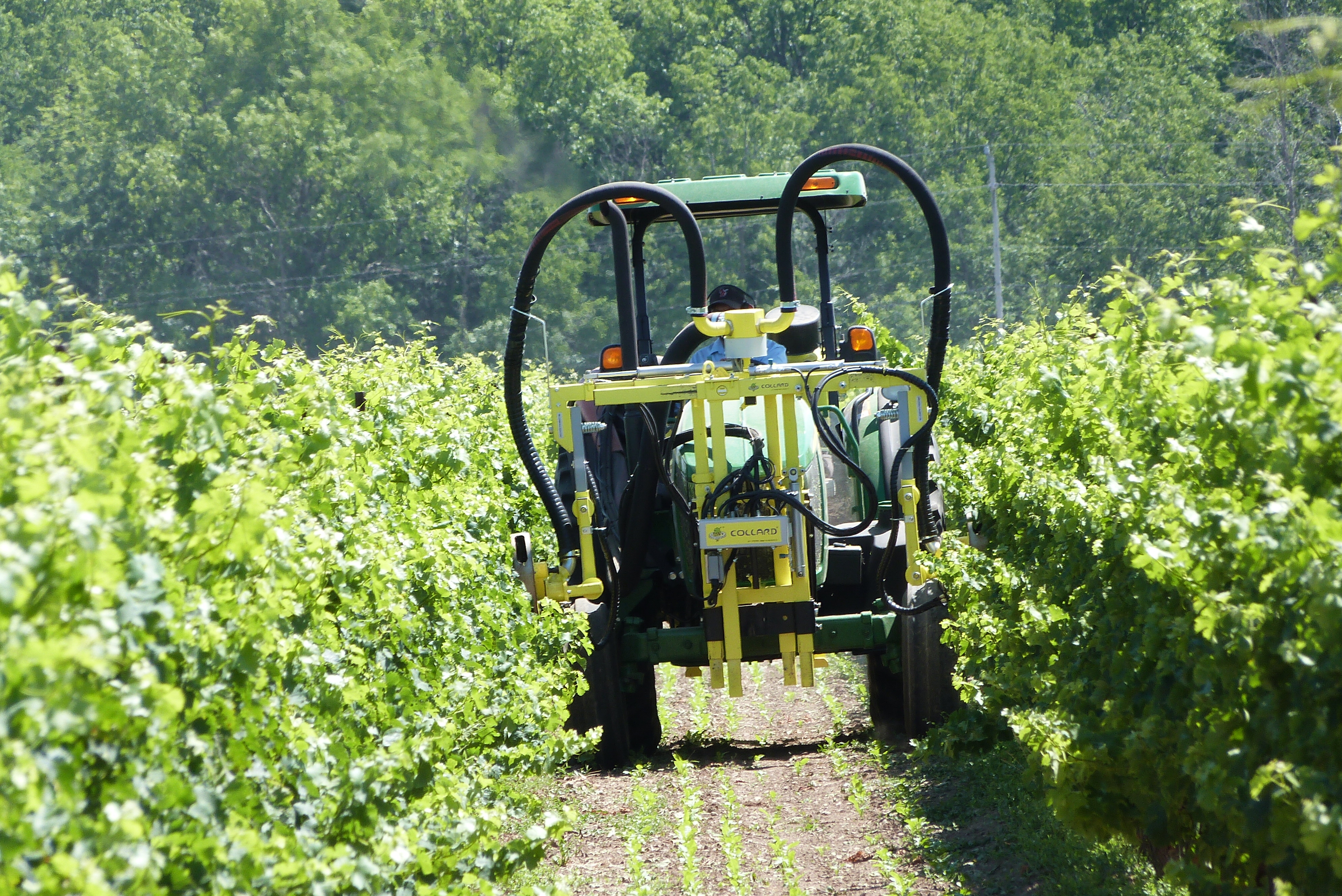
Cluster-zone leaf removal can be done manually, but it is very labor- and time- intensive, making it costly. Increasingly, leaf removal is being done mechanically to help reduce labour costs and save time. In Ontario, the most commonly used mechanical leaf removers are from the brands Collard and Pellenc. The Collard leaf remover works by shooting air to selectively remove leaves around the grapes, while the Pellenc leaf puller uses suction to draw in and cut the leaves.
Limitations of mechanical leaf removal include:
– vines must be trained in a vertical shoot positioned (VSP) system,
– equipment may cause minor damage to the post-veraison fruit,
– it is non-selective and requires adjustment to ensure that you don’t remove too many leaves at once
Conclusion
Leaf removal can effectively improve grape and wine quality, reduce disease pressure, improve spray coverage, and manage fruit set and berry size. The timing and intensity of leaf removal influences the results. Consider grape variety, growing conditions, disease pressure, row orientation, training system and winery requirements before implementing leaf removal. If you plan to use this practice, start with a small area and carefully monitor the impact on yield and fruit quality (pH, Brix, TA).
Sources
Kwasniewski, M., Vanden Heuvel, E., Pan, B. S., & Sacks, G. L. (2010). Timing of cluster light environment manipulation during grape development affects C13 norisoprenoid and carotenoid concentrations in Riesling. Journal of Agricultural and Food Chemistry, 58(11), 6841–6849.
Müller, K., Keller, M., Stoll, M., & Friedel, M. (2023). Wind speed, sun exposure and water status alter sunburn susceptibility of grape berries. Frontiers in Plant Science, 14, 1145274. https://doi.org/10.3389/fpls.2023.1145274
Smith, M., & Centinari, M. (2015, September 11). An overview of cluster-zone leaf removal strategies for cool climate vineyards. Penn State Extension Wine & Grapes U. https://psuwineandgrapes.wordpress.com/2015/09/11/an-overview-of-cluster-zone-leaf-removal-strategies-for-cool-climate-vineyards/
0 comments on “Leaf removal in Vineyards”