
By Kathryn Carter, Fruit Specialist (Tender fruit and Grape), OMAFA
Weather
Warm temperatures continue to advance crop development. Despite the rainy spring, recent warm temperatures and dry conditions have dried out many sites. Rainfall this week has helped alleviate these dry conditions, and additional rainfall is forecasted for the weekend.
Heavy rainstorms can effect residual activity of pesticides. After storm events monitor blocks for hail injury and wind damage.
Tender fruit
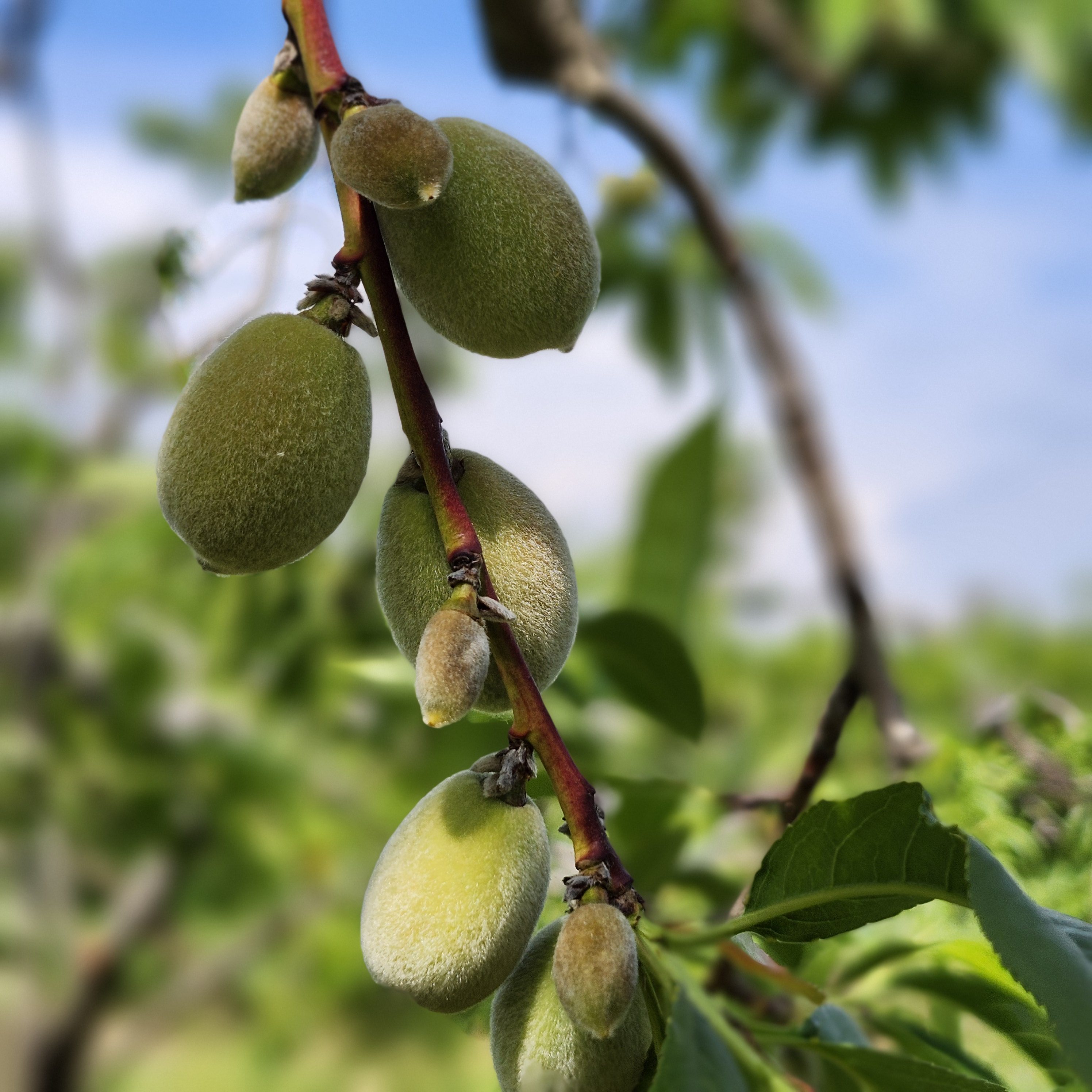
Fruit continues to size (Figure 1 and 2), and crop loads are becoming more apparent as June drop progresses.
Nectarines in some orchard blocks have quite a bit of fruit scarring from thrips injury (Figure 2). Hand thinning has begun in some early peach/nectarine cultivars and in cultivars known to have sizing challenges. Average fruit size for VG200 is currently 26 mm.
Apricots have a light fruit crop this year due to frost events and poor pollination during bloom.
Sweet cherries are starting to develop red colour. Gibberellic acid (Activol, Falgro, Grospurt Gs-5, Proliant) sprays to delay fruit ripening, and improve fruit quality should be applied about 3 weeks before normal harvest (the straw-yellow stage of maturity). Applications of products aimed at suppressing cherry splitting (Parka, VaporGard and Raingard) are applied between 3-4 weeks before harvest, see product labels for details. Monitor trees for bacterial canker symptoms and prune out dead or infected branches in the summer during dry weather to minimize disease spread.
Pear fruitlets are growing, with average fruit size around 21 mm. Some pear cultivars have a lighter crop this year.

Figure 1 Plums (Left) and Pears (Right) in Lincoln (photo: Henry Knafelc)

Figure 2 VG 200 Nectarines in Lincoln: fruit sizing (Left) and Thrips damage observed on fruit (Right) Photo: Henry Knafelc
Grape
Grapes are currently at the pre-bloom stage.
Pre-bloom:
Shoot thinning and positioning should be completed when the shoots are 12 to 30 cm long. If done too late, the shoots become hardened and more difficult to remove. Shoot thinning involves removing shoots to reduce overcrowding. Overcrowded canopies have poor air circulation and are slower to dry after rain events and are more prone to diseases such as downy mildew and powdery mildew, as well as botrytis and late season fruit rots.
Nitrogen (N) should be applied before bloom to support strong canopy growth and fruit set. N deficiency and excess can reduce yields and fruit quality. Last years petiole analysis should be used to determine fertilizer needs, however early season shoot growth can also be helpful in assessing N deficiency. If shoots are short, have pale foliage, weak growth or uneven development, it may indicate the need to adjust nitrogen fertilizer program. Avoid applying N too close to bloom as it can increase berry shatter.
Zinc and Boron are the most important nutrients for fruit set in grapes. Boron is critical for pollen germination and fruit set. Boron deficiency can result in poor fruit set and uneven berry formation. Zinc plays an important role in vegetative growth and fruit quality. The need for Boron and Zinc applications are determined based on petiole sampling conducted the previous year. Where boron or zinc levels are low consider applying pre-bloom applications based on based on petiole samples conducted the previous year.
Bloom:
Bloom is an critical time for development in vineyards and temperature and weather conditions during bloom can have a significant impact on fruit set. Bloom petiole sampling can be useful in sites where veraison sampling didn’t occur last year and can allow for amending nutrient adjustments to influence this year’s crop. Bloom sampling can provide more accurate estimates of levels of Boron and Zinc but is less accurate at indicating Potassium levels. For information see: Petiole Sampling and Analysis in Vineyards – ONfruit

Chardonnay in Lincoln: Shoot growth is approaching 50 cm (Left) and Fruit development (Photo: Henry Knafelc)

Merlot in Lincoln-Shoot length is 40 cm (Left), fruit development is pre-bloom (right) (Photo: Henry Knafelc.)
0 comments on “What’s Up? Tender Fruit and Grape Update June 11, 2026”