
Cherry leaf spot is cause by the fungus Blumeriella jaapi. It first shows as purplish black spots on the leaves. As infection proceeds, leaves turn yellow and drop prematurely. Infection can start as early as when the first bract leaves emerge around bloom. Under wet conditions, spore producing bodies develop in the lesions on leaves and infection continues while conditions are suitable, which has been the case most of the growing season.


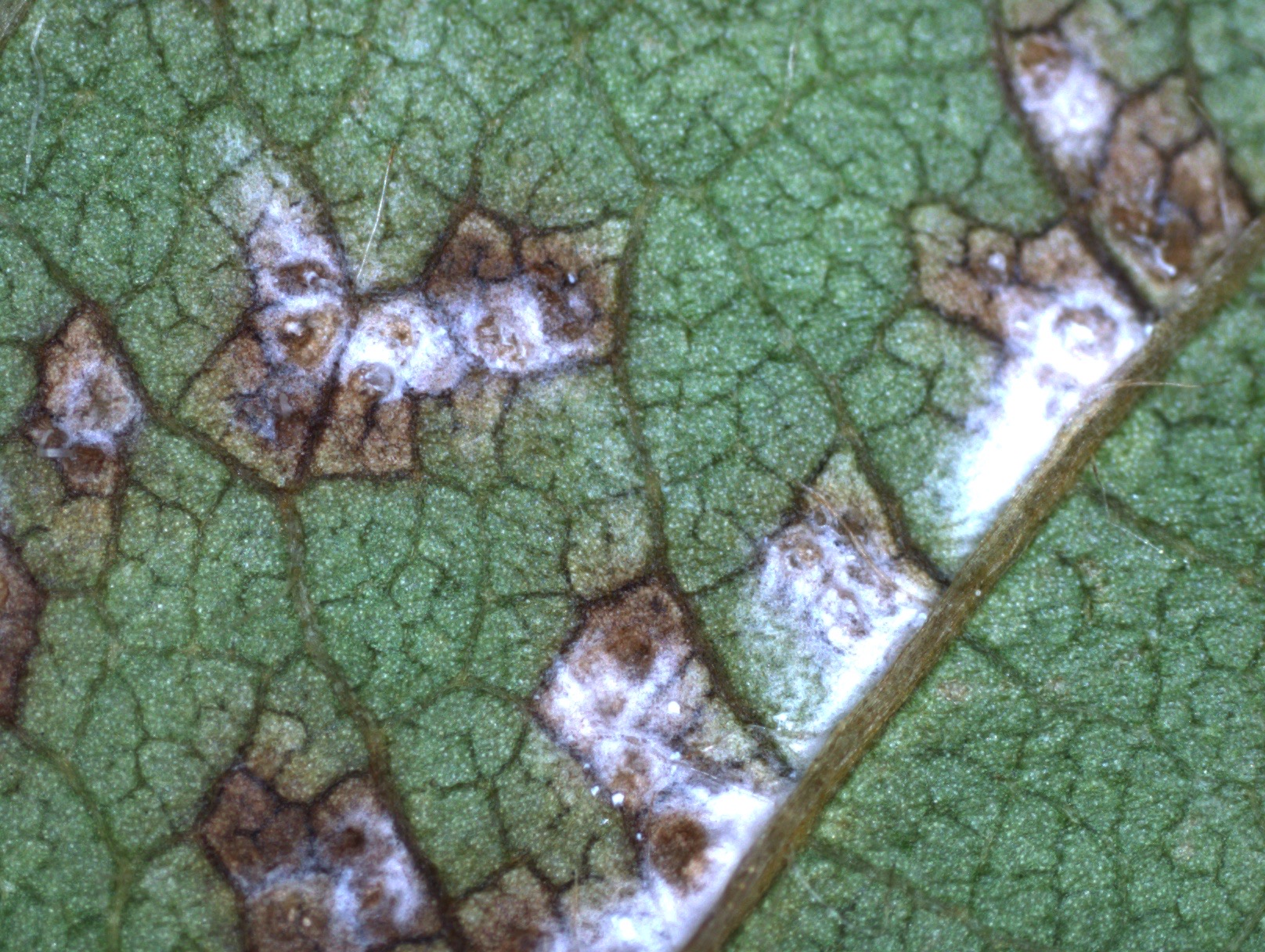

Typically, cherry leaf spot is more of a problem in tart cherry than sweet with a minimal number of lesions causing yellowing and defoliation. But this year, with heavy, frequent rains, conditions have been optimal for disease development in both sweet and tart cherry trees. There does seem to be some varietal difference in susceptibility in sweet cherries, but we don’t have records of the varieties in these orchards.
As shown in the table below, the wet season has resulted in many infection periods for cherry leaf spot in both tart and sweet cherry.
| Approximate minimum number of hours of leaf wetness required to produce leaf spot infections caused by conidia on sour cherries | |
| Average temperature (degrees C) | Wetness (hours) from the beginning of the rain |
| 12.5 | 11 |
| 13 | 10 |
| 14 | 9 |
| 15 | 7 |
| 16 | 6 |
| 17-20 | 5 |
| 21 | 6 |
| 22 | 7 |
| 23 | 8 |
| 24 | 11 |
| 25 | 14 |
| 26 | 18 |
| 27 | 28 |
| Adapted from https://ohioline.osu.edu/factsheet/plpath-fru-40 | |
Defoliated trees have difficulty forming buds and setting fruit for up to two years after severe infection; these trees are also less cold hardy and can die with low winter temperatures. The last time we had such a bad epidemic of cherry leaf spot was 2019. https://onfruit.ca/2019/07/05/cherry-leaf-spot-challenging-to-manage-in-2019/
So what can be done? Chlorthalonil (Bravo/Echo) is registered for one post-harvest application in tart cherry only and Syllit is registered for one post harvest application in both tart and sweet cherry. However, spraying these products now is pretty much closing the barn door after the horses are out – it’s too late now.
Research in the 1990s demonstrated the effectiveness of flail mowing or applying 5% urea to fallen leaves infected with apple scab. These promote the breakdown of leaves and reduce the amount of inoculum in the spring. You could extrapolate this strategy to cherry leaf spot to reduce primary inoculum. Nitrogen uptake would not be a problem once the leaves have dropped. I’ll be trialing a biological formulation containing bacterial organisms that claims to have the same effect. Stay tuned for results in spring 2027.
Next spring, make sure that bract leaves (the first leaves to come out) are protected from infection and continue spraying using one of the fungicides listed in the Crop protection Hub Fruit – Sweet cherries – Cherry leaf spot. The first few early season sprays will be critical to protecting the leaves from primary infections. The recommendation from Michigan state is to use Luna Sensation or Merivon for these critical sprays. There are also reports of reduced sensitivity to Group 7 fungicides in cherry leaf spot populations so make sure to rotate products.
0 comments on “The naked truth about cherry leaf spot”