
by Tejendra Chapagain, Stephanie Vickers and Kathryn Carter, OMAFA
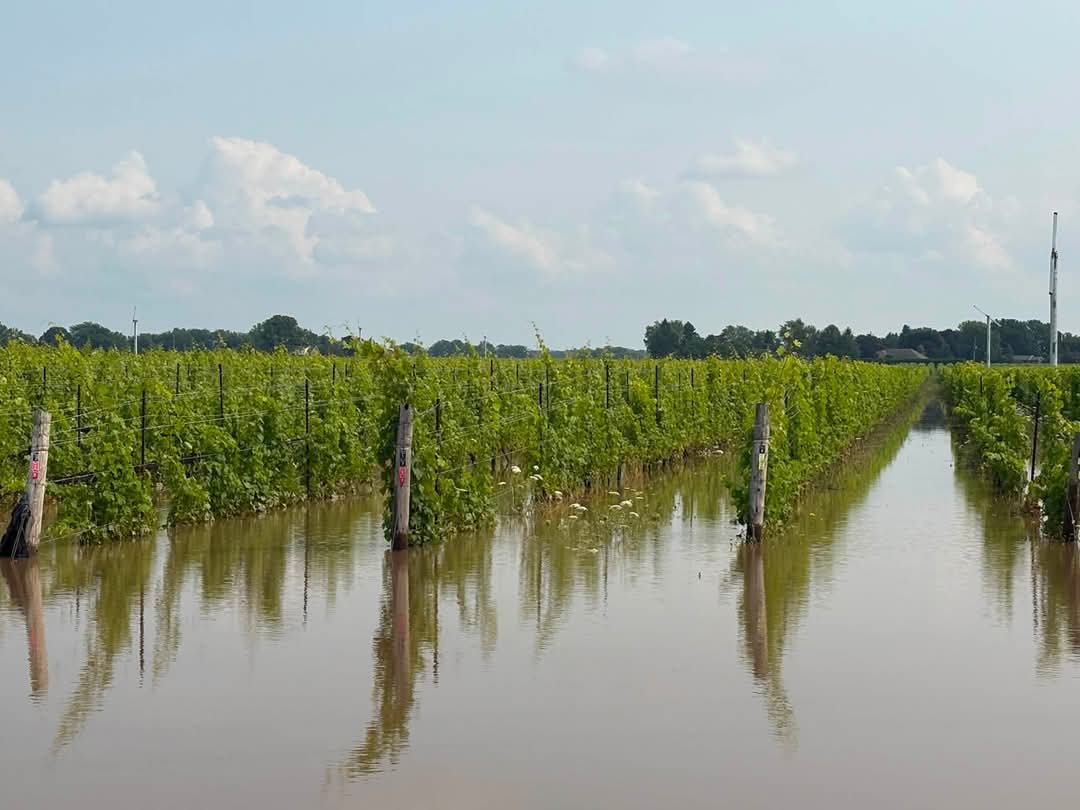
The record-breaking rainfall and flooding that recently affected northern Niagara have left many growers assessing crop, soil, and nutrient management challenges. Flooding and prolonged waterlogging can alter the physical, chemical, and biological properties of soil, with some impacts that may persist after fields have drained. This article outlines the key impacts of flooding on soil fertility and soil health, along with practical recovery strategies for horticultural operations.
Table of Contents
Impacts on Soil Fertility and Recovery Strategies
Major Impacts on Soil Fertility
- Nitrogen Depletion via Leaching and Denitrification: Saturated soils create anaerobic (oxygen-depleted) environments. Under these conditions, soil microbes convert plant-available nitrates into nitrogen gas (denitrification), emitting it into the atmosphere. Concurrently, heavy rainfall leaches highly soluble nutrients like nitrogen, sulphate, and boron deep past the root zone, particularly in sandy soils.
- Phosphorus and Zinc Immobilization: Flooding alters soil redox (oxidation-reduction) potential. While standing water initially makes phosphorus more soluble, as the soil dries and re-oxygenates, phosphorus can quickly bind to iron and aluminum minerals, becoming locked away from the plant.
- Suppressed Root Growth and Functions: Water fills soil pores, halting gas exchange and suffocating plant roots inhibiting root growth and respiration. Roots ultimately lose their ability to absorb key ions like potassium, phosphorus, calcium and magnesium, inducing widespread nutrient deficiencies even if nutrients are present in the soil.
Recovery Strategies
- Conduct diagnostic soil testing when the ground has completely dried and stabilized. Soil sampling in areas that had flooding will help get a better understanding of nutrient levels left in the soils. Testing saturated, gray soil, however, will give inaccurate chemical profiles.
- Conducting petiole analysis (veraison /bloom) will help provide a better understanding of the availability of N in the vine. Low petiole N indicates that the vines root uptake is restricted by environmental conditions (poor aeration, root damage, etc.), or the soil N is depleted. Low N in petioles is strongly associated with low YAN (Yeast assimilable Nitrogen) in must, which can cause stuck or sluggish fermentations. If petiole N levels are low, consider foliar N applications which are more efficient at raising YAN than soil applications. Utilize low-flotation tires or explore emerging aerial options like drone applications for foliar sprays of N and P in case of emergencies. Avoid applying N to the soil post veraison, as it takes too long to mobilize into the plant and increases vine vigour which increases the risk of winter cold injury and can create issues with bunch rot. Use the information gained from diagnostic testing to make educated decisions about fertilizer applications next spring.
- Use best management practices to improve nutrient uptake: Apply lighter, split doses of nitrogen rather than a single large amount to reduce risk of leaching. Use ammonium-based fertilizers in saturated or draining soils, as ammonium binds to soil particles, reducing immediate leaching risks. Consider using nitrification inhibitors in fine textured or wet soils as they temporarily half soil bacteria from converting into highly leachable nitrate. Using banded fertilizer applications or fertigation gets the fertilizer where it is needed and prevents runoff and leaching.
Impacts on Soil Health and Recovery Strategies
Impacts on Soil Health
- Loss of Structure and Surface Crusting: The impact of rainfall and prolonged ponding breaks down soil aggregates, which can then lead to a layer of fine soil particles depositing on the soil surface. When the soil eventually dries, this layer turns into a hard surface crust that can restrict water infiltration, oxygen exchange, and root penetration.
- Recovery Strategy: Only when soil is dry enough to be driven upon and worked, a single pass of shallow light tillage (e.g. rotary hoe) will break up the surface crust and allow for water and air exchange. Replanting cover crops between the rows will also help to break up compacted soil layers by producing deep roots, and fine roots that create channels for water and air to flow through the soil.
- Erosion: Intense rainfall can cause soil erosion, particularly on sloped sites. This moves the nutrient-, microbe-, and organic matter-rich topsoil downslope, resulting in low fertility on the tops of knolls and hills.
- Recovery Strategy: In the short term, target organic amendment applications (e.g. compost) to upslope areas that have experienced topsoil erosion. In the long term, repeated applications of organic amendments and the use of cover crops can both help to reduce soil erosion and build soil organic matter. The use of cover crops between the rows can reduce damage from heavy rains, add carbon to the soil, and increase soil aggregate stability making the soils more resistant to erosion.
- Compaction: Contrary to popular belief, the weight of floodwaters does not lead to soil compaction. Flooding can lead to surface crusting (see above), but true compaction after flooding occurs from driving tractors, implements, and heavy equipment over wet soils before they’re adequately dried. If you can squeeze soil (or subsoil) in your hand and it makes a firm, plasticky ball, then it is still too wet for equipment. Compaction impedes root growth and the movement of water and air through the soil, making the soil more vulnerable to flooding in the future.
- Recovery Strategy: Avoid driving on wet and/or moist soil to prevent irreversible soil compaction! Patience is the best practice – wait for the soil to dry before driving on it with trucks, tractors, and equipment. In emergency situations (e.g. disease outbreaks, excessive nutrient depletion, etc.), utilize low-flotation tires or explore emerging aerial options like drone applications for foliar sprays to prevent severe soil compaction.
- Soil Biology Decline: Beneficial soil organisms, like earthworms and microbes, decline under waterlogged conditions. Specifically, arbuscular mycorrhizal fungi, which form a symbiotic relationship with plant roots that help with phosphorus and zinc uptake, decline rapidly in anaerobic conditions. Saturated soils cause bacterial and fungal populations to shift, favoring anaerobic species that thrive without oxygen (see Nitrogen Depletion section above).
- Recovery Strategy: Establish cover crops in the alleys/drive rows, particularly if summer-seeded cover crops got wiped out from the rains. Grasses and legumes can help restore soil structure and revive mycorrhizal and nitrogen-fixing bacterial populations. If soil conditions are ideal, tap rooting brassicas (e.g. daikon/tillage radish) can help break up subsoil compaction, but brassicas do not host arbuscular mycorrhizal fungi. In addition to cover crops, repeated applications of organic amendments can both help to re-build soil biology. Growing plants such cover crops, and even weeds can increase the AMF recolonization and ultimately the availability of phosphorous, which is the most affected nutrient due to reduction in mycorrhizae population.
- Since submerged feeder roots die off and cannot absorb soil-bound nutrients, it may be required to supply P and Zn directly through the canopy to kickstart root regeneration. There is a lack of Ontario specific research available on the benefits of using bio-stimulants to renew soil health and fertility.
Extreme weather and crop losses can create financial and emotional stress for farmers and their families. Agriculture Wellness Ontario provides mental health support, education, and community for Ontario’s agricultural sector. If you are a farmer in need of support, call the Farmer Wellness Initiative at 1-866-267-6255.
Dr. Chapagain is the Soil Fertility Specialist for Horticulture Crops with OMAFA, based in Guelph. He can be reached at tejendra.chapagain@ontario.ca
Stephanie Vickers is the Soil Management Specialist for Horticulture Crops with OMAFA, based in Vineland. She can be reached at stephanie.vickers@ontario.ca
Kathryn Carter is the Tender Fruit and Grape Specialist with OMAFA, based in Vineland. She can be reached at kathryn.carter@ontario.ca
0 comments on “Nutrient and Soil Management in Vineyards After Flooding”