
Kathryn Carter, Fruit Specialist (Tender Fruit and Grape), OMAFA
Weather
This spring has been a roller coaster of temperatures. Based on degree day accumulations to date, Vineland is currently tracking around the 2024 season. Over wintering moisture levels maps, indicate that some areas in Lake Erie North Shore and Lake Ontario North Shore are heading into the season with 80 – 100 % of normal precipitation.
Tender fruit
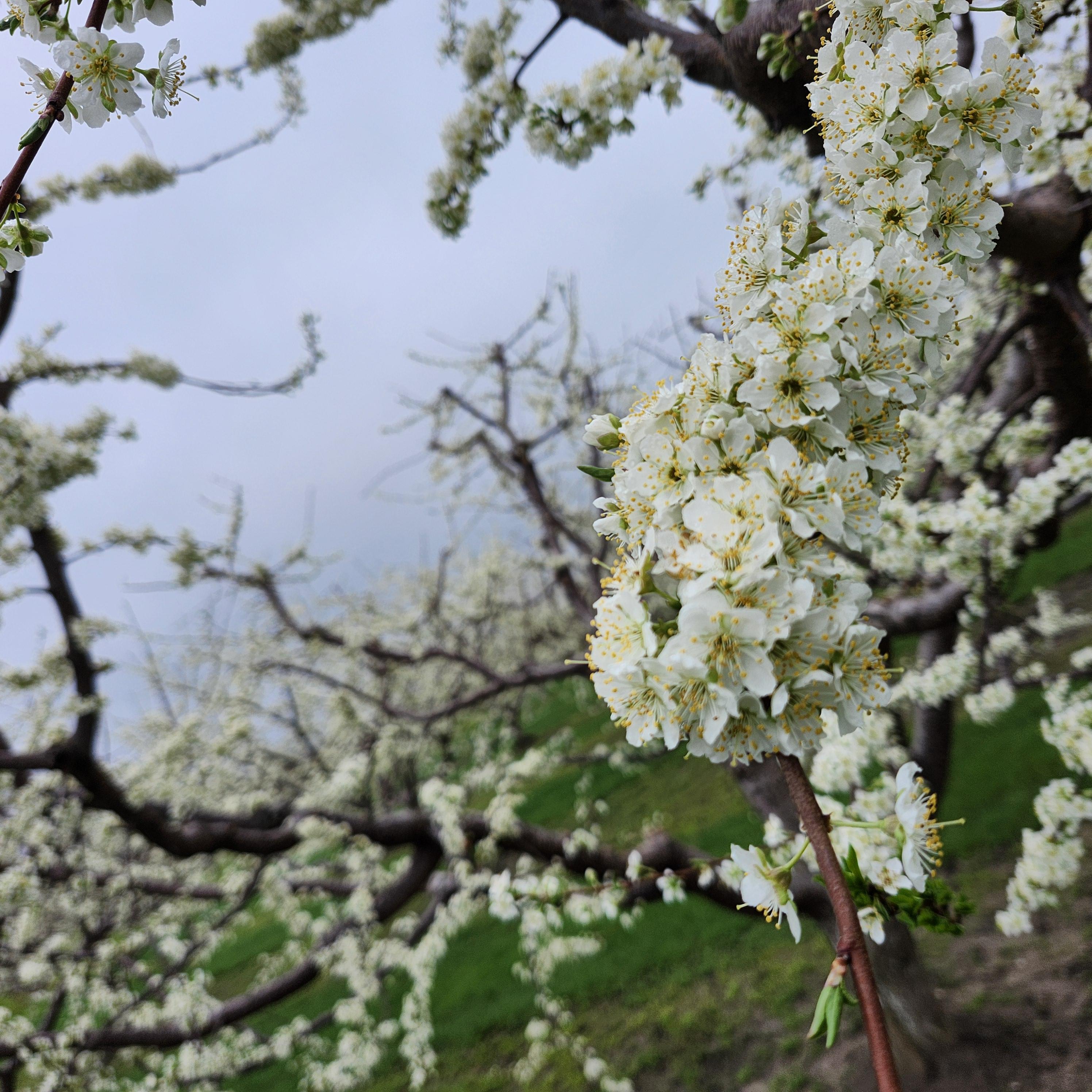
Warm temperatures pushed some fruit tree crops into bloom, and then temperatures dropped overnight to -2 or -3 C for a few days resulting in concerns about frost injury. It is important to be aware of the critical temperatures of fruit trees at different developmental stages, as well as potential mitigation strategies to reduce the risk of injury.
Orchard activities include pruning (peaches), fertilizer applications, crop protection sprays and planting new orchards.
Growth Stages
Apricot: Bloom to post bloom
Pear: First white
Plum: Bloom
Peach: First pink to first bloom
Efficient use of fertilizers
Spring is the best time to fertilize fruit trees. Fertilizers play a critical role in producing healthy trees, and good yields of high-quality fruit. With the increased costs associated with fertilizers, it is important to use fertilizers efficiently. Optimizing fertilizer use can help growers save money, improve fruit quality.
Here are some of the following tips that can help optimize fertilizer save money.
The following are some tips on how to use fertilizers efficiently in orchards:
• Make informed decisions about fertilizer applications: Conduct petiole analysis every year, and soil tests every 3 years to evaluate the trees need for fertilizers and apply nutrients according to OMAFA recommendations.
- Apply the fertilizers when the trees need them. Seasonal Nitrogen uptake in peaches increases from full bloom through harvest. Spring is a great time to apply fertilizers. Split applications of fertilizers can be used to reduce the risk of runoff in wet springs on sandy soils, ensuring the fertilizer is available when the trees need it. In peaches the first split application (half rate) can be applied in spring after budbreak, followed by a second application a month or so later after frost damage has been assessed (June). Split applications allow growers to reduce the amount of N applied if the crop is low due to frost or reduced fruit set, to help manage tree vigour. Alternatively dual inhibitor stabilizer products are available that can control nutrient release and may provide N slower than the regular N fertilizers.
- Apply fertilizers where the plants need them. Banded applications of fertilizers applied to the herbicide strip under trees is more efficient then broadcasting. When using fertigation, the fertilizer should be injected into the irrigation system in the middle third of the irrigation set i.e. inject fertilizer in hour 6 through 12 of a 18 hour irrigation set. This will ensure that the N is distributed in the wetting zone (avoiding root burn) and will prevent the fertilizer from moving below the root zone.
Grapes
Grape vines are beginning to deacclimate, reducing their tolerance to cold temperatures (Table 1). Monitor temperature conditions and use mitigation strategies where possible. Use Best Management practices when using wind machines.
Vineyard activities include tying vines, dehilling/unburying vines and compost applications.
Table 1 Critical Temperatures for grape vines (CCOVI)

0 comments on “Tender fruit and grape update”