

Kathryn Carter, OMAFA
Weather
It has been a wild weather week, with several days of extreme heat and a severe storm that swept through the province on Canada day, bringing torrential rainfall, strong winds and lightning. The heat wave continues, with temperatures above 30° C for Thursday and Friday. Thunderstorms are in the forecast for Thursday and Friday. While temperatures on the weekend are expected to moderate slightly, the risk of rain and thunderstorms continues through the weekend.
When high temperatures are combined with physical labour, the risk of heat related illness increases significantly. Growers and agricultural workers should be aware of the symptoms and risks of heat stress and adopt heat stress prevention strategies such as staying hydrated, scheduling frequent breaks and adjusting work schedules accordingly.
Tender Fruit
Hot temperatures continue to accelerate growing degree day accumulations, and seasonal development is tracking similar to the 2025 growing season.
Sweet cherry harvest has started. It has been a challenging season for sweet cherries and yields are lower than usual.
Plum and early season peach harvest is expected to start within the next few weeks. During the last four weeks before harvest (final swell), the size of peach fruit increases significantly and may account for up to 40% of the final fruit size. As a result, ensuring fruit have adequate water during the last two to four weeks before harvest is critical to achieving optimal fruit size and increasing marketable yields. This is especially important for early peach cultivars, which can have issues with small sized fruit.
While irrigation is important for fruit sizing, it also has a significant impact on fruit yield, fruit quality and water use efficiency. Over-irrigation should be avoided, as applying excess water can move water and nutrients out of the root zone, reducing nutrient availability and increasing the risk of root diseases. Excess irrigation can also reduce fruit firmness, lower soluble solid concentrations and cause the fruit to grow too quickly, leading to split pits. For information on irrigating peach trees check out: Growing Big Peaches – Irrigation is a Must! – ONfruit .
For growers that don’t have access to irrigation, maintaining a lighter crop load and retaining fruit primarily in the upper canopy where there is high sun exposure can help improve fruit quality under low water conditions (Alcobendas, 2013).
Newly planted peach and plum trees require more attention during dry weather as they have shallow, undeveloped root systems that are less able to access soil moisture. Young trees benefit from more frequent, lighter irrigations. Research has shown that drought stress can significantly reduce growth in young, non-irrigated peach trees compared with irrigated trees. Severe drought conditions may also result in advanced bud break and reduced yields (Casamali, 2021).
Early peach harvest is expected to begin around July 15, in some regions of the province. As packing lines are getting prepared for the upcoming season, it is a good opportunity to review sanitation protocols, inspect grading equipment and cooling systems, to ensure that packinghouses are prepared for production.

Vampire plum (Left) and VG200 nectarines, Niagara on the Lake, June 30, 2026
Grapes
Fruit set has occurred in grapes, and berries in some varieties have reached the buckshot size. Abundant rainfall in the spring and warm growing conditions has resulted in rapid grape vine growth across many regions.
As vine grow and become more vigorous, canopy management practices such as shoot tucking/positioning, leaf removal and hedging help reduce shading, improve air movement and increase light penetration into the fruiting zone. These practices contribute to improved fruit quality, more uniform ripening and enhanced disease management.
Summer weed management programs should focus on monitoring and controlling weeds that have escaped preemergent herbicides used in the spring, or emerged as the residual herbicide activity declines. Weed control is particularly important in hot, dry periods, as weeds can compete with vines for moisture and nutrients, potentially reducing vine vigour and productivity. Young or newly planted vineyards are particularly vulnerable to weed competition and should be monitored closely.
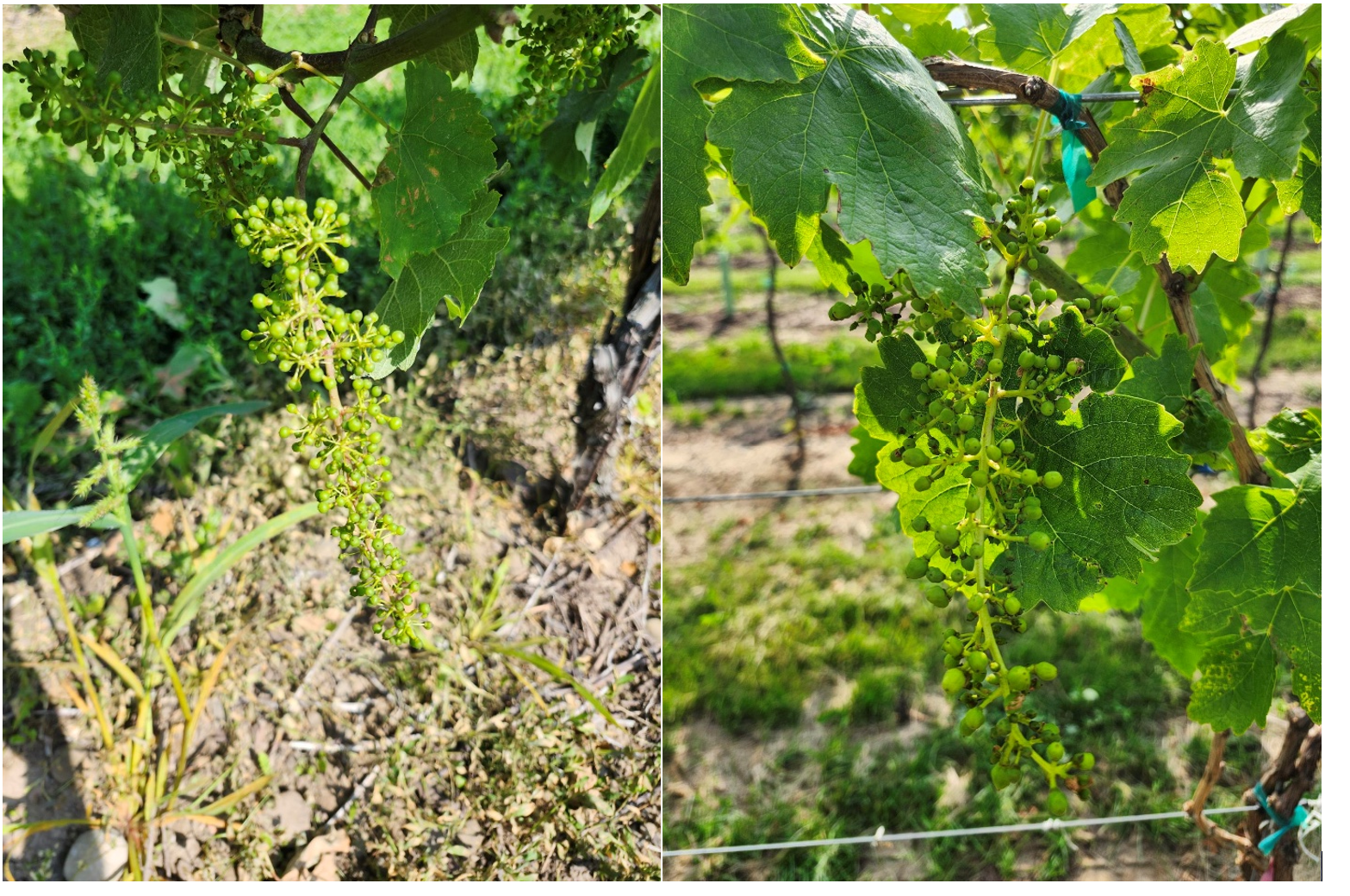
Reisling grape cluster (Left) and Timpson grape cluster (right)-June 30, 2026- NOTL (Photo: Henry Knafelc)
0 comments on “What’s up? Tender fruit and grape update July 2, 2026”