
Kathryn Carter, Fruit Specialist-Tender fruit and Grape
Tender fruit and Fresh Grape
Early golden plum and early season peach harvest has started, and recent rainfall has helped with improving fruit size in peaches. As is commonly seen in early varieties peaches, we are hearing reports of split pits. Sweet cherry harvest has pretty much wrapped up and it was a light crop this year due to cold temperatures in the spring. Last weeks storms resulted in localized hail in some areas, but overall damage is minimal. If hail events occur, it is important to be implement disease management strategies, and contact crop insurance adjusters.
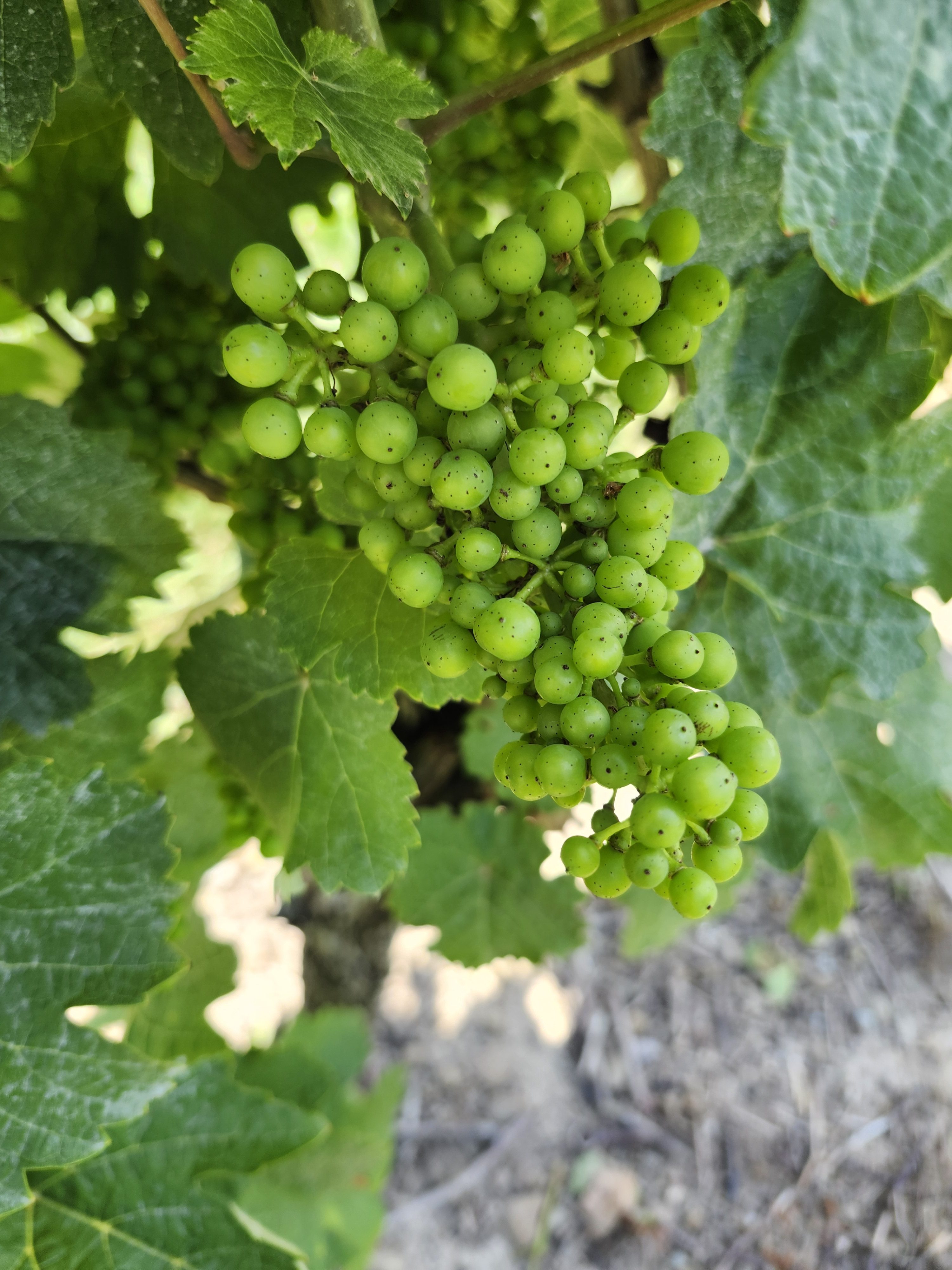
Table grapes are continuing to size up. There are some reports of coulure or the excessive shedding of flower buds and young berries. early bunch stem necrosis in some varieties. For more info on bunch stem necrosis see the information in Wine grapes.

( Left)-VG 200 Nectarines avg fruit diameter is 45 mm, (middle)- Harson peaches -avg fruit diameter 40mm, (right) Jupiter grapes in NOTL on July 6, 2026
Generally mid to late July is a good timing to conduct leaf analysis in tree fruit. Leaf analysis provides important information that can be used to make educated decisions about next years fertilizer programs, potential resulting in reduced fertilizer use, and or minimizing nutrient deficiencies. For more information on tissue analysis in tender fruit see: Tissue Sampling for Tender Fruit (Peaches, Nectarines, Cherries and Pears) – ONfruit. Tissue samples can be submitted to OMAFA credited labs.
Wine grapes
Niagara: Many wine grape cultivars are at berry touch. Focus at this time is on canopy management including leaf removal, hedging to help maintain an open canopy. Cluster thinning is also occurring in some cultivars with heavy fruit set. There are some reports of early bunch stem necrosis -also known as inflorescence necrosis occurring in some blocks of fruit in some vineyards.
Prince Edward County (PEC): Some wine grape cultivars are approaching buck shot sized berries, while others like Chardonnay have just finished blooming. There are also some reports of millerandage (aka hen and chick) a condition where the grape cluster contains berries of different sizes and maturities which is often caused by poor fertilization due to cold rainy weather during flowering.
There are reports of some nutrient deficiencies starting to appear in vineyards. The soils in PEC have a lot of limestone, and as a result tend to be very alkaline, which can increase the likelihood of deficiencies like phosphorous. Potassium deficiencies can also be an issue as a result of the shallow soils and restricted root growth. Calcareous soils (with a lot of limestone) also tend to be more susceptible to Magnesium deficiency. Cool, wet soils and calcareous soils tend to be more prone to Iron deficiency. When identifying symptoms of nutrient deficiencies in grapes take into consideration the timing of the appearance, the position of leaf symptoms on shoots and the type and pattern of foliar damage. There are some excellent photos of nutrient deficiencies in grapes. It is always best to confirm nutrient deficiencies by submitting petiole samples for laboratory analysis. Check out the OMAFA website for information on how to conduct nutrient sampling and nutrient concentration sufficiency ranges for grapes.
Lake Erie North Shore: There is considerable cold injury. It has been relatively dry in that area. Reisling are around berry touch phase.
For images of growth stages of grapes see: Growthstages or Viti 1 Chapter 07 Phenology
Inflorescence necrosis– inflorescence necrosis (IN) is, a physiological order that affects wine and table grape clusters before or during flowering, resulting in brown necrotic areas on the flower and pedicel tissue, with affected flowers and young berries failing to develop or falling off. This is caused by stress such as excessive shading in the vine or cool/wet weather. This disorder is more common on vigorous varieties that have issues with shading and poor carbohydrate availability. Excess nitrogen has also been implicated with this disorder. This disorder is also associated with cool and/or wet weather just before bloom. Additionally, some areas have reported that IN is more of an issue on vines severely pruned back during dormancy and shoot thinned in the spring to a few shoots.
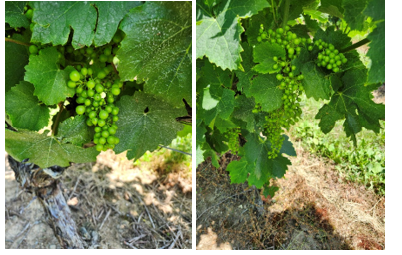
Left-Chardonnay, Right-Merlot in Lincoln July 8, 2026
0 comments on “What’s up? Tender fruit and Grape update July 9-2026”