
Table of Contents
Weather
Temperatures cooled this week, slowing crop development and extending bloom in tender fruit. Overnight temperatures are forecasted to drop to 2° C to -1° C later this week. Growing degree day accumulation this season is tracking between that of the 2024 and 2025 growing seasons.
Precipitation totals have been below average in some growing regions heading into the spring; however, recent rainfall events will help replenish soil moisture reserves.
Tender fruit
Warm temperatures advanced bloom in many fruit crops, then temperatures dropped overnight to -2 or -3° C on April 20 and 21,2026 raising in concerns about frost injury. Overall, frost injury has been low in most crops in most areas, however there is considerable frost injury in apricots and cherries in some areas where temperatures dropped to -4° C.
With temperatures forecasted to drop to 2° C to -1° C in some areas later this week, it is important to consider the critical temperature thresholds of fruit trees at their current developmental stages and to implement frost mitigation strategies to reduce the risk of injury where necessary.
Many fruit crops are in bloom, and bee hives have been placed in orchards. During this period, it is essential to follow best management practices to minimize the risk of bee poisoning.
Orchard activities include pruning (peaches), fertilizer applications, crop protection sprays and planting new orchards.

Bee pollinating a flower
Growth Stages
Apricot: post bloom
Pear: Tight cluster
Plum: Bloom and post bloom
Peach: First bloom to bloom
Cherry: Bloom
Tart cherry: Pre bloom
Grapes
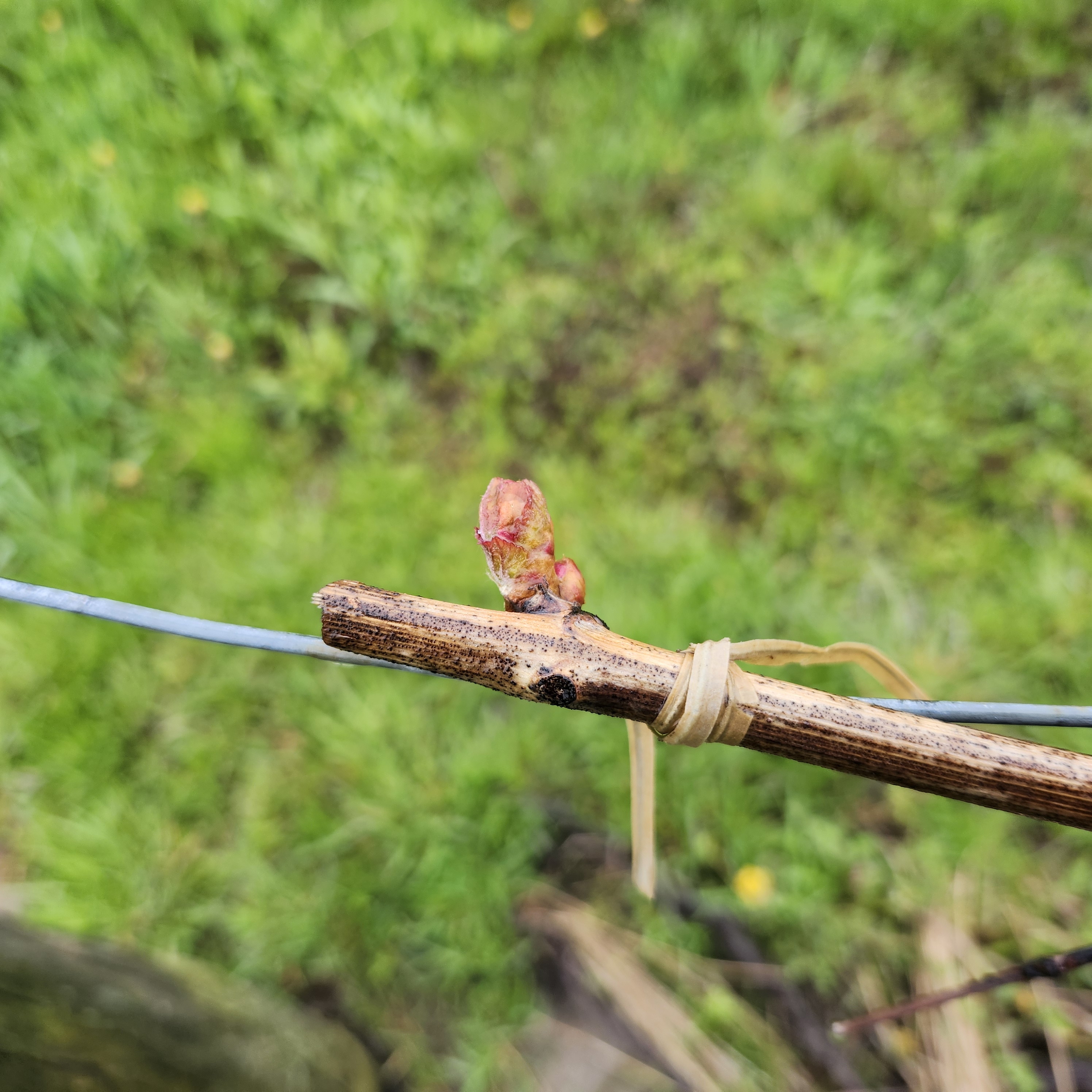
V. vinifera vines remain dormant, while late bud swell has started in some table grape cultivars and hybrid grapes. Once green tissue is present on the vines, their tolerance to cold temperatures is greatly decreased. Closely monitor temperature conditions and implement frost mitigation strategies where necessary. When operating wind machines, ensure Best Management practices are followed.
Current vineyard activities include tying vines, dehilling/unburying vines, geotextile removal and compost applications.
Closely monitor temperature conditions and implement frost mitigation strategies where possible. When operating wind machines, ensure Best Management Practices are followed.
Current vineyard activities may include vine tying, dehilling and unburying vines, removal of geotextiles, and compost applications.

Hybrid Grapes in Lincoln on April 29, 2023
Fertilizer and Grapes
Fertilizers play a critical role in maintaining vine health and achieving good yields of high-quality fruit. Applying fertilizers efficiently not only helps reduce input costs, but also minimizes environmental impacts.
The following practices can help optimize fertilizer use in vineyards.
The following are some tips on how to use fertilizers efficiently in vineyards:
Make informed decisions
- Base fertilizer applications on annual petiole analysis and soil tests conducted every three years to assess fertilizer needs and apply nutrients according to OMAFA recommendations.
- If nutrient analysis was not done on petioles at veraison last season, consider sampling at bloom, particularly in blocks where nutrient deficiencies were observed previously.
- When determining your nutrient needs, keep in mind that approximately 15-20 lbs of nitrogen is released for every 1% of soil organic matter. Nutrients supplied from compost and other organic amendments should also be factored into fertilizer programs.
- Always account for vine health and crop load when planning nutrient applications. Avoid excessive N on vines with winter injury or reduced crop load, as this can promote excessive vegetative growth rather than fruit development.
Time fertilizer applications appropriately
- Research indicates that grapevines rely primarily on stored nitrogen (N) reserves from budbreak to bloom. After bloom, vines begin actively taking up N from the soil.
- Nitrogen applications timed from the 3–4 leaf stage through approximately two weeks before bloom help align N availability with peak vine demand and reduce the risk of nutrient loss during wet spring conditions.
- This timing also allows growers to adjust fertilizer applications according to winter injury. In blocks with severe cold injury and little or no crop, nitrogen rates should be reduced to prevent excessive vigour and the production of unproductive “bull wood”, which is more susceptible to winter injury.
- Where higher nitrogen rates are required, consider split applications, with half applied between the 3-4 leaf stage to two weeks pre-bloom and the remainder applied approximately two weeks post-bloom.
- Avoid applying nitrogen too close to bloom as it can result in bunch shatter.

Taken from: Nitrogen Management in Vineyards – Viticulture & Enology
Managing Yeast Assimilable Nitrogen (YAN)
- Last year was a dry, and low YAN levels were reported at harvest in some cultivars. Low YAN levels in fruit can result in slow or stuck fermentation at the winery.
- Research suggests that foliar nitrogen applications at veraison are more effective in increasing petiole N and grape YAN than soil- applied nitrogen at bloom.
- Foliar N applications also have minimal impact on vine vigor, which is important since excessive vigor negatively affects fruit quality and ripening.
Apply fertilizers where vines can access the nutrients easily
- Banded applications of fertilizers applied to the herbicide strip under vines is more efficient than broadcasting.
0 comments on “Tender fruit and grape update April 29,2026”