
Kathryn Carter and Wendy McFadden-Smith, OMAFA
Grape harvest is one of the busiest times of the year in the vineyard and winery. Careful planning is important to ensure a successful harvest where fruit is picked at the optimal time, to optimize fruit quality. Here are some things to take into consideration when preparing for grape harvest.
Evaluating wine grape quality
Monitoring wine grape quality begins well before harvest. When determining harvest dates, it is important to consider fruit chemistry, ripening physiology, sensory maturity, fruit condition, wine style and the risks associated with leaving the crop on the vine. For more information on evaluating wine grape quality see:
- Ready to pick? Preparing for harvest and evaluating wine grape quality in Michigan
- Beyond cold hardiness: Managing fruit quality and harvest maturity of hybrid wine grapes in Michigan – Grapes.
Scheduling
Harvest scheduling is critical to ensure that growers have advance notice for arranging equipment, including mechanical harvesters, bins and labour for hand harvesting. When rainfall is expected, harvest may need to be pushed forward to avoid reductions in soluble solids (°Brix) and declines in fruit quality.
Wineries must also coordinate fruit deliveries to ensure grapes arrive when processing capacity and tank space is available. As a result, clear communication between growers and wineries throughout the harvest season is essential for timely fruit delivery and efficient use of resources.
After spending the summer producing high-quality fruit, it is important to harvest and transport grapes in a manner that preserves quality.
Harvest and fruit quality
- The need for speed: Fruit quality begins to decline as soon as grapes are harvested. Delaying harvest can result in spoilage, oxidation and unwanted fermentation that can have a negative impact on fruit quality. Keep grapes as cool after harvest and avoid leaving them in the sun where they can overheat. Warm grapes can trigger unwanted fermentation that results in harsh flavours in wines.
- Sour rot: Berry skin cracking caused by rainfall, bird pecks and bee damage can increase the risk of sour rot. Sour rot is a highly destructive late-season disease complex that can trigger immediate winery load rejections. Wineries across the Niagara region and other Ontario wine districts enforce strict quality thresholds to protect wine integrity, commonly rejecting entire truckloads of grapes if volatile acidity or acetic acid levels exceed 0.20 to 0.24 g/L. Monitor vineyards closely, particularly if rainfall occurs near harvest, and take appropriate measures to manage diseases. Develop a strategy to minimize the harvest of diseased clusters, as they can reduce fruit quality and result in rejected loads. Pre-harvest scouting of vineyard blocks can help assess the extent of damage. Depending on the disease severity, selective removal can be done manually, or with harvesters with optimal sorters to improve fruit quality and reduce the amount of diseased fruit entering the winery.
- Multi-coloured Asian lady bird beetle: This insect can be an issue in vineyards as these insects aggregate in clusters of berries and secrete a liquid (reflex bleeding) when disturbed. Reflex bleeding can lead to earthy, herbaceous off flavours and aromas and reducing may mask or diminish the varietal fruit characteristics of the wine. Monitor for MALB prior to harvest, and manage accordingly.
- Wasps, Drosophila, Earwigs: these insects can also be an issue in vineyards. Visit ON fruit for managing vineyard insects preharvest.
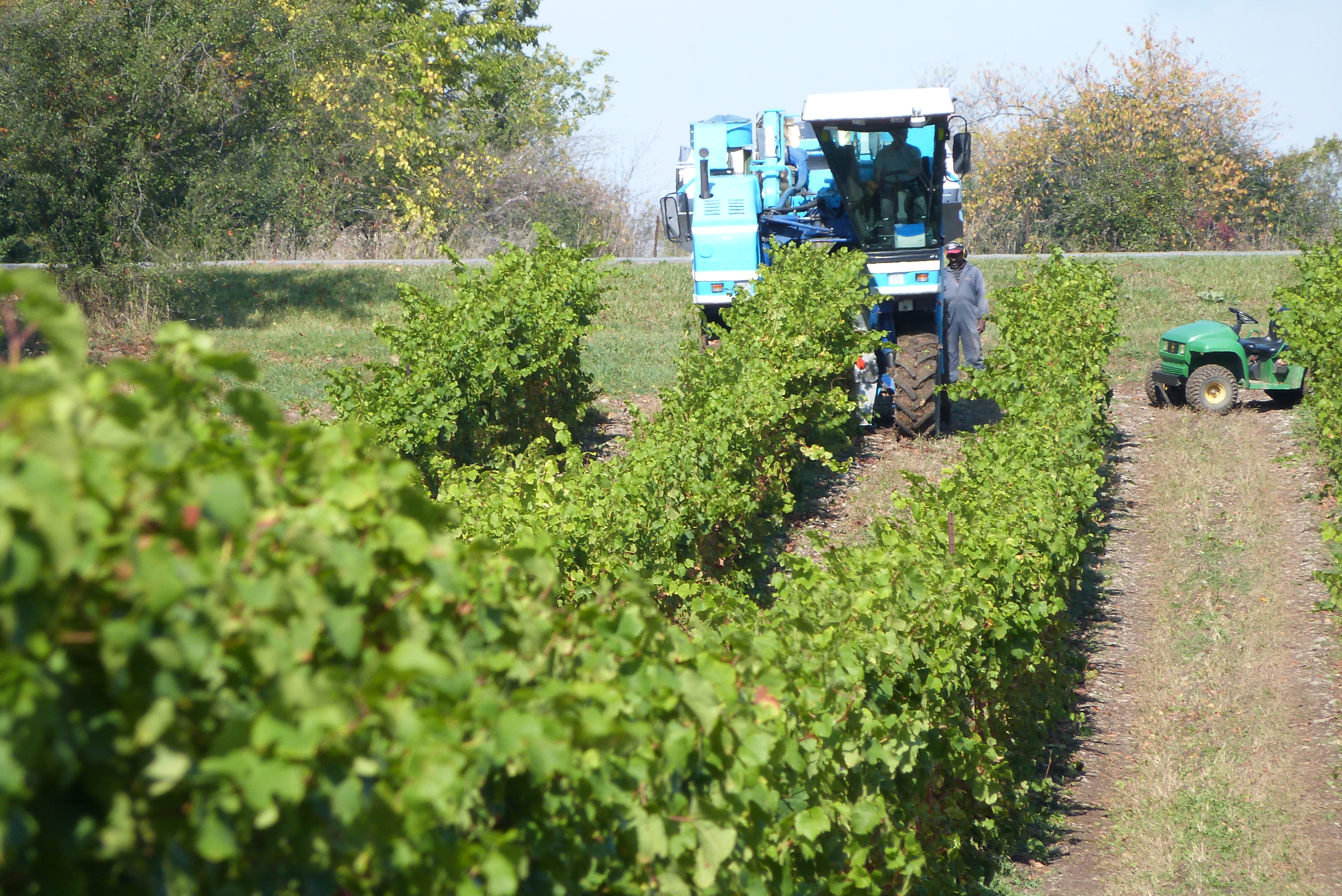
Things to consider when preparing for machine harvest:
- Test harvest equipment in advance to ensure it is functioning properly.
- Most mechanical harvesters can remove materials other than grape (MOG) such as leaves, and canes during harvest.
- Remove secondary clusters and diseased fruit before harvest in vineyards with high incidence of cluster rot. Optical sorting systems can help remove rotten or diseased fruit. Alternatively, diseased clusters can be removed by hand prior to machine harvesting.
- Ensure machine operators and harvest crews are knowledgeable and experienced. Inexperienced crew members can increase crop losses, damage vines and trellis systems.
- Deliver machine-harvested grapes to the winery as quickly as possible. These loads often contain a lot of juice and are more susceptible to oxidation, resulting in reduced fruit quality.
Things to consider when preparing for hand harvest:
- Remove all material other than grape (MOG) including leaves, shoots and branches, before fruit is delivered to the winery. MOG can contribute to undesirable green, herbaceous and bitter characteristics to wine.
Other things to consider
- If petiole sampling conducted at veraison indicated low nitrogen (N) levels, consider foliar N applications to increase Yeast Assimilable Nitrogen in Fruit (YAN) in the fruit. Low YAN levels can contribute to sluggish or stuck fermentations. Avoid soil applied nitrogen at this time of year, as it can stimulate excess vegetative growth, increase disease pressure and reduce cold hardiness.
- Reduce irrigation after veraison, but ensure vines have adequate water to get through harvest and prepare for winter. Excess irrigation after veraison can reduce fruit quality.
- Crop thinning after veraison is primarily used to improve crop uniformity and remove damaged or lagging clusters. Post-veraison thinning generally has minimal benefits on fruit quality.
- Avoid late-season hedging or canopy management as harvest approaches. These practices can stimulate new vegetative growth that is more susceptible to cold injury.
Wishing everyone the very best for a successful and fruitful harvest season.
0 comments on “Preparing for a Successful Grape Harvest”